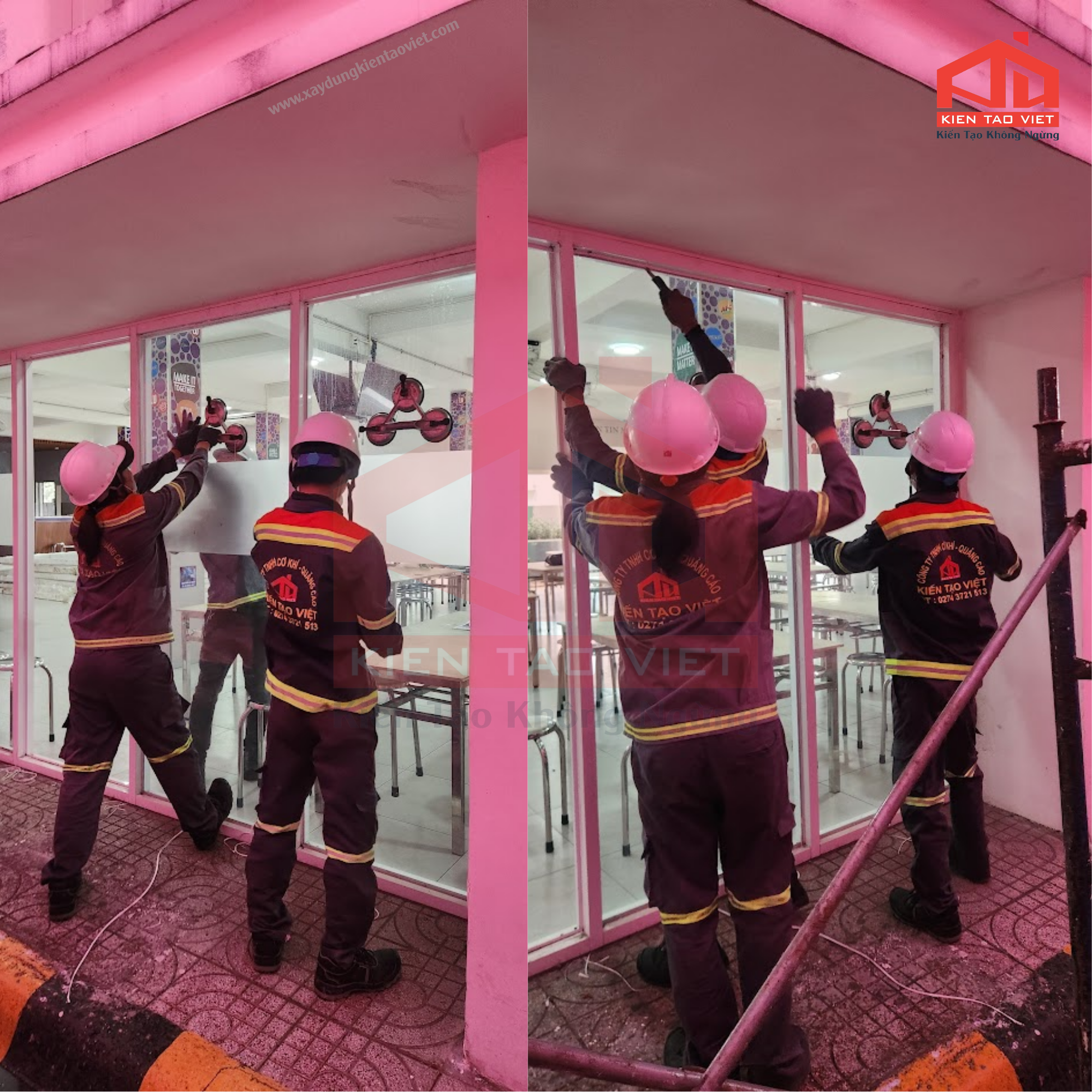
Dust and noise control is an important factor during construction activities in factories to protect workers’ health, minimize impacts on production operations and meet environmental requirements. This article will share effective solutions to help businesses control these two factors throughout the construction process.
What is dust and noise control?
In factory renovation, expansion or new construction projects, dust and noise are two factors that are almost unavoidable. They can occur from various activities such as demolition, metal cutting, steel structure welding, concrete drilling, material transportation and operation of construction equipment.
Dust and noise control refers to the application of technical solutions, management procedures and specialized equipment to reduce dust emissions and noise levels throughout the construction process. The goal is not only to create a safe working environment for employees but also to minimize impacts on production lines, machinery, products and surrounding areas.
For operating factories, effective dust and noise control also helps businesses maintain stable production, reduce the risk of interruptions and comply with current safety and environmental regulations.
Why is dust and noise control necessary during factory construction?
Unlike conventional construction projects, construction activities inside factories often take place while production operations are still running. Therefore, if dust and noise are not properly controlled, businesses may face various risks related to workplace safety, product quality and operational efficiency.
Proactively developing a dust and noise control plan from the beginning helps ensure smoother construction progress while reducing negative impacts on the working environment and business activities.
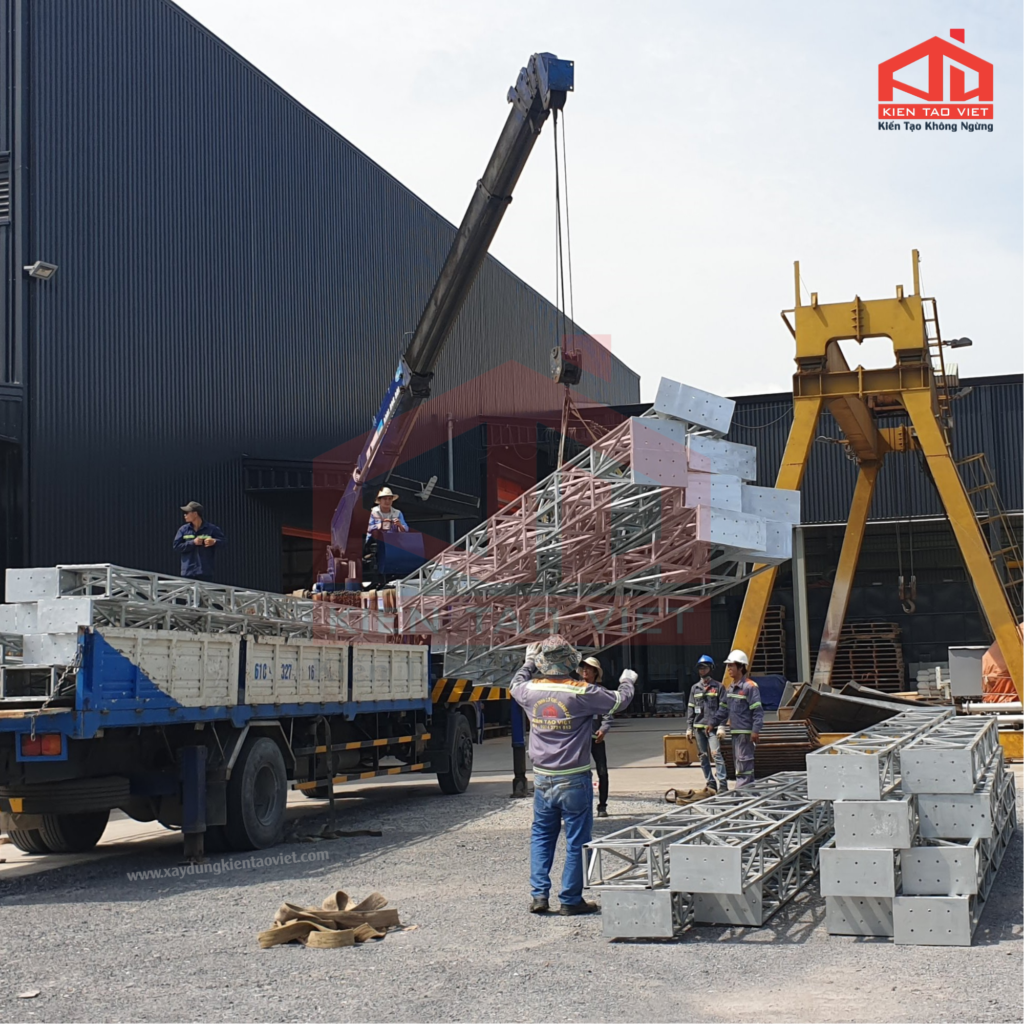
Impacts of poor dust and noise control
1. Impact on workers’ health
Dust generated during construction may contain fine particles or contaminants from concrete, metals and building materials. Long-term exposure can increase the risk of respiratory diseases, eye irritation and skin problems among workers.
In addition, excessive noise from cutting machines, drilling machines, demolition equipment or lifting devices can cause fatigue, reduce concentration and negatively affect hearing if proper protection measures are not provided.
Solutions
– Provide sufficient masks, protective glasses and hearing protection equipment.
– Train employees on safety procedures when working in construction areas.
– Arrange appropriate break times for workers who are frequently exposed to high noise levels.
2. Impact on production lines
Many factories continue operating while undergoing renovation or expansion. If dust spreads into production areas, it can accumulate on machinery, components or products, reducing finished product quality and increasing cleaning and maintenance costs.
Meanwhile, continuous noise can make communication between departments more difficult and affect coordination during production operations.
Solutions
– Clearly separate construction areas from production areas.
– Use partitions or protective barriers to limit dust and noise spreading.
– Develop construction plans by zones to reduce impacts on factory operations.
3. Increased safety risks during construction
Heavy dust accumulation can reduce workers’ visibility, while high noise levels can make communication and emergency warnings more difficult.
This increases the risk of collisions between workers and equipment and affects the ability to respond quickly when incidents occur.
Solutions
– Maintain regular construction site cleaning.
– Install clear warning signs and safety alert systems.
– Closely monitor high-risk areas.
– Regularly inspect working conditions throughout the construction process.
4. Impact on the environment and business image
Dust and noise not only affect internal factory areas but can also impact surrounding areas if they are not properly controlled.
Allowing excessive dust emissions or noise levels beyond permitted limits may lead to complaints from neighboring businesses, damage brand reputation and create issues related to environmental regulations.
Therefore, investing in dust and noise control solutions is not only a technical requirement but also demonstrates a company’s responsibility toward employees and the community.
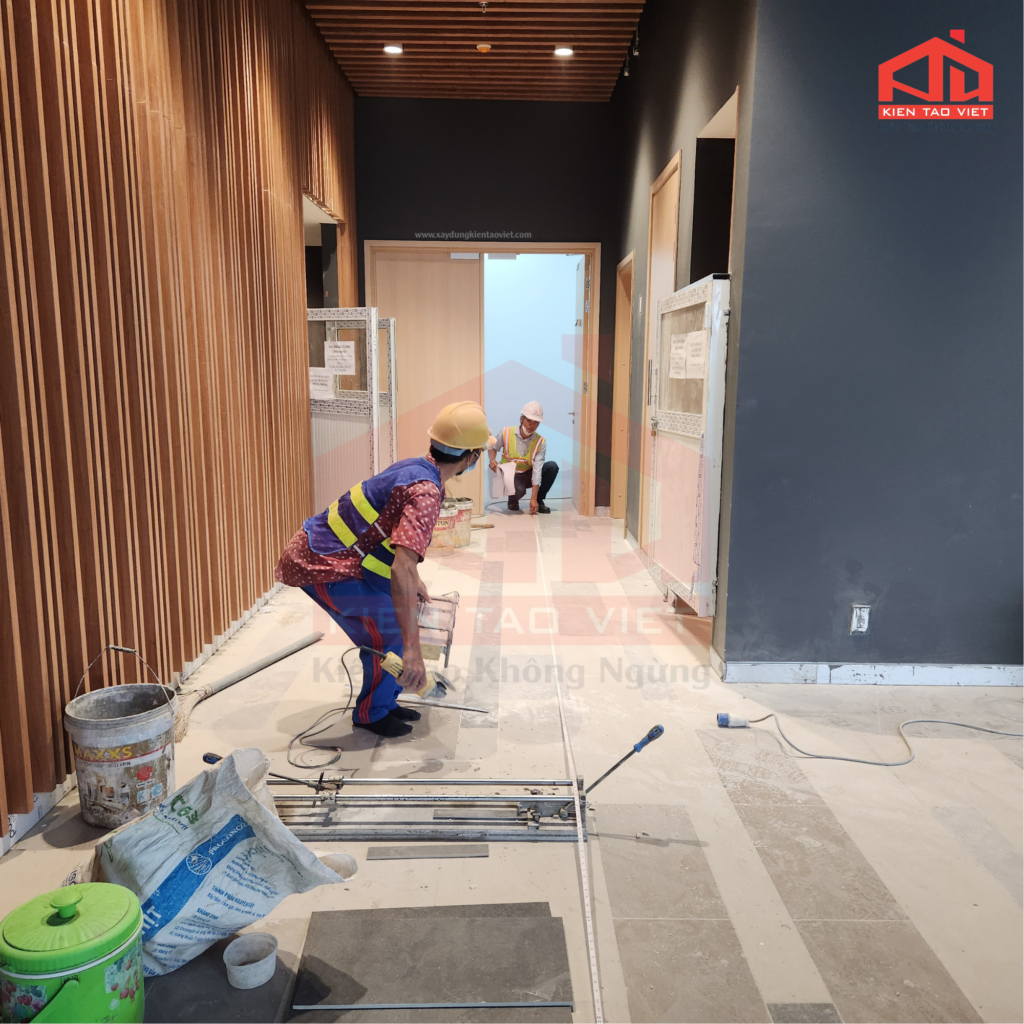
>> Read more: Multi-Functional Office Renovation Solutions for Small Office Spaces
10 effective solutions for dust and noise control during factory construction
1. Develop a construction plan suitable for factory operations
Before starting a project, businesses need to develop a detailed construction plan to minimize impacts on production lines. Clearly identifying construction areas, implementation schedules and priority tasks will help improve dust and noise control efficiency.
For factories that operate continuously, construction should be carried out in separate areas or high-noise activities should be scheduled during periods that have less impact on production activities.
Benefits
– Reduce impacts on production processes.
– Minimize risks during construction.
– Easily control progress and working conditions.
2. Install dust and noise protection partitions
Using temporary partitions is a common solution in factory renovation projects. These partitions help define construction areas, reduce dust dispersion and limit noise spreading into production zones.
Depending on actual conditions, businesses can use panel walls, metal sheets, PVC curtains or soundproof materials to improve control effectiveness.
Benefits
– Limit the spread of dust and noise.
– Protect active production areas.
– Create a safer working environment.
3. Use mist spraying systems for dust suppression
During activities such as concrete cutting, foundation drilling or demolition, a large amount of dust can be generated. Installing a mist spraying system helps dust particles settle quickly and reduces their spread into the air.
This is a simple but highly effective solution, especially for large construction areas or locations where dust is frequently generated.
Benefits
– Reduce airborne dust levels.
– Improve the working environment.
– Prevent dust from accumulating on machinery and products.
4. Select modern construction equipment
Modern machinery not only improves productivity but also significantly reduces vibration, noise and dust generated during construction.
Equipment that is regularly maintained also operates more efficiently, helping reduce risks of failures and ensuring construction quality.
Benefits
– Reduce noise during construction.
– Improve work efficiency.
– Save maintenance and repair costs.
5. Control transportation vehicles and material handling activities
Trucks, forklifts and transportation vehicles operating continuously in construction areas can generate additional dust and noise.
Businesses should establish separate transportation routes, cover materials during movement and clean vehicle wheels before leaving the construction site to minimize dust dispersion.
Benefits
– Reduce dust from transportation activities.
– Minimize impacts on surrounding areas.
– Maintain a cleaner construction environment.
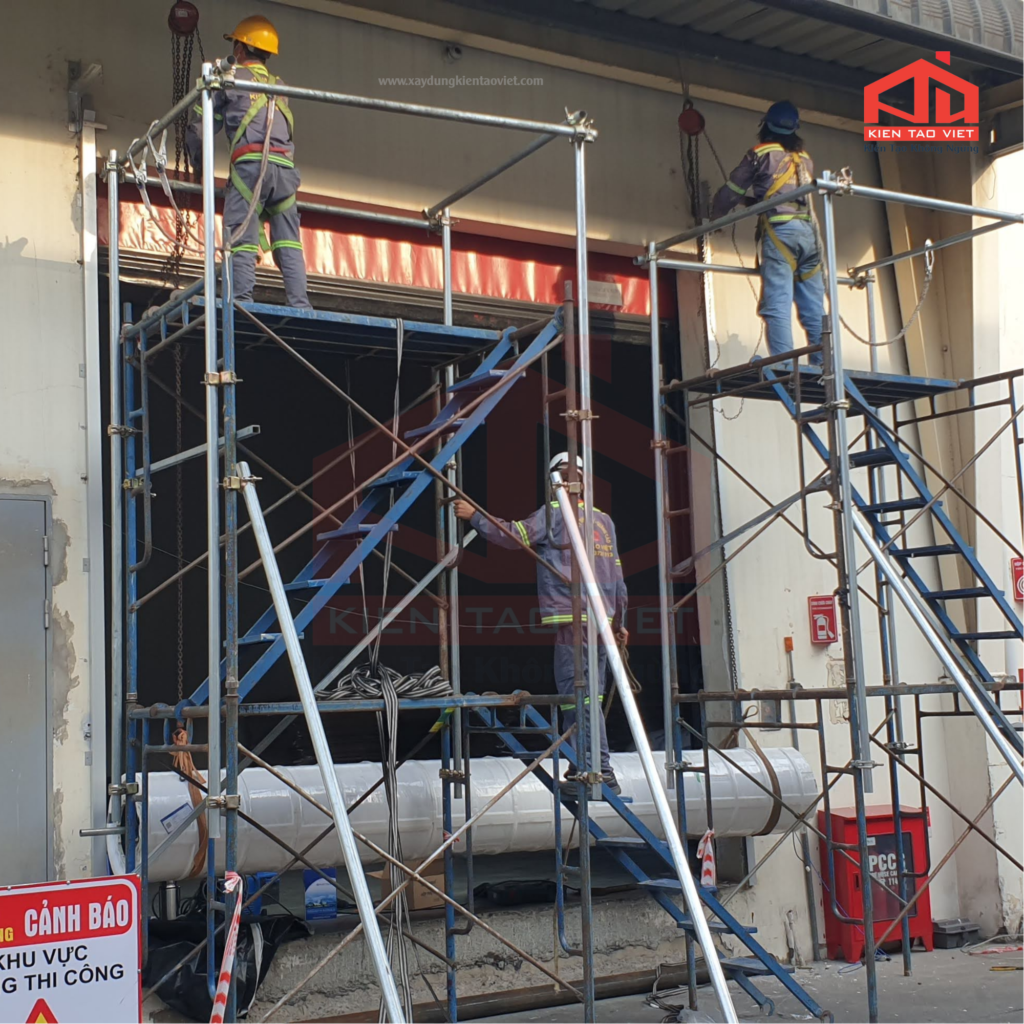
6. Perform regular construction site cleaning
Dust accumulation over time not only affects workers’ health but also reduces the effectiveness of other control measures.
Collecting waste materials, using industrial vacuum systems and cleaning construction areas regularly help maintain a clean and safe working environment.
Benefits
– Reduce accumulated dust.
– Minimize risks of slipping and workplace accidents.
– Create a professional working environment.
7. Manage construction schedules effectively
Activities that generate high noise levels, such as concrete drilling, cutting, welding or steel structure fabrication, should be scheduled at appropriate times to reduce impacts on production activities.
In addition, organizing construction schedules by phases allows businesses to better control progress and working conditions.
Benefits
– Reduce impacts on production lines.
– Improve coordination between departments.
– Minimize noise complaints.
8. Provide adequate personal protective equipment for workers
Besides technical solutions, businesses must ensure workers are fully equipped with protective equipment such as masks, safety glasses, noise protection earplugs and suitable protective clothing.
This is an important measure to reduce direct impacts of dust and noise on workers’ health.
Benefits
– Protect workers’ health.
– Reduce the risk of occupational diseases.
– Improve safety awareness during construction.
9. Monitor and evaluate environmental conditions regularly
For large-scale projects, businesses should periodically measure dust concentration and noise levels to evaluate the effectiveness of implemented control measures.
Regular monitoring helps identify areas with risks of exceeding permitted limits and allows timely corrective actions.
Benefits
– Better control construction conditions.
– Adjust solutions promptly when necessary.
– Meet safety and environmental requirements.
10. Work with experienced construction contractors
A professional construction contractor can develop effective dust and noise control plans from the survey stage, planning process to actual implementation.
With experience in factory renovation and industrial construction, contractors can select suitable solutions to ensure progress, quality and minimize impacts on business operations.
Benefits
– Ensure safe construction processes.
– Effectively control dust and noise.
– Reduce additional costs and potential risks.
– Maintain stable production activities.
Important standards businesses should consider
Besides applying technical solutions, businesses should also comply with occupational safety and environmental protection regulations during construction.
Important considerations include:
– Regularly checking dust concentration and noise levels in construction areas.
– Implementing environmental protection measures according to regulations.
– Providing suitable protective equipment for all employees.
– Developing response plans for environmental incidents.
– Organizing regular training on workplace safety and factory working procedures.
Following these requirements not only helps businesses minimize risks but also contributes to building a safe, professional and sustainable working environment.
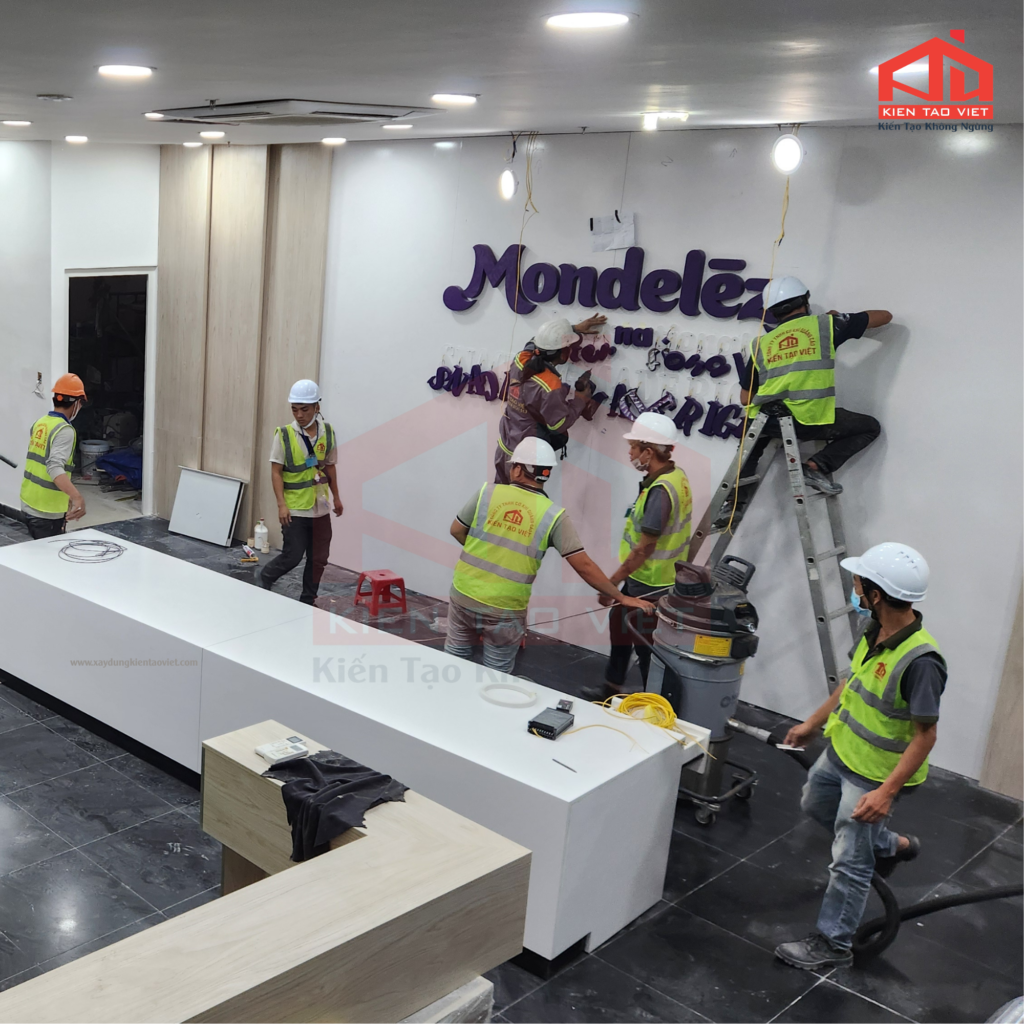
>> Read more: Cafeteria Renovation Project for Mondelez Kinh Do Vietnam by Kien Tao Viet
Why choose Kien Tao Viet for factory construction?
Construction activities inside operating factories require contractors not only to have construction expertise but also to deeply understand production processes, safety requirements and methods for controlling factors that may affect the working environment.
With experience in industrial construction and facility renovation, Kien Tao Viet provides optimized construction solutions that help businesses minimize impacts on production activities while ensuring safety, quality and efficiency.
Extensive experience in industrial projects
Kien Tao Viet has completed many projects involving factory renovation, industrial building upgrades, steel structure construction and installation of industrial mechanical systems.
With practical experience from various projects, our engineering team can develop suitable construction plans based on the specific conditions of each facility.
Safe construction solutions with minimal impact on production
Each project is carefully surveyed before implementation to develop an appropriate construction plan.
Dust and noise control measures are applied systematically to reduce impacts on production lines and working areas within the factory.
This helps businesses maintain stable operations while ensuring construction progress and quality.
Highly qualified technical team
The engineering and construction teams at Kien Tao Viet are professionally trained and strictly follow occupational safety regulations and construction procedures in industrial environments.
With strong technical expertise and practical experience, our team ensures that every project is implemented safely and effectively.
Commitment to quality and schedule
All project stages are strictly controlled, from site survey, design, construction implementation to final acceptance.
This process helps ensure construction quality, complete projects on schedule and minimize unexpected costs during execution.
Frequently asked questions
Is dust and noise control mandatory during factory construction?
Yes. Dust and noise control is an important requirement to ensure workplace safety, protect workers’ health and minimize impacts on production activities as well as surrounding environments.
What should businesses consider when renovating an operating factory?
Businesses should develop a detailed construction plan, clearly separate working areas, apply appropriate dust and noise control measures and maintain close coordination between contractors and factory operation teams.
What solutions are most effective for reducing dust?
Depending on each construction activity, businesses can combine multiple solutions such as installing protective partitions, using mist spraying systems, conducting regular site cleaning and covering materials to prevent dust dispersion.
How can businesses reduce noise during construction?
Businesses should use modern equipment, arrange suitable construction schedules, install soundproof materials in necessary areas and perform high-noise activities outside production hours whenever possible.
Does Kien Tao Viet provide renovation services for operating factories?
Yes. Kien Tao Viet provides site surveys, consulting and factory renovation services for operating factories and industrial facilities.
With suitable construction plans, we help businesses effectively control dust and noise while minimizing impacts on production activities.
Conclusion
Dust and noise control not only helps protect workers’ health but also contributes to maintaining a safe working environment, ensuring product quality and reducing interruptions during production.
Proactively applying suitable solutions from the planning stage allows businesses to minimize risks, control project progress and improve overall construction efficiency.
For factory renovation or construction projects in operating facilities, choosing an experienced contractor is an important factor in ensuring that the project is implemented safely, technically and in compliance with environmental requirements.
Contact Kien Tao Viet
With many years of experience in industrial construction, factory renovation, industrial facility improvement and mechanical construction, Kien Tao Viet accompanies businesses in implementing safe, efficient and cost-effective projects.
From site surveys and construction planning to actual implementation, our engineering team always focuses on effective dust and noise control solutions to minimize impacts on production activities and ensure project progress.
Contact Kien Tao Viet today to receive consultation on suitable, safe and effective construction solutions for your factory.

Blog mới nhất
Hồ sơ an toàn nhà thầu: Chuẩn bị gì trước khi thi công tại nhà máy?
Hồ sơ an toàn nhà thầu cần thể hiện công việc sẽ làm, người chịu trách nhiệm, mối nguy đã nhận diện và biện pháp kiểm soát tương ứng. Doanh nghiệp nên xác định yêu cầu hồ sơ theo phạm vi thi công và điều kiện cơ sở, thay vì sử dụng một bộ tài […]
Kế hoạch cải tạo hạ tầng nhà máy theo từng giai đoạn
Kế hoạch cải tạo hạ tầng nhà máy nên xác định rõ hiện trạng, nhu cầu vận hành, mức độ ưu tiên và điều kiện triển khai của từng hạng mục. Doanh nghiệp cần thống nhất phạm vi, ngân sách, lịch phối hợp với sản xuất và tiêu chí bàn giao trước khi huy động […]

Thi công bảng hiệu nhà máy tại TP.HCM | Kiến Tạo Việt
Thi công bảng hiệu nhà máy cần bắt đầu từ vị trí lắp đặt, mục đích nhận diện và điều kiện tiếp cận công trình. Doanh nghiệp nên chốt nội dung, kích thước, vật liệu, phương án chiếu sáng, trách nhiệm lắp đặt và tiêu chí nghiệm thu trước khi gia công. Một thiết kế […]
Chi phí cải tạo văn phòng: Cách lập dự toán và kiểm soát phát sinh
Chi phí cải tạo văn phòng không thể xác định chính xác phân tích chính xác. Doanh nghiệp cần biết hiện trạng mặt bằng, các hạng mục phải làm, vật liệu lựa chọn và điều kiện tổ chức thi công. Một báo giá hữu ích phải thể hiện khối lượng, cung cấp phạm vi, loại […]
Cải Tạo Văn Phòng Tại Củ Chi Trọn Gói
Nhiều nhà máy và kho bãi tại Củ Chi đang gặp tình trạng văn phòng cũ thiếu diện tích, bố trí bất hợp lý, hệ thống kỹ thuật xuống cấp. Cải tạo văn phòng tại Củ Chi giúp doanh nghiệp tận dụng mặt bằng sẵn có, tái cấu trúc công năng, tiết kiệm thời gian […]
An toàn lắp đặt bảng hiệu trên cao: Doanh nghiệp cần phối hợp những gì?
An toàn lắp đặt bảng hiệu trên cao cần được chuẩn bị trước khi huy động đội thi công. Doanh nghiệp và nhà thầu phải làm rõ vị trí, cách tiếp cận, nhân sự, thiết bị, hoạt động bên dưới và điều kiện triển khai. Phương án phải do người có chuyên môn xem xét; […]
-
Vì sao lắp đặt mái che di động trở thành xu hướng những năm gần đây
-
Những điều cần biết về lắp đặt mái che di động 2026
-
Những điều cần biết khi chọn nhà thầu xây dựng nhà thép tiền chế 2026
-

07 Tiêu chí chọn nhà thầu xây dựng – cải tạo nhà xưởng uy tín 2026
-

Cải tạo văn phòng doanh nghiệp 2026: Những điều cần biết