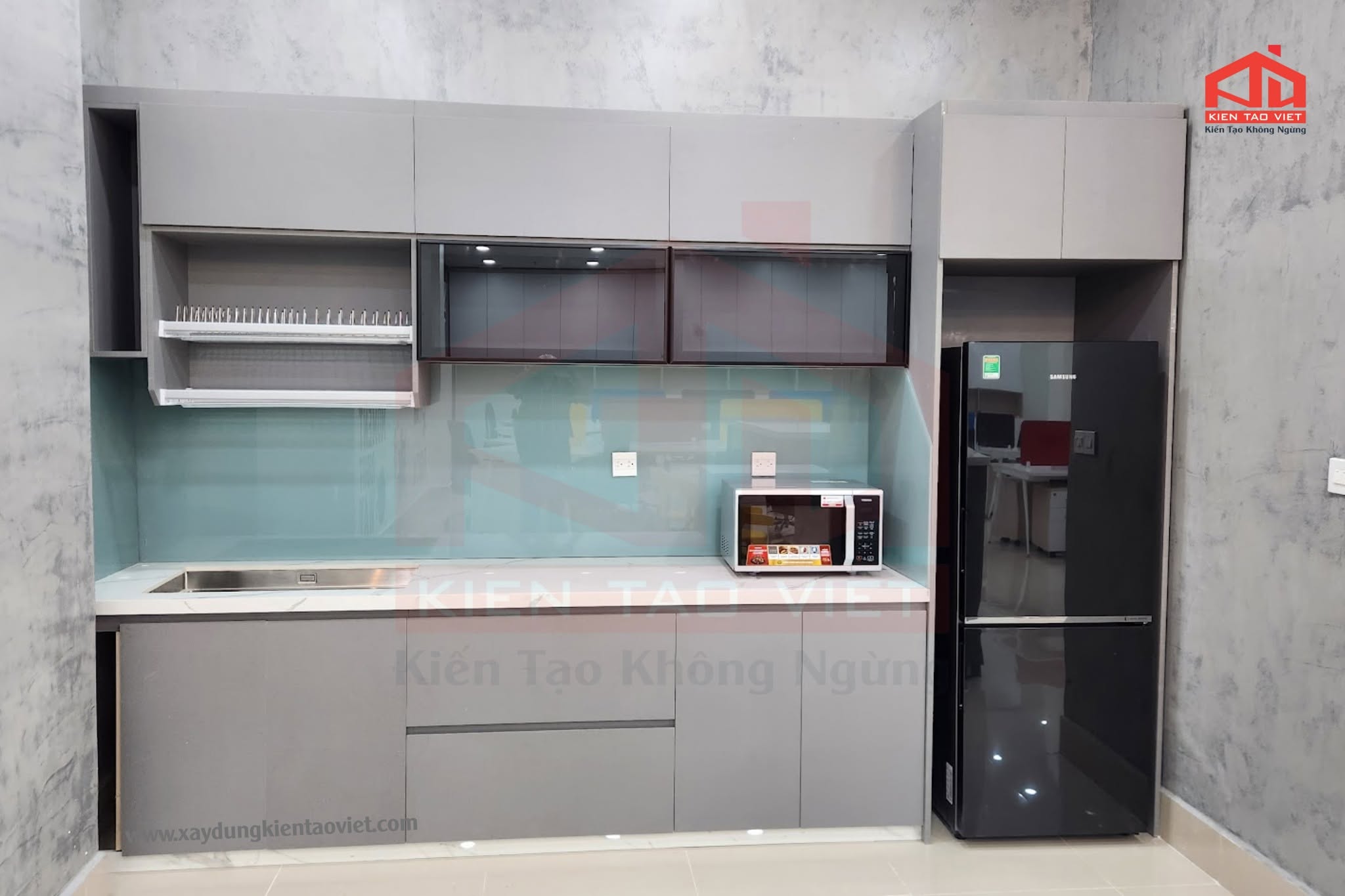
Factory pantry area is a functional space that helps businesses improve the working environment, enhance employees’ health and well-being, and create a more productive workplace. This article explores the benefits, design standards, and key considerations when developing a pantry area, while providing practical solutions for modern industrial facilities.
What is a factory pantry area?
A factory pantry area is a dedicated space designed for employees to rest, relax, have light meals, or interact with colleagues during their breaks. In the past, many businesses mainly focused their investment on production lines, warehouses, and machinery operation areas. However, today, providing convenient facilities and improving employee working conditions have become increasingly important.
In an industrial environment, employees often work continuously for long hours, dealing with machinery, noise, production pressure, and high workloads. Therefore, a well-designed pantry area provides employees with a short recovery period, helping them recharge energy, reduce stress, and maintain work efficiency.
Unlike a factory cafeteria or industrial dining area, a pantry is usually more compact and focuses on convenience and flexibility. It can include a relaxing seating area, beverage counter, refrigerator, coffee machine, microwave, hand-washing area, and other facilities that support employees’ daily needs.
For modern factories, especially large-scale manufacturing facilities, a pantry area is no longer considered an optional supporting space. Instead, it has become an important part of building a professional, safe, and employee-friendly working environment.
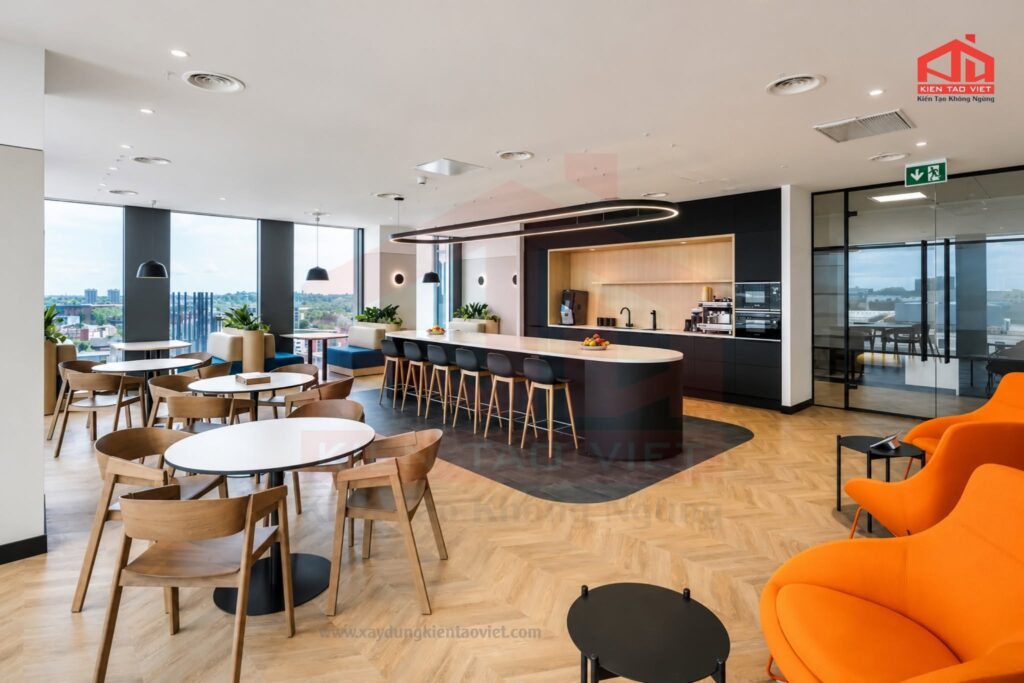
Why should factories invest in a pantry area?
1. Improving employee health and well-being
One of the greatest benefits of a factory pantry area is providing employees with a suitable space to rest and recover. After many continuous working hours, both physical and mental energy need to be restored to maintain concentration and performance.
A clean, comfortable, and well-equipped resting area allows employees to relax, recharge, and reduce fatigue. This is especially important in manufacturing environments where workers often stand for long periods, operate equipment, or perform repetitive tasks.
When businesses pay attention to workplace conditions, employees are more likely to feel valued and develop stronger commitment to the company. This also plays an important role in building a positive corporate culture.
2. Increasing productivity in factories
Production efficiency does not only depend on machinery or technology but also relies heavily on human factors. Employees with better physical conditions and a comfortable mindset are more likely to stay focused and perform their tasks effectively.
A factory pantry area creates short breaks between shifts or during working periods. Reasonable rest time helps employees reduce pressure and avoid decreased concentration caused by prolonged stress and fatigue.
For industries requiring high accuracy, such as mechanical manufacturing, electronics, component production, and machine fabrication, maintaining employee alertness is essential to minimize operational errors and improve overall production quality.
3. Creating a more professional working environment
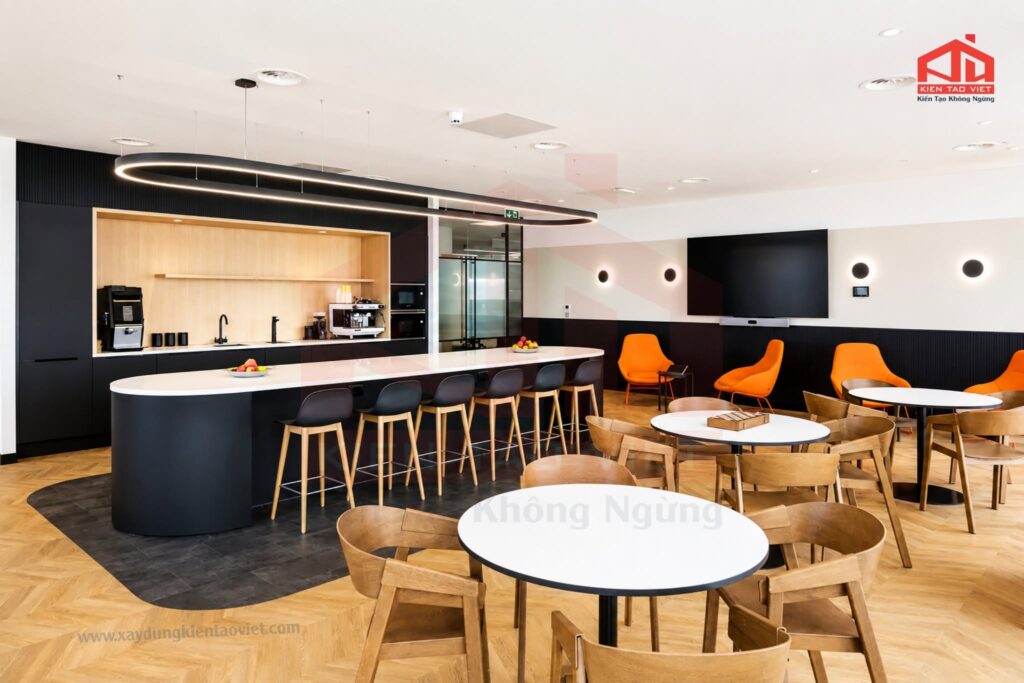
Today, businesses compete not only through products and services but also through their ability to attract and retain employees. A factory with a modern workplace and complete facilities creates a more professional image for both employees and partners.
A factory pantry area demonstrates a company’s investment in employee experience. Although it may be a relatively small space, a well-designed pantry can create a significant difference compared with factories that only focus on production areas.
For businesses working with international partners, a well-designed pantry area also reflects operational standards, corporate culture, and professionalism in factory management.
4. Supporting connection between departments
A pantry area is not only a place for employees to rest but also a space that encourages communication and connection among different teams within the company.
In a factory environment, departments such as production, engineering, quality control, logistics, and administration often have different responsibilities. A shared space allows employees to exchange ideas, communicate more naturally, and strengthen teamwork.
This also contributes to building a positive workplace culture, improving collaboration, and reducing barriers between departments.
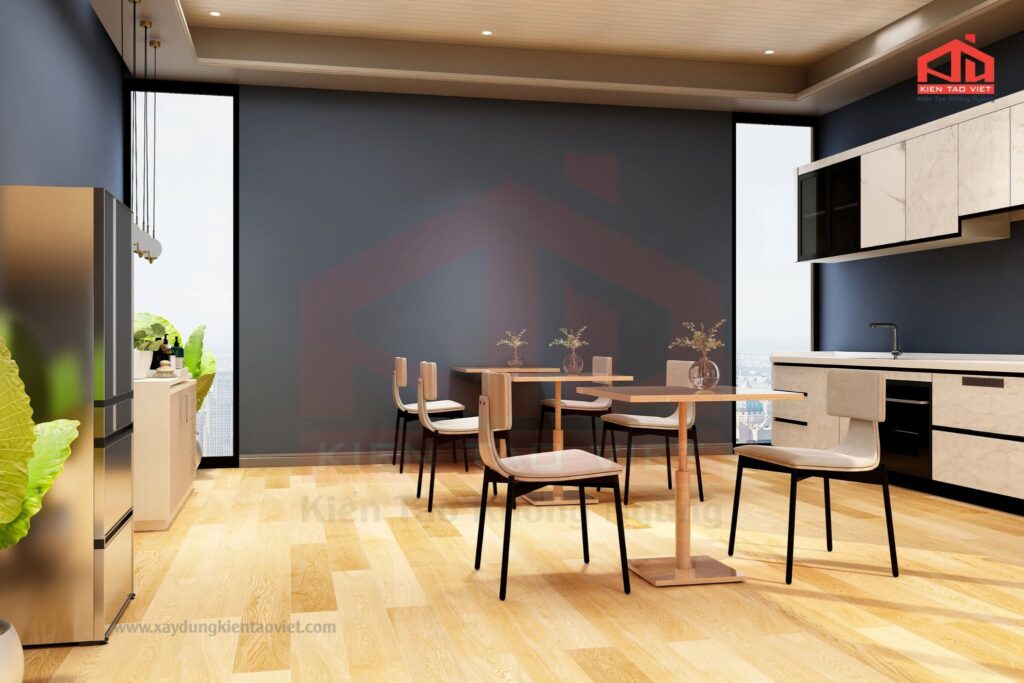
Design standards for a factory pantry area
To maximize the functionality and effectiveness of a factory pantry area, businesses need to carefully consider various factors, including location, space planning, materials, and technical systems.
1. Choosing the right location
The location of a factory pantry area should provide convenience for employees while ensuring that it does not affect production activities.
Common locations for a factory pantry area include:
– Office areas inside the factory.
– Employee break areas.
– Areas near meeting rooms or management offices.
– Transitional spaces between office areas and production zones.
However, the pantry should not be placed too close to areas with high levels of dust, noise, or chemicals generated during production processes. Proper placement helps maintain hygiene, ensure safety, and create a comfortable environment for employees.
2. Scientific space planning
The required area of a factory pantry depends on the factory scale and the number of employees using the space.
For small factories, a pantry area can be designed as a compact space equipped with a beverage counter, refrigerator, seating area, and essential appliances.
For large-scale factories with a high number of employees, businesses need to calculate a larger area to avoid overcrowding during break times.
A well-designed factory pantry area should ensure:
– Convenient circulation paths.
– Suitable seating and resting areas.
– No obstruction to internal transportation routes.
– Easy cleaning and maintenance.
Proper space planning allows the pantry area to provide maximum functionality while maintaining the overall aesthetics of the factory.
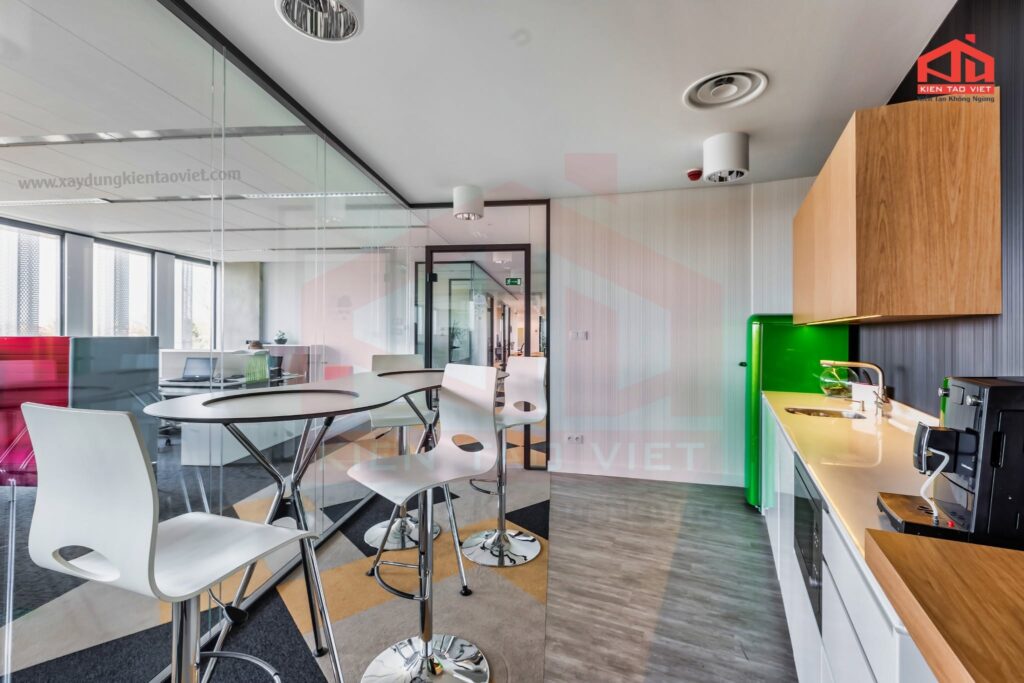
3. Durable and easy-to-clean interior design
Unlike conventional office spaces, a factory pantry area requires durable materials that are suitable for industrial environments.
Commonly preferred materials include:
– Stainless steel for kitchen areas and washing counters.
– Artificial stone or waterproof materials for countertops.
– Moisture-resistant industrial wood for storage cabinets.
– Anti-slip and easy-to-clean flooring materials.
Due to the high frequency of daily use in factories, materials must have good durability, resistance to wear and tear, and the ability to maintain their appearance over a long period.
4. Ensuring electrical, water supply, and ventilation systems
A factory pantry area often uses various electrical appliances, such as:
– Coffee machines.
– Refrigerators.
– Microwaves.
– Water heaters.
– Other household appliances.
Therefore, the electrical system must be designed safely, capable of meeting usage demands, and preventing overload risks.
In addition, the pantry area requires an appropriate water supply and drainage system, especially in washing and cleaning areas.
Ventilation is also an important factor to ensure fresh air circulation, minimize food odors, and create a pleasant environment for users.
>> Read more: Cafeteria Renovation Project for Mondelez Kinh Do Vietnam by Kien Tao Viet
Important considerations when building a factory pantry area
1. Ensuring consistency with the overall factory design
An effective factory pantry area should not be designed as an isolated space but should be integrated with the overall architecture and layout of the factory.
From colors, materials, interior arrangement to technical systems, every element should match the general design style of the facility.
For modern factories, many businesses choose minimalist and functional pantry designs that incorporate natural lighting and greenery to create a more comfortable and welcoming atmosphere.
2. Prioritizing safety factors
Safety is always one of the most important requirements for every area within a factory.
A factory pantry area should ensure:
– Electrical systems are installed according to safety standards.
– Water-use areas prevent slipping hazards.
– Electrical equipment is arranged properly.
– Suitable fire prevention and firefighting solutions are provided.
Especially in manufacturing facilities with strict safety requirements, pantry design should be carefully considered from the initial construction or renovation stage.
3. Easy maintenance and future upgrades
Factories usually operate for many years, so supporting areas such as pantries should also be designed with long-term maintenance in mind.
A smart design allows businesses to easily replace equipment, repair electrical and plumbing systems, or expand the space when the workforce increases.
This factor helps businesses reduce long-term operational costs while maintaining the quality and functionality of the facility.
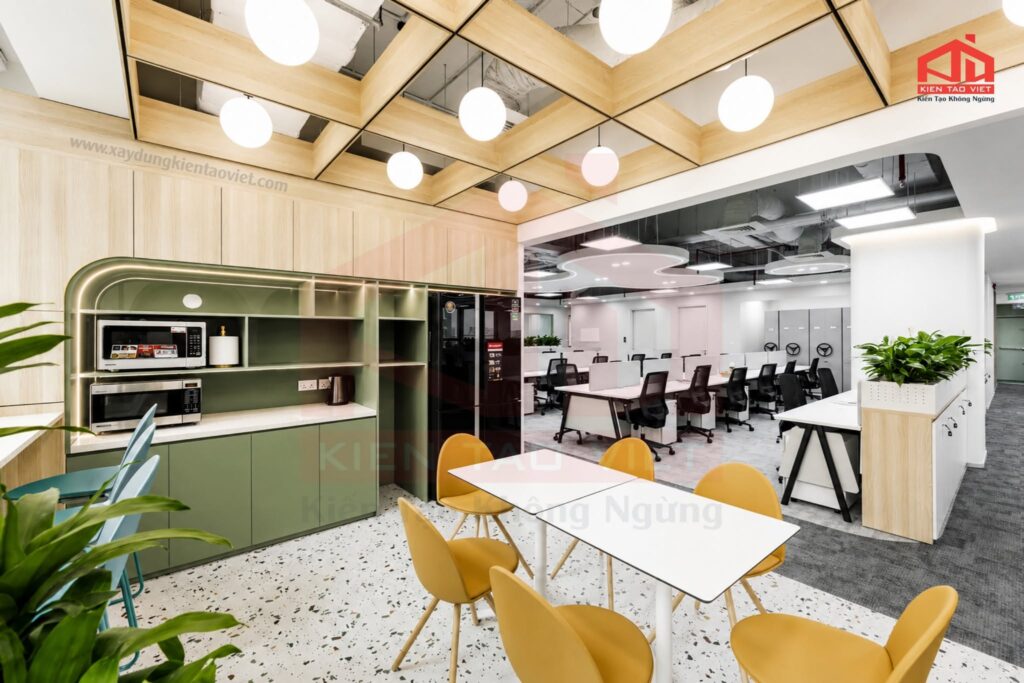
Kien Tao Viet – Professional factory space design and renovation solutions
With extensive experience in mechanical construction, pre-engineered steel buildings, industrial factories, and infrastructure renovation, Kien Tao Viet understands that a modern factory not only needs to meet production requirements but also create an effective and comfortable working environment for employees.
In addition to services such as factory construction, industrial facility renovation, and steel structure installation, Kien Tao Viet also accompanies businesses in optimizing their factory spaces, including functional areas such as pantry areas, employee rest areas, office spaces, and other supporting facilities.
With a professional working process from site surveys, consultation, design planning to construction completion, Kien Tao Viet focuses on providing solutions that meet actual business requirements, ensuring durability, safety, and cost efficiency for every project.
>> Read more: Mondelez Kinh Do Office Renovation Project by Kien Tao Viet
Conclusion
A factory pantry area is a small but valuable facility that brings significant benefits in improving workplace quality, enhancing employee well-being, and creating a professional business image.
A suitable pantry design should ensure convenience, safety, durability, and harmony with the overall factory environment. When properly invested, a factory pantry area not only supports employees’ resting needs but also contributes to improving operational efficiency and strengthening connections within the organization.
If your business is looking for solutions to renovate, design, or optimize factory spaces, contact Kien Tao Viet for professional consultation and suitable solutions based on your project conditions and operational goals.

Blog mới nhất
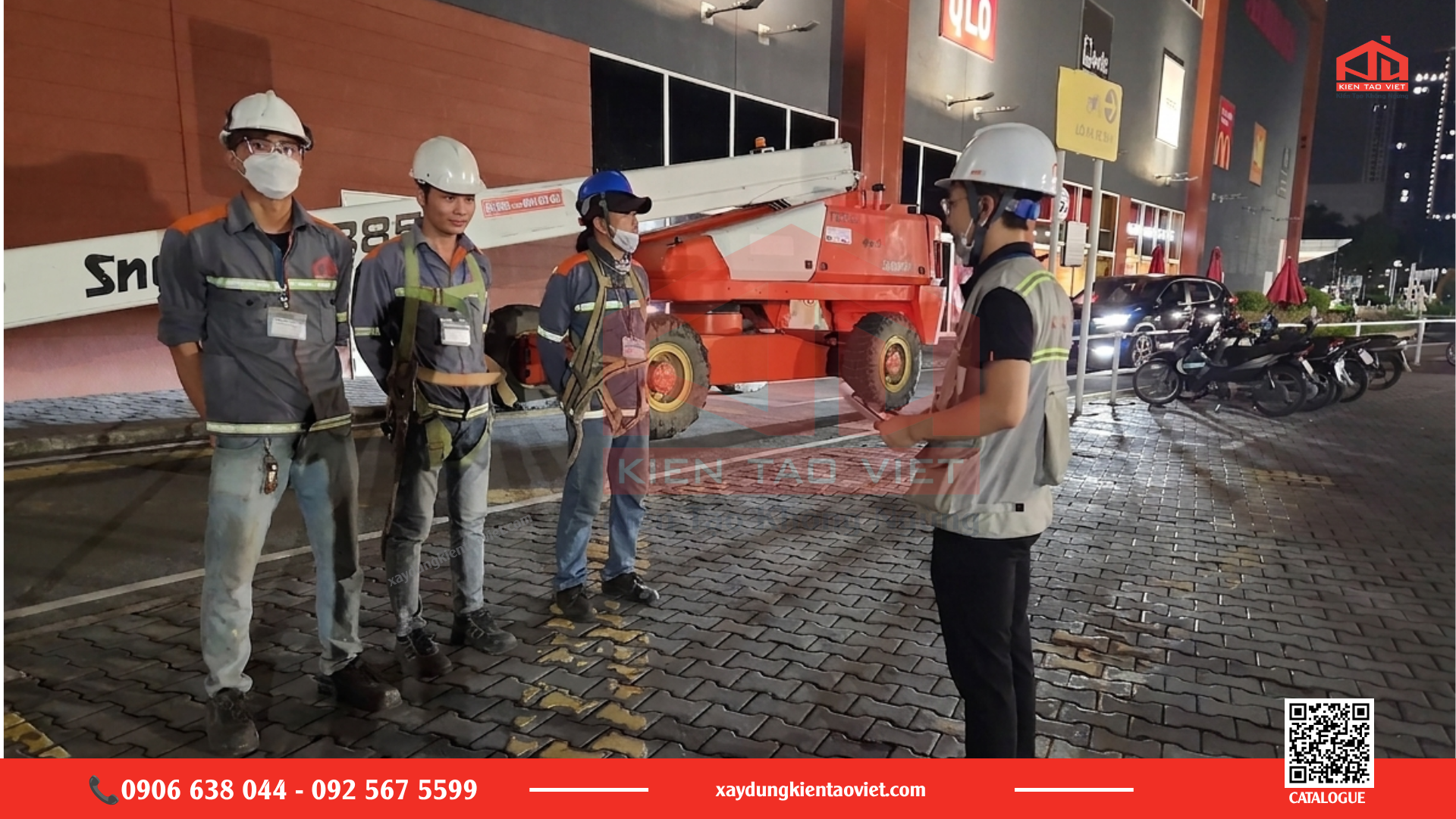
Hồ sơ an toàn nhà thầu: Chuẩn bị gì trước khi thi công tại nhà máy?
Hồ sơ an toàn nhà thầu cần thể hiện công việc sẽ làm, người chịu trách nhiệm, mối nguy đã nhận diện và biện pháp kiểm soát tương ứng. Doanh nghiệp nên xác định yêu cầu hồ sơ theo phạm vi thi công và điều kiện cơ sở, thay vì sử dụng một bộ tài […]
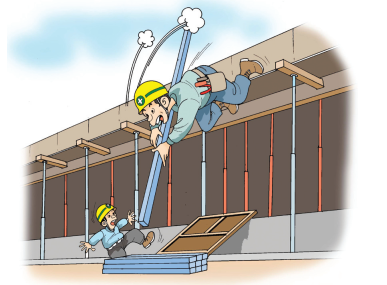
Kế hoạch cải tạo hạ tầng nhà máy theo từng giai đoạn
Kế hoạch cải tạo hạ tầng nhà máy nên xác định rõ hiện trạng, nhu cầu vận hành, mức độ ưu tiên và điều kiện triển khai của từng hạng mục. Doanh nghiệp cần thống nhất phạm vi, ngân sách, lịch phối hợp với sản xuất và tiêu chí bàn giao trước khi huy động […]

Thi công bảng hiệu nhà máy tại TP.HCM | Kiến Tạo Việt
Thi công bảng hiệu nhà máy cần bắt đầu từ vị trí lắp đặt, mục đích nhận diện và điều kiện tiếp cận công trình. Doanh nghiệp nên chốt nội dung, kích thước, vật liệu, phương án chiếu sáng, trách nhiệm lắp đặt và tiêu chí nghiệm thu trước khi gia công. Một thiết kế […]
Chi phí cải tạo văn phòng: Cách lập dự toán và kiểm soát phát sinh
Chi phí cải tạo văn phòng không thể xác định chính xác phân tích chính xác. Doanh nghiệp cần biết hiện trạng mặt bằng, các hạng mục phải làm, vật liệu lựa chọn và điều kiện tổ chức thi công. Một báo giá hữu ích phải thể hiện khối lượng, cung cấp phạm vi, loại […]
Cải Tạo Văn Phòng Tại Củ Chi Trọn Gói
Nhiều nhà máy và kho bãi tại Củ Chi đang gặp tình trạng văn phòng cũ thiếu diện tích, bố trí bất hợp lý, hệ thống kỹ thuật xuống cấp. Cải tạo văn phòng tại Củ Chi giúp doanh nghiệp tận dụng mặt bằng sẵn có, tái cấu trúc công năng, tiết kiệm thời gian […]
An toàn lắp đặt bảng hiệu trên cao: Doanh nghiệp cần phối hợp những gì?
An toàn lắp đặt bảng hiệu trên cao cần được chuẩn bị trước khi huy động đội thi công. Doanh nghiệp và nhà thầu phải làm rõ vị trí, cách tiếp cận, nhân sự, thiết bị, hoạt động bên dưới và điều kiện triển khai. Phương án phải do người có chuyên môn xem xét; […]
-
Vì sao lắp đặt mái che di động trở thành xu hướng những năm gần đây
-
Những điều cần biết về lắp đặt mái che di động 2026
-
Những điều cần biết khi chọn nhà thầu xây dựng nhà thép tiền chế 2026
-
07 Tiêu chí chọn nhà thầu xây dựng – cải tạo nhà xưởng uy tín 2026
-

Cải tạo văn phòng doanh nghiệp 2026: Những điều cần biết