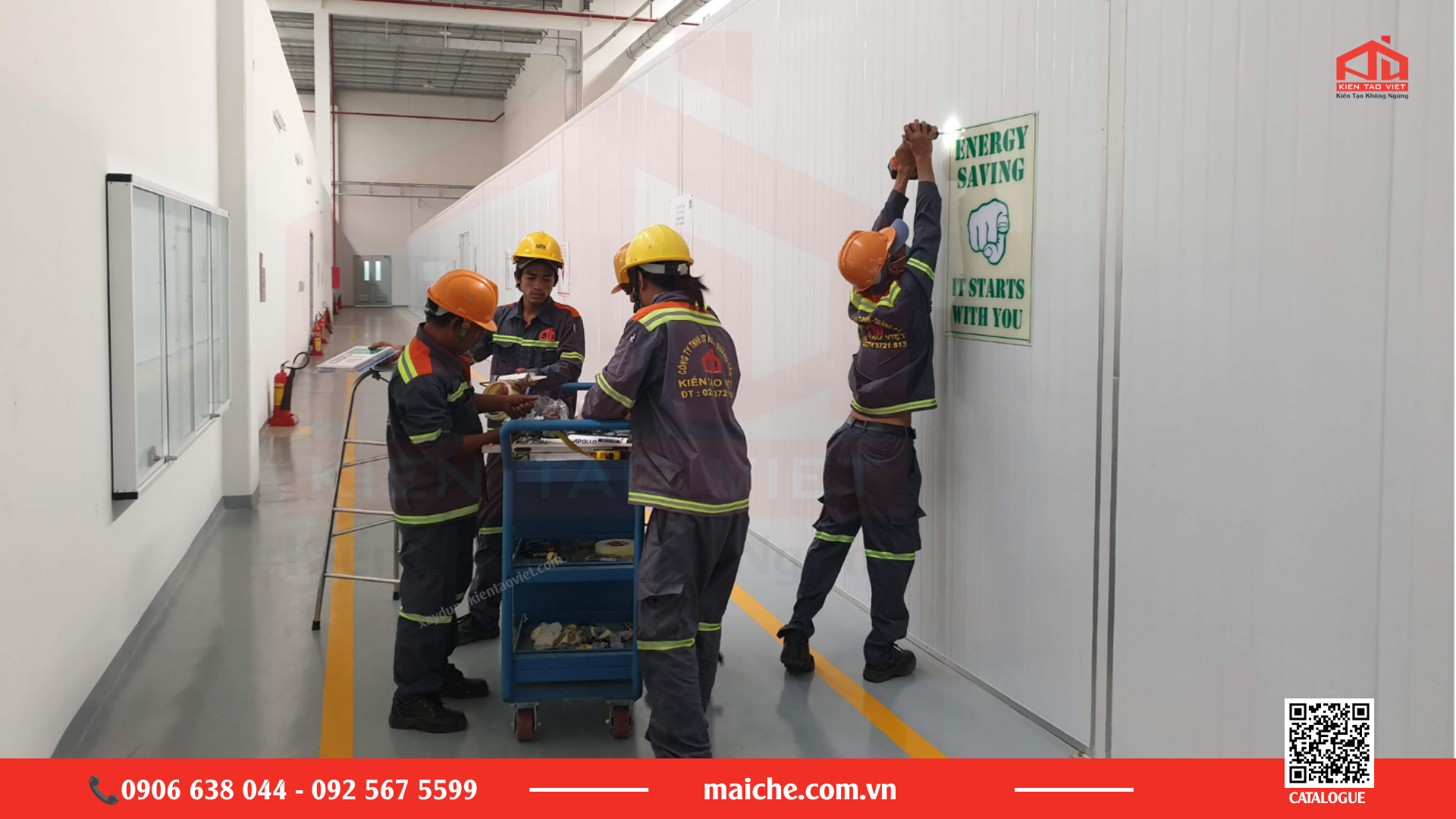
Ho Chi Minh City is home to a large number of factories, warehouses, offices, and construction projects. As production expansion and infrastructure renovation continue, businesses increasingly need effective solutions to control safety risks during construction and daily operations.
In construction and industrial environments, safety signs provide clear visual communication to identify hazards, guide workers, and restrict access to specific areas. When properly positioned and designed for the actual site conditions, safety signage helps businesses communicate safety requirements and organize work areas more effectively.
In particular, infrastructure renovation projects often involve changes to the site layout at different stages. Demolition areas, work-at-height activities, material transportation routes, and equipment installation areas may change throughout the project. Therefore, safety signs should be designed based on the actual site conditions and construction plan.
Kien Tao Viet provides occupational safety signage design in Ho Chi Minh City for factories, warehouses, construction sites, and infrastructure renovation projects based on each client’s practical requirements.
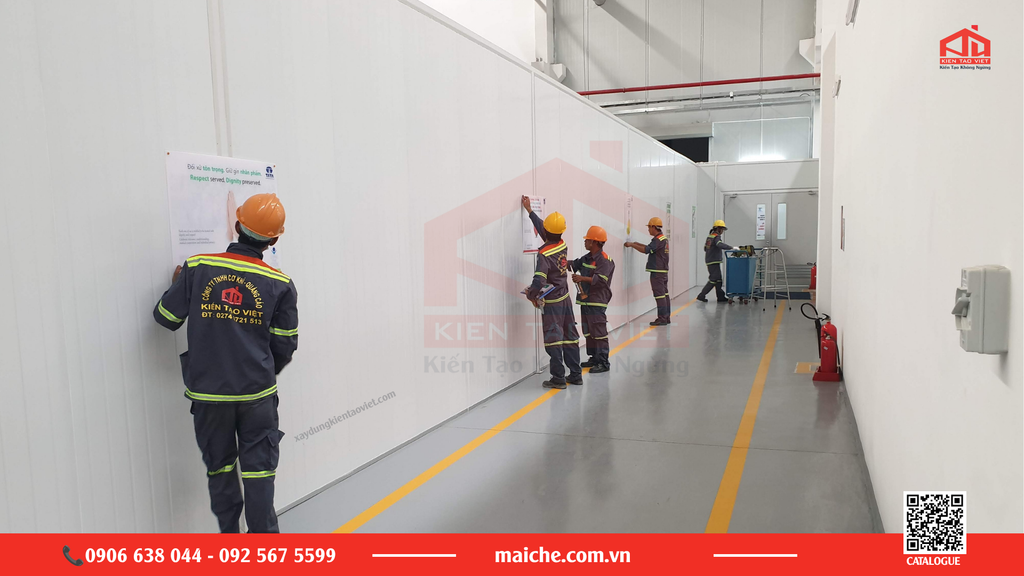
1. The Role of Safety Signs in Construction and Infrastructure Renovation
Occupational safety in construction does not depend solely on personal protective equipment. In addition, businesses need to identify and control potential hazards in the workplace.
Safety Requirements in Construction
Under Vietnam’s occupational safety regulations, hazardous factors are those that may cause injury or death to workers. Therefore, identifying and controlling these hazards is an important part of workplace safety management.
For construction activities, QCVN 18:2021/BXD sets out national technical requirements for safety in construction. The regulation was issued together with Circular No. 16/2021/TT-BXD by the Ministry of Construction.
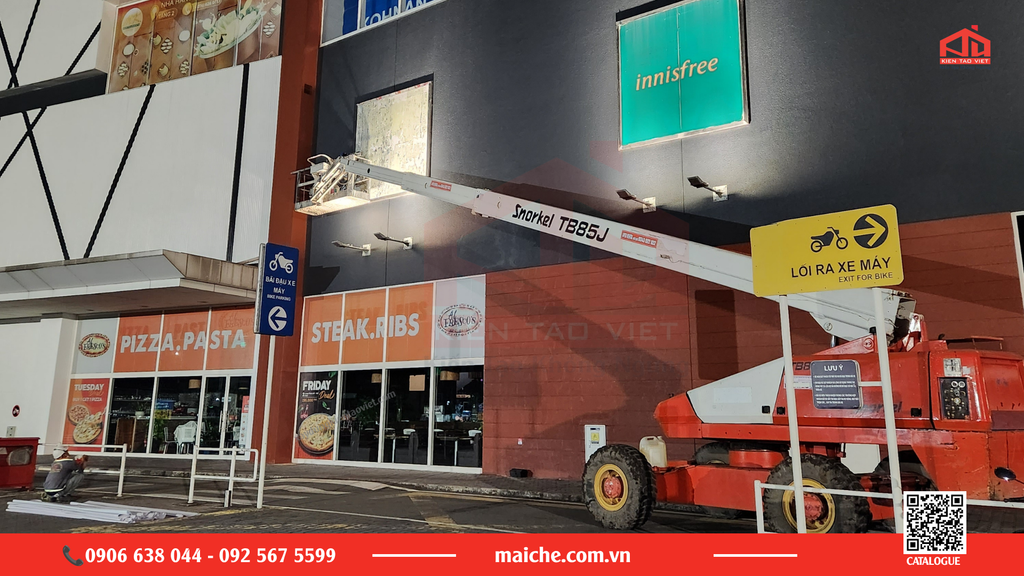
How Safety Signs Support Site Organization
From a construction-site management perspective, safety signs serve several practical purposes:
– Hazard warning: Help workers quickly identify areas with potential safety risks.
– Safety instruction: Remind workers to follow mandatory safety requirements.
– Area identification: Clearly distinguish construction zones from operational areas.
– Traffic guidance: Direct the movement of workers and vehicles within factories and construction sites.
– PPE reminders: Indicate the personal protective equipment required for specific work areas.
– Emergency guidance: Identify emergency exits and the locations of essential safety equipment.
In particular, infrastructure renovation projects may involve frequent changes to the site layout. When machinery, materials, or work areas are relocated, the position of safety signs should also be reviewed and adjusted accordingly.
>>View more: Turnkey Infrastructure Renovation in Tay Ninh 2026 – Kiến Tạo Việt Turnkey Infrastructure Renovation in Tay Ninh 2026
2. Common Types of Occupational Safety Signs
When providing occupational safety signage design in Ho Chi Minh City, the appropriate signage categories should be determined based on the characteristics of each project. Factories, warehouses, and construction sites may involve different types of hazards.
2.1. Hazard Warning Signs

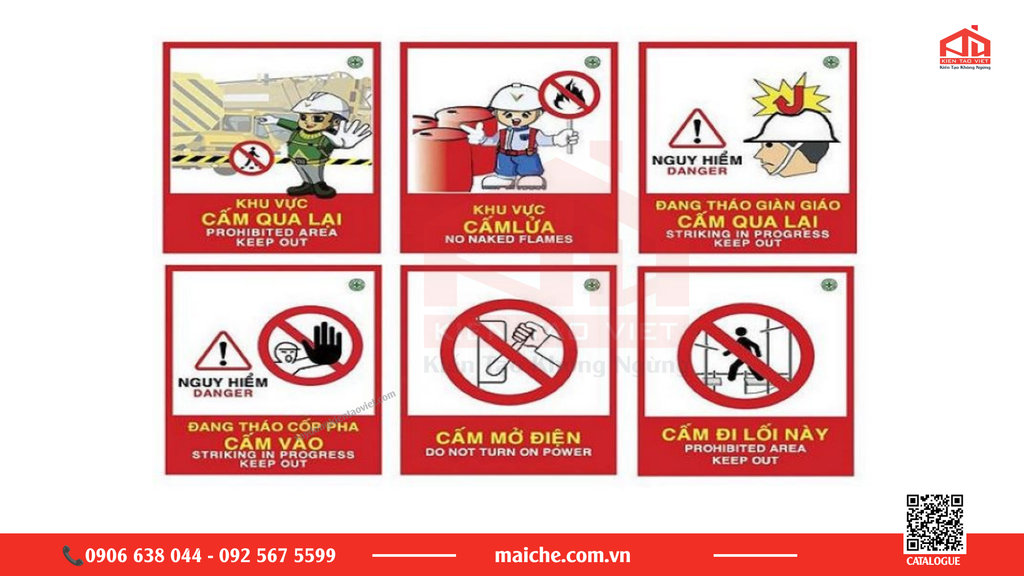
Hazard warning signs are installed in areas where safety risks may occur. For example, these may include work-at-height areas, deep pits, or locations where falling objects may pose a risk.
The wording should be short and easy to understand. At the same time, the sign should clearly communicate the specific hazard that workers need to avoid.
2.2. Prohibition and Restricted-Access Signs
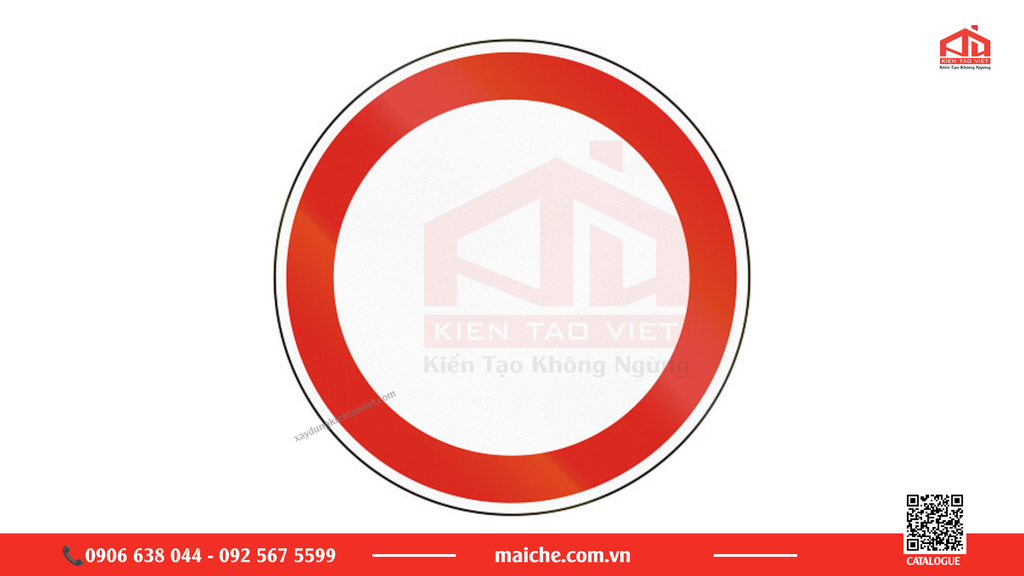
Signs such as “No Entry” or “Authorized Personnel Only” are used in areas where access needs to be controlled.
In particular, these signs are useful in factories undergoing renovation. They help distinguish construction areas from active production areas.
2.3. Mandatory Personal Protective Equipment Signs
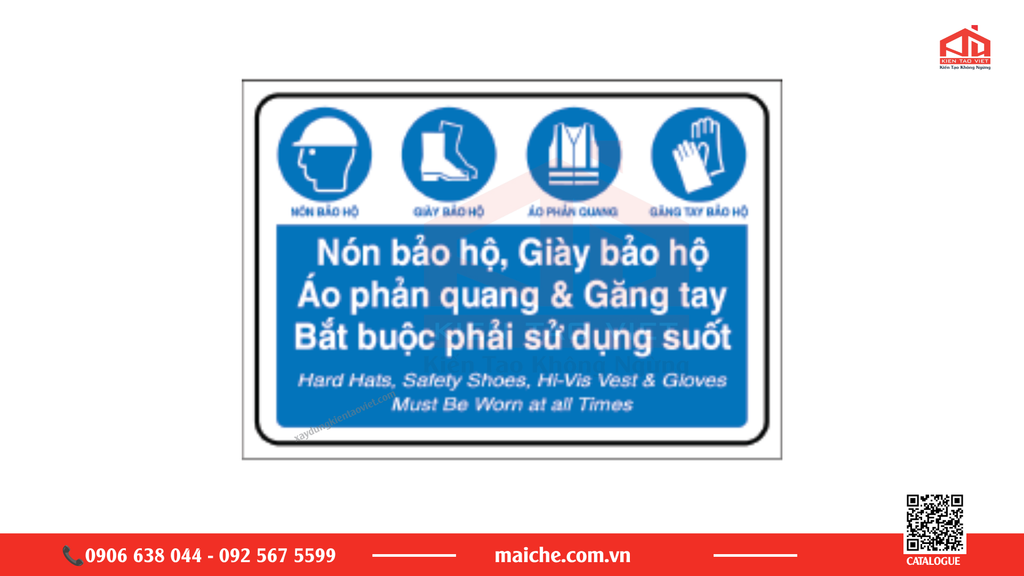
Depending on the nature of the work, businesses may install signs requiring workers to wear helmets, safety glasses, protective footwear, or gloves.
In addition, certain areas may require hearing protection or safety harnesses. The signage should reflect the safety requirements applicable to each specific work area.
2.4. Safety Direction and Information Signs
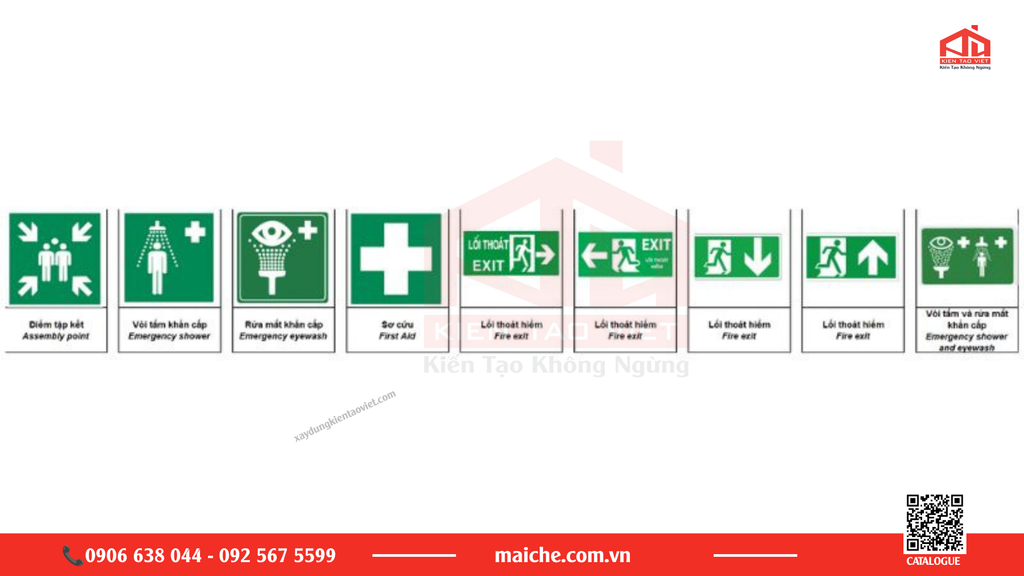
These signs help workers identify walkways, emergency exits, fire-fighting equipment, assembly points, first-aid areas, and other functional zones.
In large factories and warehouses, a well-organized directional signage system makes it easier for workers and visitors to identify routes and locate specific areas.
2.5. Site Rules and Safety Information Boards
In addition to individual warning signs, construction sites may use safety rules boards, safety instruction boards, site layout plans, emergency evacuation maps, and other information boards.
The size and layout should be selected based on the installation location, viewing distance, and amount of information that needs to be displayed.
3. Requirements for Safety Signage Design in Factories and Construction Sites
An effective safety signage system should be clear and easy to see. In addition, the materials should be selected according to the environment in which the signs will be used.
3.1. Keep the Content Short and Easy to Understand
First, each sign should focus on one specific hazard or safety requirement. At the same time, clear visual symbols can help viewers understand the information more quickly.
3.2. Choose the Right Size for the Viewing Distance
Each installation location has different viewing conditions. Therefore, the sign size should be appropriate for the viewing distance and available space.
3.3. Select Materials Suitable for the Environment
Outdoor signs should withstand sunlight and rain. Meanwhile, signs installed inside factories should be suitable for exposure to dust, humidity, and mechanical impact.
Depending on the project requirements, signs can be manufactured from galvanized steel, stainless steel, mica, aluminum composite panels (Alu), or aluminum. Reflective decals may also be used in certain applications.
3.4. Install Signs Without Obstructing Visibility
Finally, signs should be installed in clearly visible locations. In particular, machinery, materials, or vegetation should not block the sign content.
For renovation projects, the site layout often changes as construction progresses. Therefore, sign positions should be inspected and adjusted whenever necessary.
4. Integrating Safety Signage Design with Infrastructure Renovation
For factory or production facility renovation projects, the safety signage system should be considered from the site survey and construction planning stage.
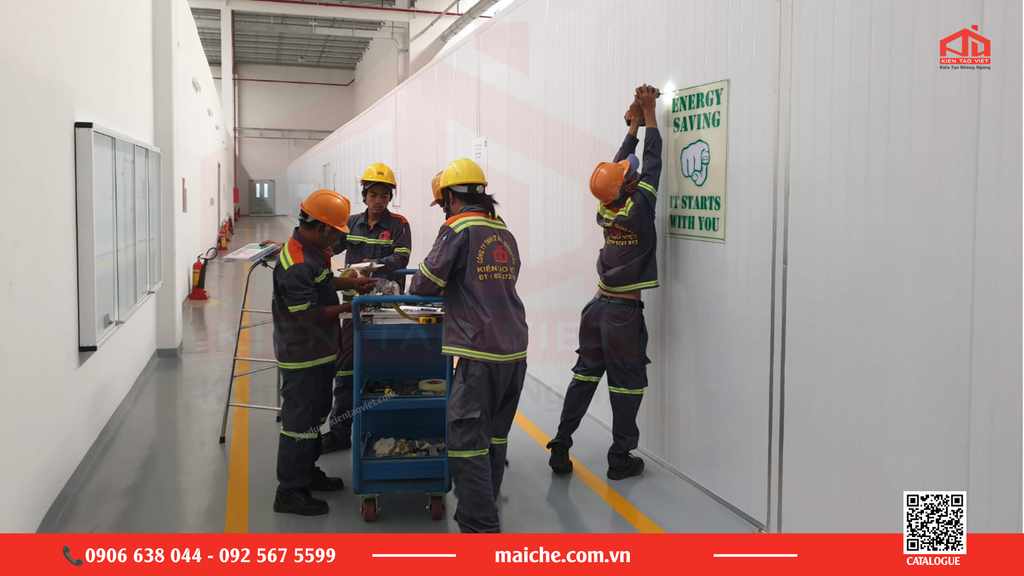
For example:
– Factory floor renovation: Construction areas may need to be separated from material transportation routes, with temporary directional signs installed where necessary.
– Electrical system repairs: Work areas should display appropriate warning signs and implement access controls for unauthorized personnel.
– Demolition or work at height: Areas below the work zone should be controlled using barriers, warning signs, and other protective measures appropriate to the construction plan.
– Machinery and equipment installation: Warning signs, restricted-access signs, and safety instructions may be required around operating areas.
Therefore, occupational safety signage design in Ho Chi Minh City can be implemented alongside infrastructure renovation work. This approach makes safety signage part of the overall site organization and safety control plan rather than an additional item installed after construction is completed.
>> Refer to: Infrastructure Renovation in Thu Duc | Kien Tao Viet – Kiến Tạo Việt
5. Safety Signage Design and Installation Process at Kien Tao Viet
Kien Tao Viet follows a practical five-step process from site assessment to installation and final handover.
01 – SITE SURVEY & REQUIREMENT ASSESSMENT
– Survey the existing site conditions.
– Identify areas requiring safety signage.
– Check walkways and internal traffic routes.
– Identify locations with potential safety risks.
– Record the required types and quantities of signs.
Reference time: 1 day
02 – DESIGN & SOLUTION DEVELOPMENT
– Classify the required signage categories.
– Develop warning messages and visual symbols.
– Determine dimensions and layout.
– Select suitable materials.
– Determine the frame, base, and installation method.
Reference time: 1-3 days
03 – DESIGN APPROVAL & PRODUCTION
– Confirm the final content and design.
– Agree on quantities and dimensions.
– Confirm materials and fabrication methods.
– Provide a quotation and finalize the scope of work.
– Begin production according to the approved design.
Reference time: 1-2 days
04 – FABRICATION & INSTALLATION
– Cut and fabricate sign panels.
– Print or apply the approved sign content.
– Fabricate frames, bases, and accessories.
– Inspect products before transportation.
– Transport and install the signs at the project site.
Time required: Depends on project size and quantity
05 – INSPECTION & HANDOVER
– Check the quantity and content of all signs.
– Inspect installation positions and structural stability.
– Check visibility from relevant viewing areas.
– Clean and complete the installation area.
– Conduct final acceptance and handover.
Kien Tao Viet – Safety Signage Solutions for Factories and Construction Projects
Every project has different site conditions, scales, and operational requirements. Therefore, safety signage should be developed according to the actual needs of each project rather than applying the same design to every site.
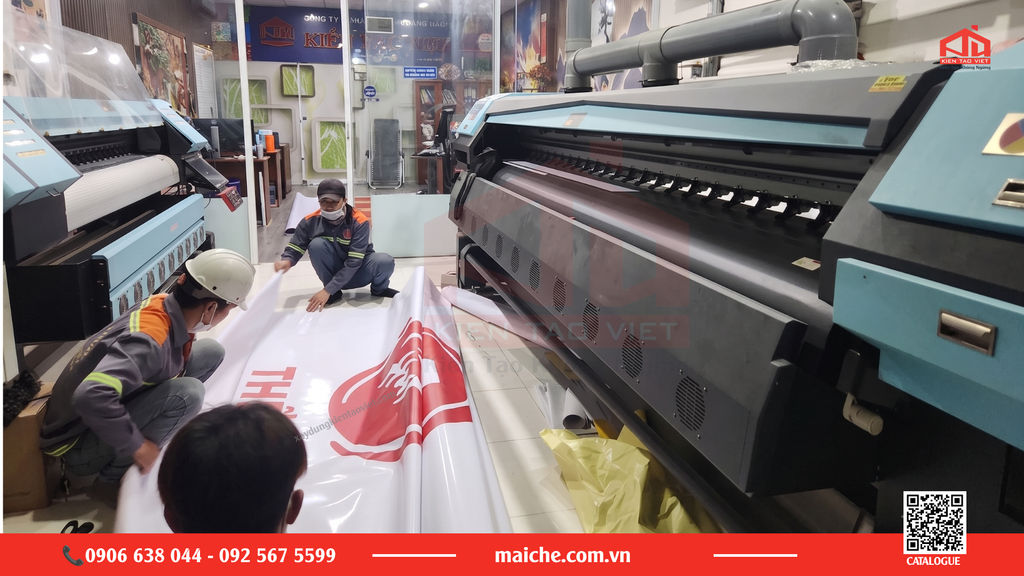
Kien Tao Viet Mechanical Construction Co., Ltd. provides an integrated service covering site surveys, signage consultation, design, fabrication, and installation.
For projects that combine construction or infrastructure renovation, coordinating safety signage with the overall site organization plan can make project implementation and site management more convenient.
Customers can provide a site layout, current-condition photos, or a list of areas requiring warnings. Based on this information, Kien Tao Viet can recommend suitable signage categories, dimensions, materials, and installation methods.
Contact Kien Tao Viet for Occupational Safety Signage Design in Ho Chi Minh City
A properly designed safety signage system helps businesses communicate safety information clearly, define work areas, and organize construction and production sites more effectively.
If you are looking for a professional occupational safety signage design company in Ho Chi Minh City for a factory, warehouse, construction site, or infrastructure renovation project, Kien Tao Viet can review your project information and provide recommendations for signage categories, dimensions, materials, and installation methods.
Kien Tao Viet Mechanical Construction Co., Ltd.
Consulting – Design – Fabrication – Installation of safety signs and mechanical construction works according to project requirements.

Blog mới nhất
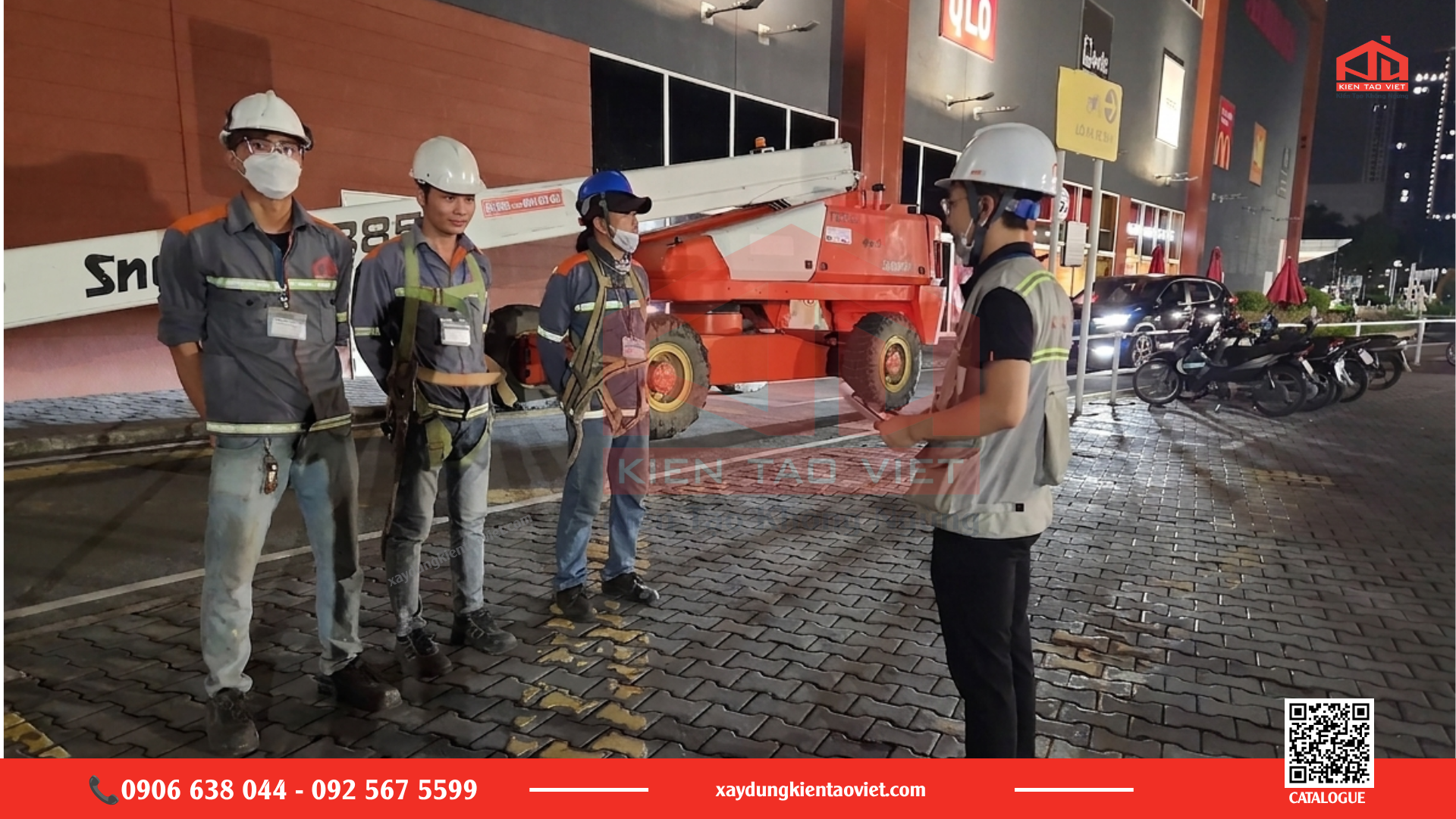
Hồ sơ an toàn nhà thầu: Chuẩn bị gì trước khi thi công tại nhà máy?
Hồ sơ an toàn nhà thầu cần thể hiện công việc sẽ làm, người chịu trách nhiệm, mối nguy đã nhận diện và biện pháp kiểm soát tương ứng. Doanh nghiệp nên xác định yêu cầu hồ sơ theo phạm vi thi công và điều kiện cơ sở, thay vì sử dụng một bộ tài […]
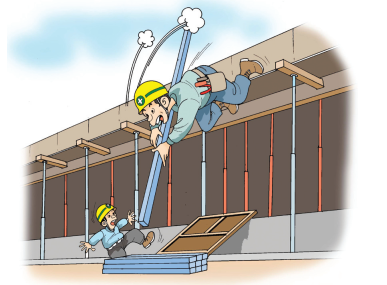
Kế hoạch cải tạo hạ tầng nhà máy theo từng giai đoạn
Kế hoạch cải tạo hạ tầng nhà máy nên xác định rõ hiện trạng, nhu cầu vận hành, mức độ ưu tiên và điều kiện triển khai của từng hạng mục. Doanh nghiệp cần thống nhất phạm vi, ngân sách, lịch phối hợp với sản xuất và tiêu chí bàn giao trước khi huy động […]

Thi công bảng hiệu nhà máy tại TP.HCM | Kiến Tạo Việt
Thi công bảng hiệu nhà máy cần bắt đầu từ vị trí lắp đặt, mục đích nhận diện và điều kiện tiếp cận công trình. Doanh nghiệp nên chốt nội dung, kích thước, vật liệu, phương án chiếu sáng, trách nhiệm lắp đặt và tiêu chí nghiệm thu trước khi gia công. Một thiết kế […]

Chi phí cải tạo văn phòng: Cách lập dự toán và kiểm soát phát sinh
Chi phí cải tạo văn phòng không thể xác định chính xác phân tích chính xác. Doanh nghiệp cần biết hiện trạng mặt bằng, các hạng mục phải làm, vật liệu lựa chọn và điều kiện tổ chức thi công. Một báo giá hữu ích phải thể hiện khối lượng, cung cấp phạm vi, loại […]
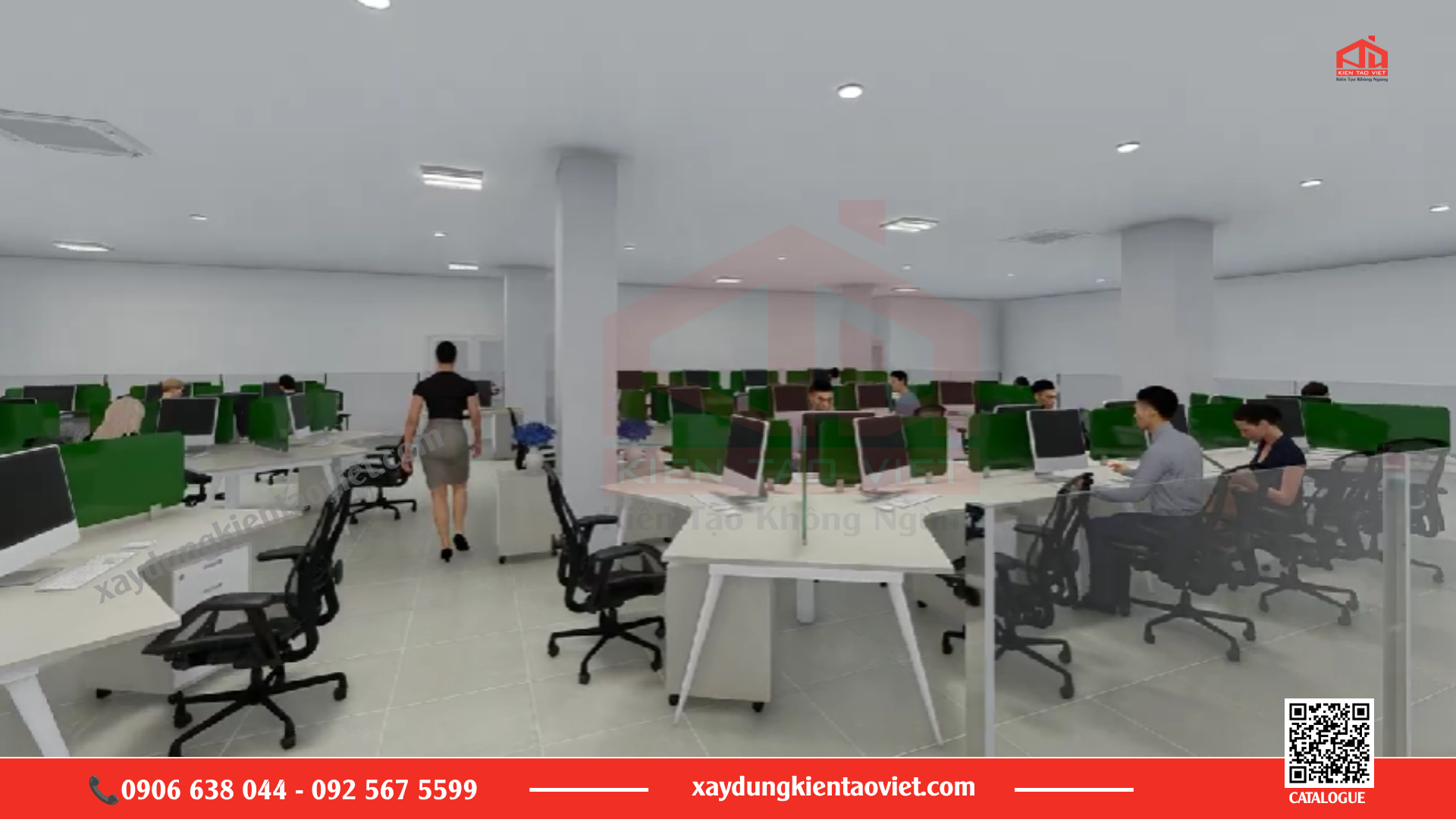
Cải Tạo Văn Phòng Tại Củ Chi Trọn Gói
Nhiều nhà máy và kho bãi tại Củ Chi đang gặp tình trạng văn phòng cũ thiếu diện tích, bố trí bất hợp lý, hệ thống kỹ thuật xuống cấp. Cải tạo văn phòng tại Củ Chi giúp doanh nghiệp tận dụng mặt bằng sẵn có, tái cấu trúc công năng, tiết kiệm thời gian […]
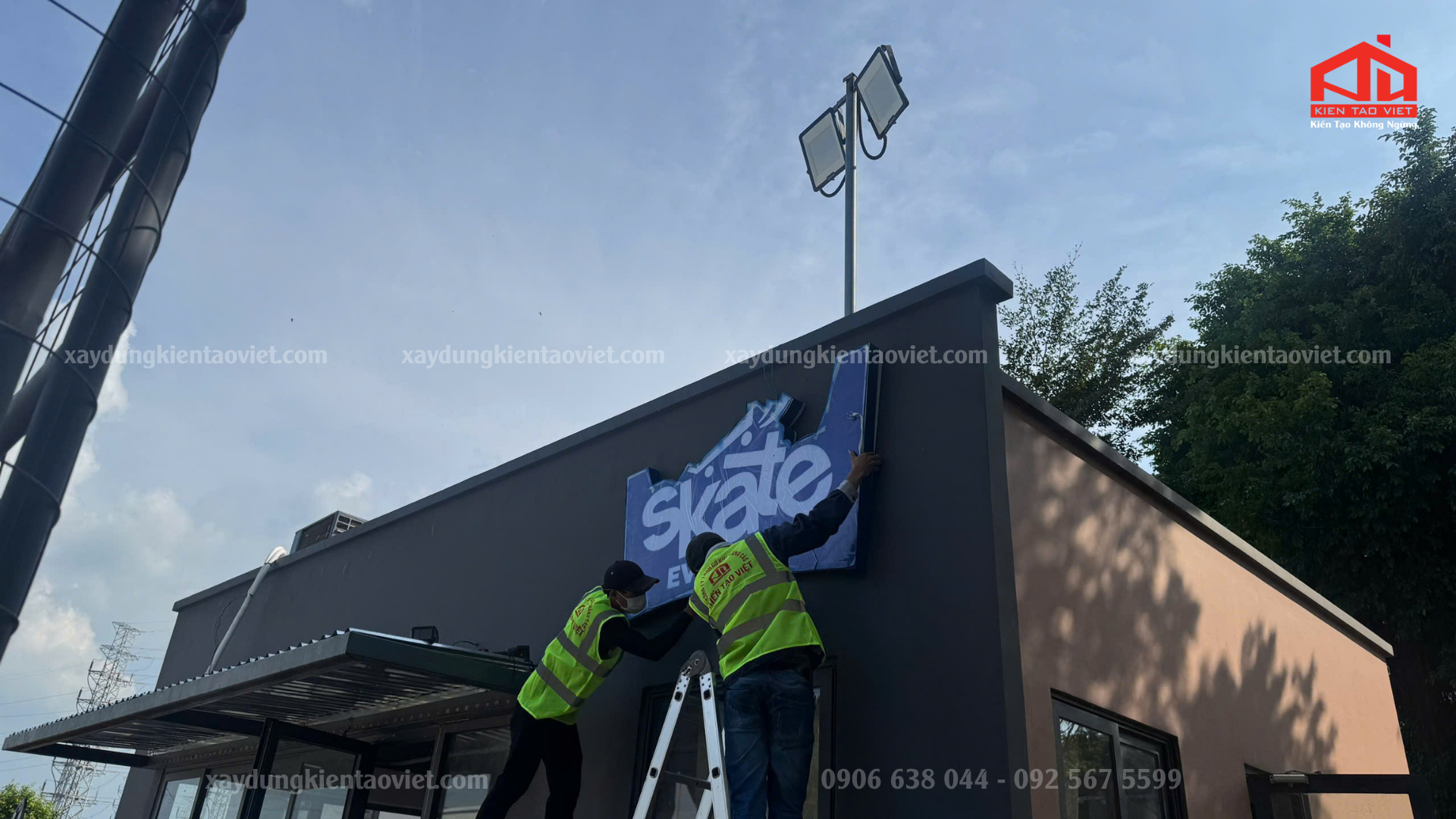
An toàn lắp đặt bảng hiệu trên cao: Doanh nghiệp cần phối hợp những gì?
An toàn lắp đặt bảng hiệu trên cao cần được chuẩn bị trước khi huy động đội thi công. Doanh nghiệp và nhà thầu phải làm rõ vị trí, cách tiếp cận, nhân sự, thiết bị, hoạt động bên dưới và điều kiện triển khai. Phương án phải do người có chuyên môn xem xét; […]
-
Vì sao lắp đặt mái che di động trở thành xu hướng những năm gần đây
-
Những điều cần biết về lắp đặt mái che di động 2026
-
Những điều cần biết khi chọn nhà thầu xây dựng nhà thép tiền chế 2026
-

07 Tiêu chí chọn nhà thầu xây dựng – cải tạo nhà xưởng uy tín 2026
-

Cải tạo văn phòng doanh nghiệp 2026: Những điều cần biết