Category: Cải tạo nhà xưởng
Cải tạo nhà xưởng là giải pháp giúp doanh nghiệp nâng cao hiệu quả sản xuất, đảm bảo an toàn lao động và kéo dài tuổi thọ công trình. Nếu nhà xưởng xuất hiện dấu hiệu xuống cấp hoặc không còn đáp ứng nhu cầu vận hành, việc cải tạo kịp thời sẽ giúp doanh nghiệp tiết kiệm chi phí và duy trì hoạt động ổn định.
Khi nào doanh nghiệp nên cải tạo nhà xưởng?
Sau một thời gian đưa vào sử dụng, nhà xưởng sẽ chịu tác động của thời tiết, tải trọng sản xuất và cường độ vận hành liên tục. Điều này khiến nhiều hạng mục dần xuống cấp hoặc không còn đáp ứng yêu cầu sản xuất hiện tại.
Thay vì chờ đến khi công trình hư hỏng nghiêm trọng mới sửa chữa, doanh nghiệp nên chủ động đánh giá hiện trạng và thực hiện cải tạo nhà xưởng ngay khi xuất hiện những dấu hiệu bất thường. Việc cải tạo đúng thời điểm không chỉ giúp kéo dài tuổi thọ công trình mà còn hạn chế gián đoạn sản xuất, đảm bảo an toàn cho người lao động và tối ưu chi phí đầu tư trong dài hạn.
Đối với các doanh nghiệp đang mở rộng quy mô hoặc thay đổi dây chuyền sản xuất, cải tạo nhà xưởng cũng là giải pháp hiệu quả để nâng cấp không gian mà không cần đầu tư xây dựng mới hoàn toàn.
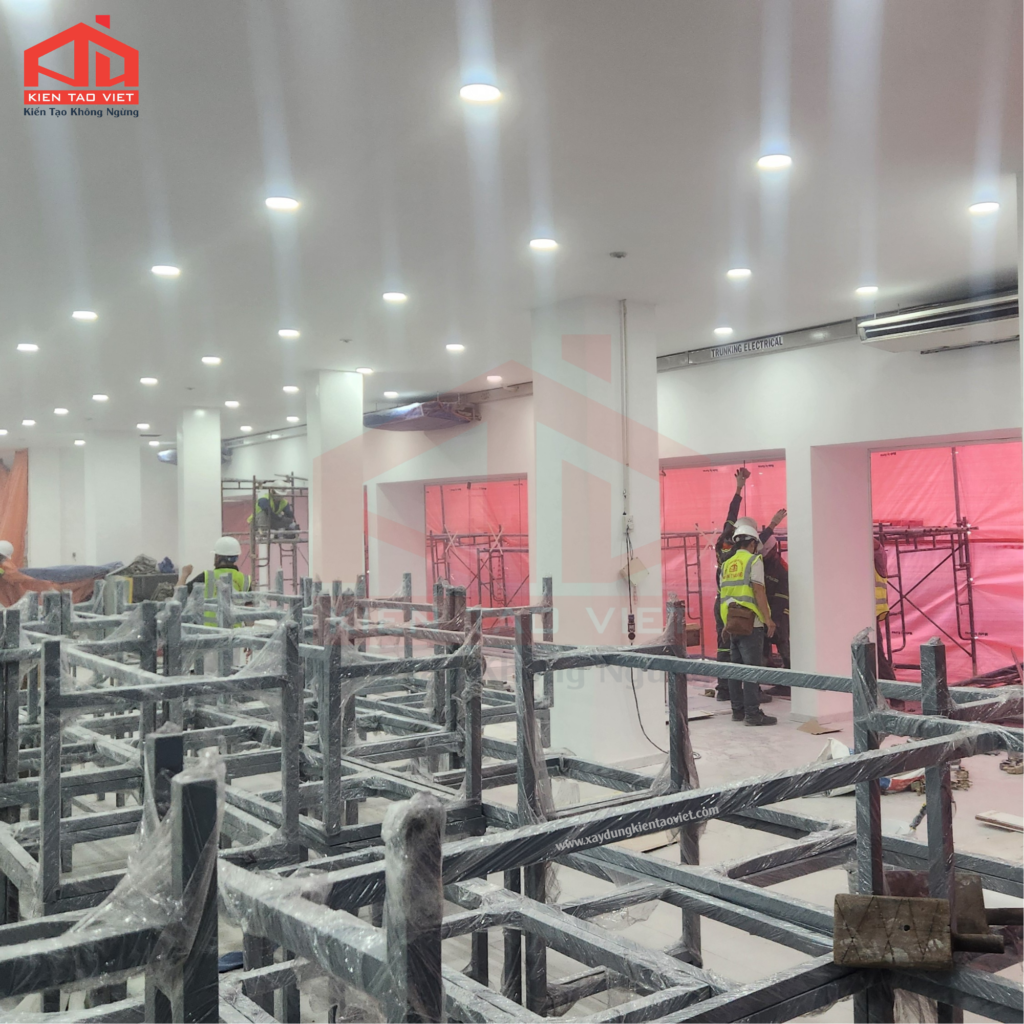
Lợi ích khi cải tạo nhà xưởng đúng thời điểm
Nhiều doanh nghiệp thường chỉ nghĩ đến việc cải tạo khi công trình đã xuống cấp nghiêm trọng. Tuy nhiên, việc chủ động nâng cấp nhà xưởng từ sớm mang lại nhiều lợi ích thiết thực cả về vận hành, chi phí và hiệu quả sản xuất.
Đảm bảo môi trường làm việc an toàn
Những hạng mục như mái, sàn, kết cấu thép, hệ thống điện hoặc hệ thống thông gió nếu xuống cấp đều có thể tiềm ẩn nguy cơ mất an toàn. Việc cải tạo kịp thời giúp giảm thiểu rủi ro, tạo môi trường làm việc ổn định và bảo vệ sức khỏe người lao động.
Nâng cao hiệu quả sản xuất
Một nhà xưởng được bố trí hợp lý sẽ giúp tối ưu luồng di chuyển của nguyên vật liệu, máy móc và nhân sự. Điều này góp phần rút ngắn thời gian vận hành, tăng năng suất và giảm các chi phí phát sinh trong quá trình sản xuất.
Tiết kiệm chi phí vận hành
Các hệ thống điện, chiếu sáng, thông gió hoặc mái che cũ thường tiêu tốn nhiều năng lượng và chi phí bảo trì. Sau khi cải tạo, doanh nghiệp có thể tối ưu mức tiêu thụ điện năng, giảm chi phí sửa chữa và nâng cao hiệu quả sử dụng công trình.
Gia tăng giá trị và tuổi thọ công trình
Việc bảo trì và cải tạo định kỳ giúp hạn chế tình trạng xuống cấp của nhà xưởng, đồng thời kéo dài tuổi thọ sử dụng của các hạng mục quan trọng. Đây cũng là giải pháp giúp doanh nghiệp tránh những khoản đầu tư lớn cho việc xây dựng mới trong tương lai.
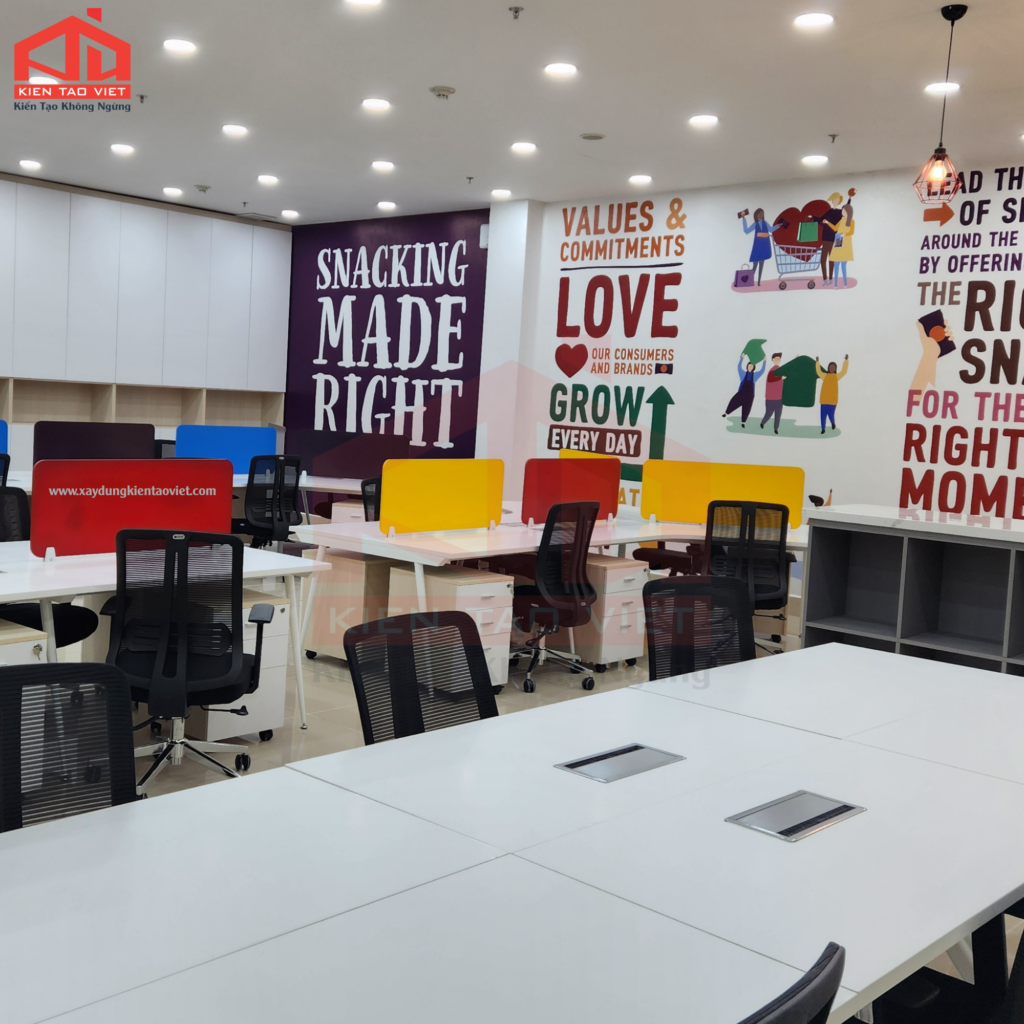
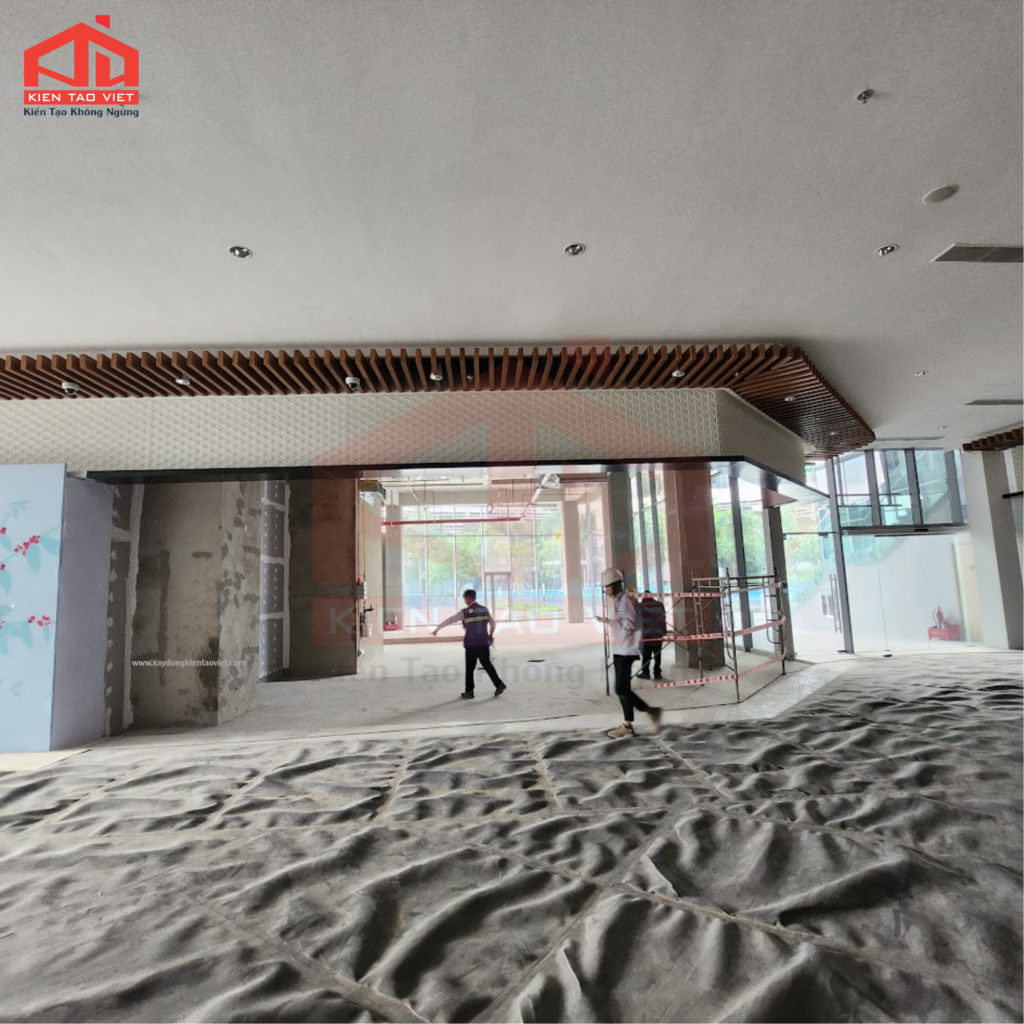
>> Xem thêm: Dự án cải tạo văn phòng làm việc cho Công ty cổ phần Mondelez Kinh Đô của Kiến Tạo Việt
5 Dấu hiệu cho thấy doanh nghiệp cần cải tạo nhà xưởng ngay
1. Kết cấu nhà xưởng xuất hiện dấu hiệu xuống cấp
Một trong những dấu hiệu dễ nhận biết nhất là mái nhà bị dột, tường xuất hiện vết nứt, sàn bê tông bong tróc hoặc kết cấu thép có hiện tượng gỉ sét. Nếu không được xử lý kịp thời, các hư hỏng này có thể ảnh hưởng đến khả năng chịu lực của công trình và làm tăng nguy cơ mất an toàn trong quá trình sản xuất.
Ngoài ra, nước mưa thấm qua mái hoặc tường còn có thể làm hư hỏng máy móc, nguyên vật liệu và thành phẩm, gây thiệt hại đáng kể cho doanh nghiệp.
Doanh nghiệp nên làm gì?
– Kiểm tra định kỳ toàn bộ kết cấu công trình.
– Khắc phục sớm các hư hỏng nhỏ để tránh phát sinh chi phí lớn.
– Lập kế hoạch cải tạo đối với những hạng mục đã xuống cấp sau nhiều năm sử dụng.
2. Không gian sản xuất không còn phù hợp với nhu cầu hiện tại
Khi doanh nghiệp mở rộng quy mô hoặc đầu tư thêm dây chuyền sản xuất, bố trí ban đầu của nhà xưởng có thể không còn đáp ứng nhu cầu vận hành. Lối đi quá hẹp, khu vực lưu trữ thiếu diện tích hoặc mặt bằng được sắp xếp thiếu khoa học đều làm giảm hiệu quả sản xuất.
Bên cạnh đó, việc bố trí không hợp lý còn ảnh hưởng đến quá trình vận chuyển nguyên vật liệu, tăng thời gian thao tác và làm phát sinh nhiều chi phí không cần thiết.
Thực hiện cải tạo nhà xưởng trong giai đoạn này sẽ giúp doanh nghiệp tối ưu không gian, cải thiện quy trình vận hành và tạo điều kiện thuận lợi cho việc mở rộng trong tương lai.
Doanh nghiệp nên làm gì?
– Đánh giá lại mặt bằng sản xuất.
– Sắp xếp lại dây chuyền và khu vực lưu trữ.
– Tận dụng tối đa diện tích hiện có trước khi mở rộng nhà xưởng.
3. Hệ thống điện, thông gió và chiếu sáng không còn đáp ứng nhu cầu
Sau nhiều năm sử dụng, các hệ thống kỹ thuật trong nhà xưởng có thể dần xuống cấp hoặc không còn phù hợp với quy mô sản xuất hiện tại. Tình trạng điện quá tải, hệ thống thông gió hoạt động kém hay ánh sáng không đảm bảo không chỉ ảnh hưởng đến năng suất mà còn làm tăng nguy cơ mất an toàn trong quá trình vận hành.
Đặc biệt, khi doanh nghiệp đầu tư thêm máy móc hoặc mở rộng dây chuyền sản xuất nhưng không nâng cấp hệ thống kỹ thuật, nguy cơ xảy ra sự cố sẽ cao hơn và chi phí vận hành cũng tăng đáng kể.
Việc cải tạo nhà xưởng kết hợp nâng cấp hệ thống điện, thông gió và chiếu sáng sẽ giúp doanh nghiệp xây dựng môi trường làm việc an toàn, tiết kiệm năng lượng và đáp ứng tốt hơn nhu cầu sản xuất.
Doanh nghiệp nên làm gì?
– Kiểm tra công suất của hệ thống điện.
– Nâng cấp hệ thống thông gió và làm mát khi cần.
– Thay thế hệ thống chiếu sáng cũ bằng các giải pháp tiết kiệm năng lượng.
– Bố trí ánh sáng phù hợp với từng khu vực sản xuất.
4. Nhà xưởng không còn đáp ứng yêu cầu về an toàn và môi trường
Các quy định về an toàn lao động và bảo vệ môi trường ngày càng được siết chặt. Nếu nhà xưởng chưa được đầu tư đúng mức về hệ thống thông gió, phòng cháy chữa cháy, lối thoát hiểm hoặc các giải pháp kiểm soát bụi và tiếng ồn, doanh nghiệp có thể gặp nhiều khó khăn trong quá trình vận hành.
Bên cạnh việc đáp ứng yêu cầu pháp lý, một môi trường làm việc an toàn còn giúp người lao động yên tâm làm việc, giảm nguy cơ tai nạn và nâng cao hiệu quả sản xuất.
Đây cũng là một trong những lý do nhiều doanh nghiệp lựa chọn cải tạo nhà xưởng thay vì tiếp tục sử dụng công trình đã xuống cấp hoặc không còn phù hợp với tiêu chuẩn hiện hành.
Doanh nghiệp nên làm gì?
– Kiểm tra hệ thống phòng cháy chữa cháy.
– Đánh giá lại lối thoát hiểm và biển báo an toàn.
– Cải thiện hệ thống thông gió và xử lý bụi.
– Bổ sung các hạng mục đáp ứng quy định về môi trường.
5. Chi phí vận hành và bảo trì ngày càng tăng
Nếu doanh nghiệp phải thường xuyên sửa chữa mái nhà, hệ thống điện hoặc các hạng mục kết cấu, đây có thể là dấu hiệu cho thấy nhà xưởng cần được cải tạo tổng thể.
Việc liên tục khắc phục các hư hỏng nhỏ không chỉ làm tăng chi phí bảo trì mà còn ảnh hưởng đến tiến độ sản xuất. Trong nhiều trường hợp, chi phí sửa chữa kéo dài còn cao hơn so với việc đầu tư cải tạo ngay từ đầu.
Ngoài ra, các công trình cũ thường tiêu tốn nhiều điện năng hơn do hệ thống chiếu sáng, thông gió và thiết bị vận hành không còn đạt hiệu quả như ban đầu.
Chủ động cải tạo nhà xưởng sẽ giúp doanh nghiệp tối ưu chi phí vận hành, giảm các khoản sửa chữa phát sinh và nâng cao hiệu quả đầu tư trong dài hạn.
Doanh nghiệp nên làm gì?
– Theo dõi chi phí bảo trì định kỳ.
– Đánh giá hiệu suất của các hệ thống kỹ thuật.
– Lập kế hoạch cải tạo tổng thể thay vì sửa chữa nhiều lần.
– Ưu tiên thay thế các hạng mục đã xuống cấp nghiêm trọng.
>> Xem thêm: 7 Giải Pháp Tiết Kiệm Chi Phí Khi Cải Tạo Văn Phòng
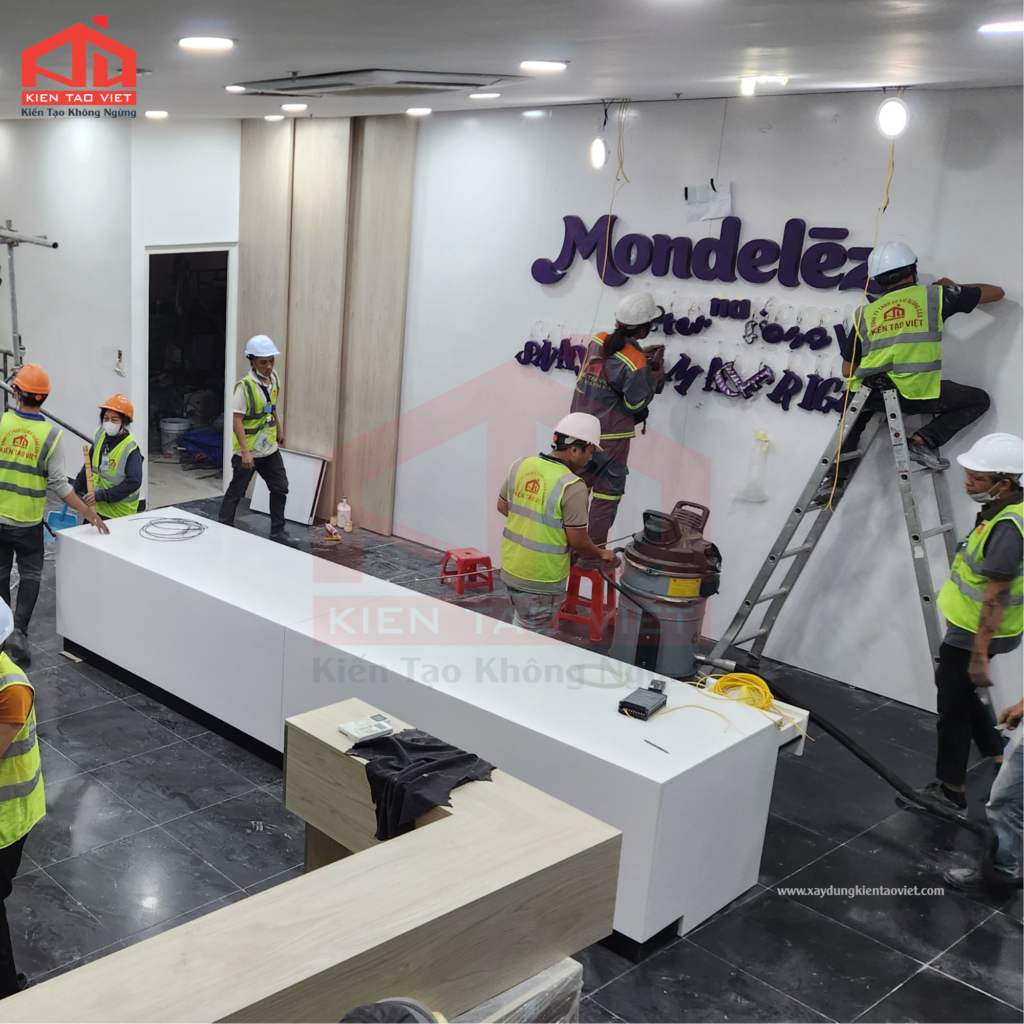
Những hạng mục thường được ưu tiên khi cải tạo nhà xưởng
Tùy vào hiện trạng công trình và mục tiêu sử dụng, mỗi doanh nghiệp sẽ có phương án cải tạo khác nhau. Tuy nhiên, một số hạng mục dưới đây thường được ưu tiên để nâng cao hiệu quả vận hành và kéo dài tuổi thọ công trình.
Mái và vách nhà xưởng
Đây là khu vực chịu tác động trực tiếp của thời tiết. Việc thay thế hoặc gia cố mái và vách giúp hạn chế tình trạng dột nước, thấm nóng và bảo vệ máy móc, hàng hóa bên trong.
Sàn nhà xưởng
Sàn xuống cấp có thể ảnh hưởng đến quá trình di chuyển của xe nâng, máy móc và người lao động. Cải tạo sàn giúp tăng khả năng chịu tải, đảm bảo an toàn và nâng cao hiệu quả sản xuất.
Hệ thống điện và chiếu sáng
Nâng cấp hệ thống điện giúp đáp ứng nhu cầu sử dụng của các dây chuyền sản xuất mới, đồng thời giảm nguy cơ quá tải và tiết kiệm chi phí điện năng.
Hệ thống thông gió và làm mát
Không gian thông thoáng sẽ giúp cải thiện điều kiện làm việc, giảm nhiệt độ trong nhà xưởng và nâng cao sức khỏe của người lao động.
Khu vực văn phòng và tiện ích
Nhiều doanh nghiệp cũng lựa chọn cải tạo văn phòng, khu vực nghỉ ngơi, nhà vệ sinh hoặc khu vực tiếp khách để tạo môi trường làm việc chuyên nghiệp và thuận tiện hơn.
Những lưu ý trước khi cải tạo nhà xưởng
Để quá trình cải tạo nhà xưởng diễn ra hiệu quả, doanh nghiệp cần chuẩn bị kỹ lưỡng từ khâu khảo sát đến triển khai thi công.
Khảo sát hiện trạng công trình
Việc đánh giá chính xác mức độ xuống cấp sẽ giúp xác định đúng hạng mục cần cải tạo và tránh phát sinh chi phí không cần thiết.
Xác định mục tiêu cải tạo
Doanh nghiệp cần làm rõ mục tiêu như mở rộng diện tích, nâng cấp hệ thống kỹ thuật, cải thiện môi trường làm việc hay tối ưu dây chuyền sản xuất để lựa chọn giải pháp phù hợp.
Lập kế hoạch và dự toán chi phí
Chuẩn bị kế hoạch chi tiết về tiến độ, ngân sách và phương án thi công sẽ giúp quá trình cải tạo diễn ra thuận lợi hơn.
Lựa chọn đơn vị thi công uy tín
Một đơn vị có kinh nghiệm sẽ tư vấn phương án phù hợp, đảm bảo chất lượng công trình và hạn chế tối đa ảnh hưởng đến hoạt động sản xuất trong quá trình thi công.
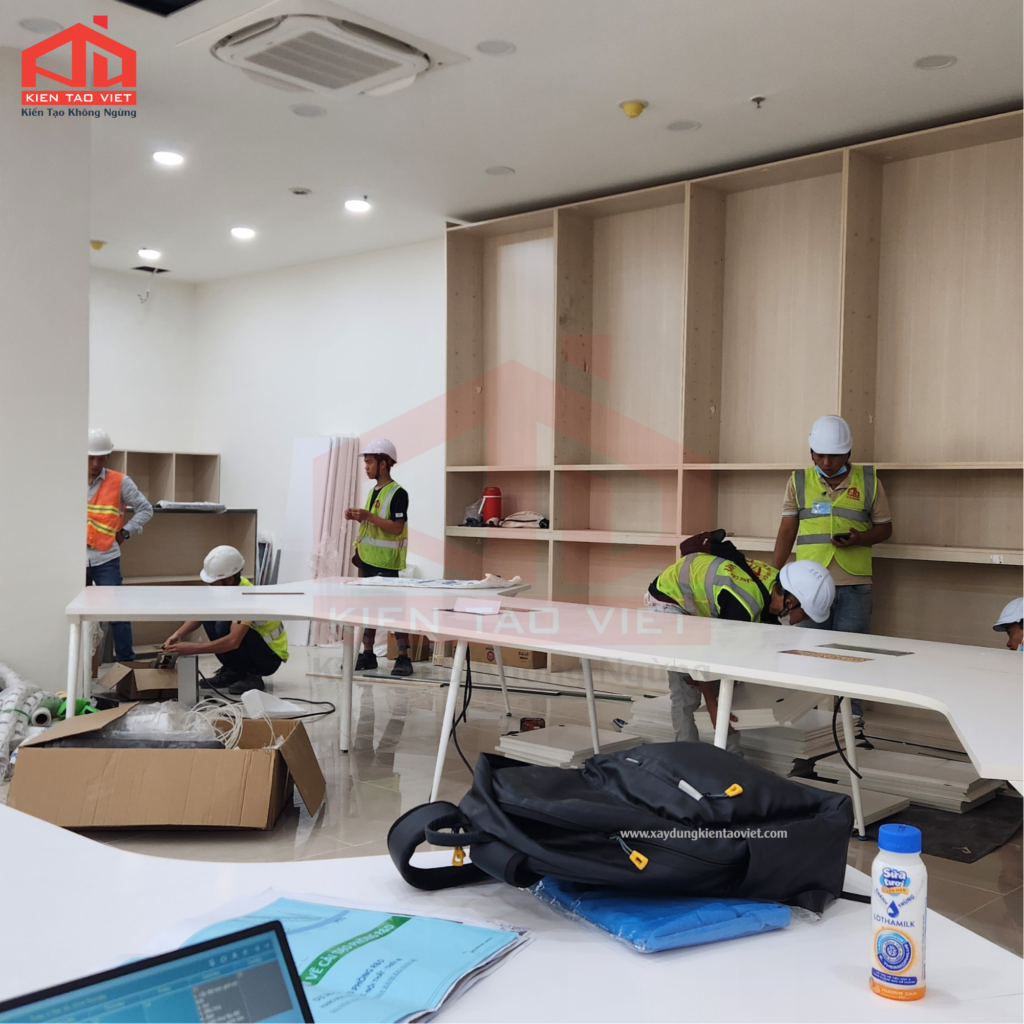
>> Xem thêm: Dự án cải tạo nhà ăn cho Công ty cổ phần Mondelez Kinh Đô của Kiến Tạo Việt
Vì sao nên chọn Kiến Tạo Việt để cải tạo nhà xưởng?
Cải tạo nhà xưởng không chỉ là sửa chữa các hạng mục xuống cấp mà còn là quá trình tối ưu không gian, nâng cao hiệu quả sản xuất và đảm bảo công trình đáp ứng các yêu cầu về an toàn. Với nhiều năm kinh nghiệm trong lĩnh vực xây dựng công nghiệp và cải tạo cơ sở vật chất, Kiến Tạo Việt mang đến giải pháp phù hợp với nhu cầu thực tế của từng doanh nghiệp.
Khảo sát và tư vấn giải pháp phù hợp
Đội ngũ kỹ sư của Kiến Tạo Việt tiến hành khảo sát hiện trạng công trình, đánh giá mức độ xuống cấp và phân tích nhu cầu sử dụng trước khi đề xuất phương án cải tạo. Điều này giúp doanh nghiệp tối ưu chi phí đầu tư và lựa chọn giải pháp phù hợp với kế hoạch phát triển lâu dài.
Thi công hạn chế ảnh hưởng đến hoạt động sản xuất
Đối với các nhà máy đang vận hành, Kiến Tạo Việt xây dựng kế hoạch thi công theo từng giai đoạn nhằm giảm thiểu tác động đến dây chuyền sản xuất. Quy trình được tổ chức khoa học giúp đảm bảo tiến độ công trình mà vẫn duy trì hoạt động của doanh nghiệp.
Đội ngũ kỹ thuật giàu kinh nghiệm
Kiến Tạo Việt sở hữu đội ngũ kỹ sư và nhân sự có kinh nghiệm trong lĩnh vực cải tạo nhà xưởng, xây dựng công nghiệp và thi công cơ khí. Mỗi dự án đều được triển khai theo quy trình chặt chẽ, đáp ứng các yêu cầu về kỹ thuật, chất lượng và an toàn lao động.
Cam kết chất lượng và tiến độ
Từ khâu khảo sát, thiết kế đến thi công và nghiệm thu, mọi hạng mục đều được kiểm soát nghiêm ngặt. Kiến Tạo Việt luôn hướng đến mục tiêu bàn giao công trình đúng tiến độ, đảm bảo chất lượng và đồng hành cùng doanh nghiệp trong suốt quá trình sử dụng.
Câu hỏi thường gặp
Khi nào doanh nghiệp nên cải tạo nhà xưởng?
Doanh nghiệp nên xem xét cải tạo khi công trình xuất hiện dấu hiệu xuống cấp, không còn đáp ứng nhu cầu sản xuất, hệ thống kỹ thuật hoạt động kém hiệu quả hoặc chi phí bảo trì tăng cao.
Cải tạo nhà xưởng có phải dừng toàn bộ hoạt động sản xuất không?
Không phải. Tùy vào hiện trạng và quy mô dự án, đơn vị thi công có thể xây dựng phương án triển khai theo từng khu vực hoặc từng giai đoạn để hạn chế ảnh hưởng đến hoạt động sản xuất.
Những hạng mục nào thường được cải tạo?
Các hạng mục phổ biến gồm mái và vách nhà xưởng, sàn công nghiệp, hệ thống điện, chiếu sáng, thông gió, kết cấu thép, khu vực văn phòng và các công trình phụ trợ.
Chi phí cải tạo nhà xưởng phụ thuộc vào những yếu tố nào?
Chi phí sẽ phụ thuộc vào diện tích công trình, mức độ xuống cấp, số lượng hạng mục cần cải tạo, vật liệu sử dụng và yêu cầu kỹ thuật của từng dự án.
Kiến Tạo Việt có nhận cải tạo nhà xưởng đang hoạt động không?
Có. Kiến Tạo Việt cung cấp dịch vụ khảo sát, thiết kế và thi công cải tạo nhà xưởng đang vận hành, với phương án tổ chức thi công phù hợp nhằm đảm bảo an toàn và hạn chế tối đa ảnh hưởng đến hoạt động của doanh nghiệp.
Kết luận
Cải tạo nhà xưởng đúng thời điểm không chỉ giúp doanh nghiệp khắc phục các hạng mục xuống cấp mà còn nâng cao hiệu quả sản xuất, đảm bảo an toàn lao động và tối ưu chi phí vận hành trong dài hạn. Chủ động đánh giá hiện trạng công trình và lựa chọn phương án cải tạo phù hợp sẽ giúp doanh nghiệp duy trì hoạt động ổn định, sẵn sàng đáp ứng nhu cầu phát triển trong tương lai.
Liên hệ Kiến Tạo Việt
Với kinh nghiệm trong lĩnh vực xây dựng công nghiệp, cải tạo nhà xưởng, cải tạo nhà máy và nâng cấp cơ sở vật chất, Kiến Tạo Việt cam kết mang đến những giải pháp thi công chất lượng, an toàn và tối ưu chi phí cho doanh nghiệp.
Từ khảo sát hiện trạng, lập phương án cải tạo đến triển khai thi công, đội ngũ kỹ sư của Kiến Tạo Việt luôn đồng hành cùng khách hàng để đảm bảo công trình được hoàn thành đúng tiến độ, đáp ứng yêu cầu kỹ thuật và phù hợp với nhu cầu vận hành thực tế.
Nếu doanh nghiệp của bạn đang có kế hoạch cải tạo nhà xưởng hoặc nâng cấp cơ sở sản xuất, hãy liên hệ Kiến Tạo Việt để được tư vấn giải pháp phù hợp và nhận báo giá chi tiết.

Occupational health care for workers is an important factor that helps businesses maintain a safe working environment, improve productivity and achieve sustainable development. In industrial environments, controlling factors such as dust, noise, temperature, factory conditions and operational safety needs to be prioritized.
The role of occupational health care for workers in industrial environments
In factories, production areas or industrial construction sites, workers are frequently exposed to various factors that can affect their health, such as continuously operating machinery, high noise levels, industrial dust, high temperatures and other specific working conditions.
Therefore, occupational health care for workers is not only a responsibility of businesses but also an important strategy to ensure stable production operations.
A scientifically designed working environment that meets safety and health standards can help:
– Reduce the risk of workplace accidents.
– Limit occupational diseases related to production environments.
– Increase employee engagement with the company.
– Improve work performance and product quality.
– Build a professional and responsible business image.
For manufacturing companies, factories and industrial facilities, investing in worker health should be considered an essential part of long-term infrastructure development.
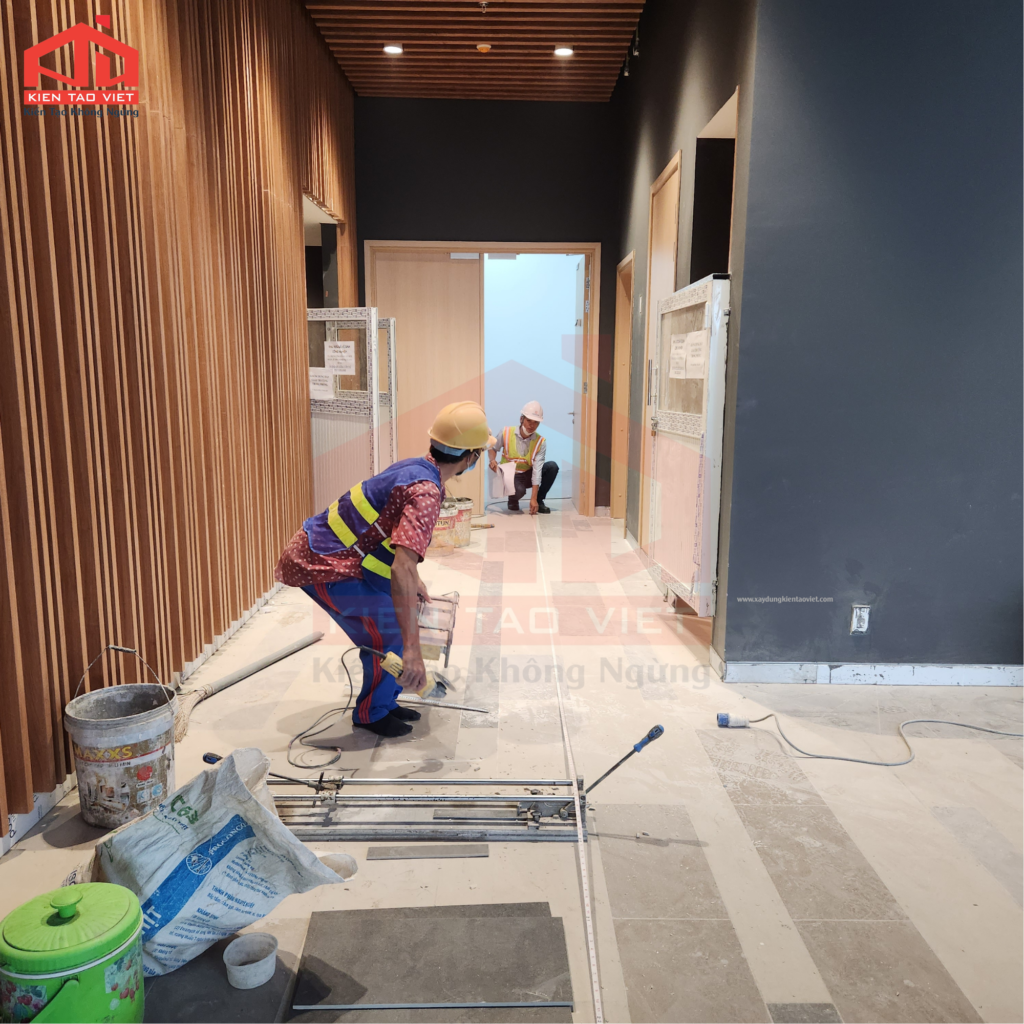
Factors affecting worker health in factories
Dust and pollutants during production processes
Some industries such as mechanical manufacturing, material production, metal processing and construction often generate various types of dust during operation.
If not properly controlled, dust can affect workers’ respiratory systems, reduce workplace environmental quality and cause long-term health problems.
Businesses should implement solutions such as:
– Installing suitable ventilation and dust extraction systems.
– Arranging production areas scientifically.
– Regularly checking air quality inside factories.
– Providing adequate personal protective equipment.
Noise from industrial machinery
Noise is one of the most common factors in manufacturing factories. Working regularly in high-noise environments can affect workers’ hearing, concentration ability and mental health.
Noise control solutions may include:
– Arranging machinery properly to reduce impacts between production areas.
– Using suitable soundproofing materials.
– Regularly maintaining equipment to minimize abnormal noise.
– Designing factories with structures that reduce sound transmission.
Temperature and ventilation conditions in factories
Many factories have large areas, operate continuously and use machinery that generates high levels of heat. Without proper ventilation, temperatures in production areas can increase significantly, causing fatigue and negatively affecting worker health.
Solutions to improve the working environment include:
– Designing natural or mechanical ventilation systems.
– Optimizing factory height.
– Using suitable roofing and wall materials to reduce heat absorption.
– Renovating infrastructure when factories no longer meet operational requirements.
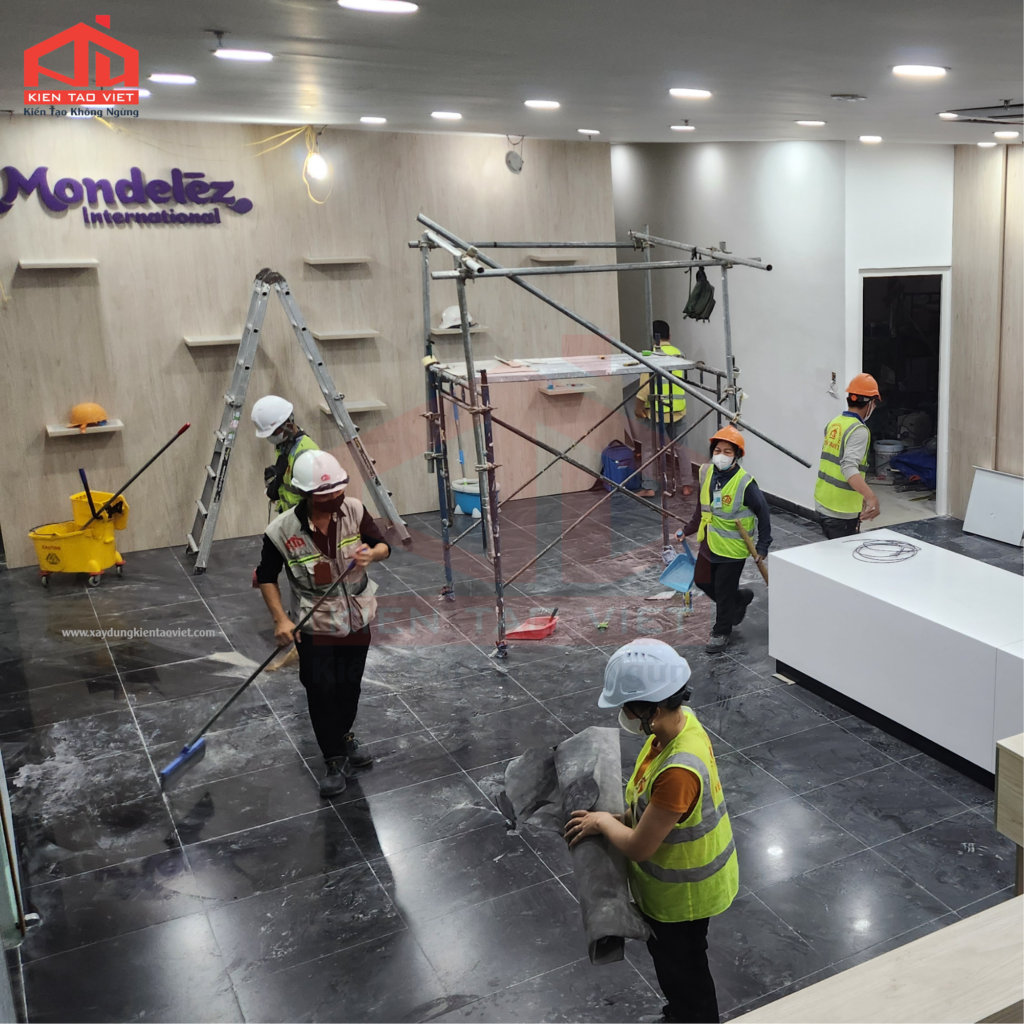
>>Read more: Effective solutions for dust and noise control during factory construction
Solutions for building a safe working environment for workers
Designing factories suitable for production conditions
From the early stages of factory design and construction, businesses need to consider factors related to worker health, including:
– Safe movement spaces.
– Properly divided production areas.
– Adequate lighting systems.
– Effective ventilation and heat dissipation capabilities.
A scientifically designed factory not only helps optimize production processes but also creates better working conditions for employees.
Renovating factory infrastructure
For factories that have been operating for many years, deterioration of buildings and facilities can directly affect the working environment.
Common renovation items that businesses often consider include:
– Factory roof renovation.
– Upgrading ventilation systems.
– Adding protective and covered areas.
– Repairing steel structures and pre-engineered steel buildings.
– Optimizing production space.
Proper renovation helps extend the lifespan of industrial facilities while improving working conditions for employees.
Applying industrial mechanical construction solutions
In the field of mechanical construction, many modern solutions can support businesses in improving working environments, such as:
– Industrial canopy systems that protect production areas.
– Pre-engineered steel structures that optimize factory space.
– Factory expansion solutions to meet increasing production demands.
– Mechanical construction solutions that improve safety and workplace convenience.
The combination of industrial construction and suitable mechanical solutions creates a more efficient, safe and sustainable production environment.
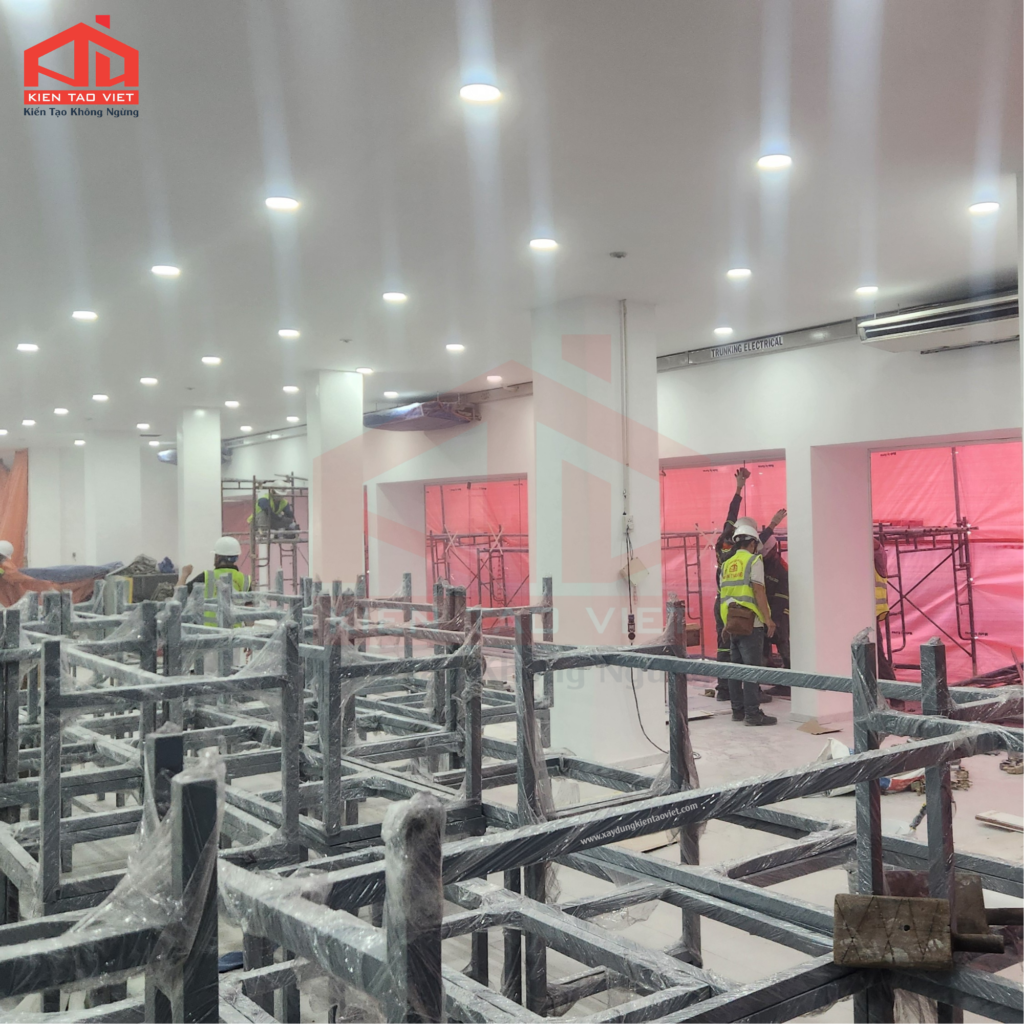
>> Read more: Industrial Construction Risks: Common Challenges and How to Prevent Them
Business responsibilities in protecting worker health
Businesses not only need to meet workplace safety requirements but also need to develop a long-term occupational health care culture.
Some activities should be maintained regularly:
– Providing periodic health check-ups for workers.
– Training employees on workplace safety knowledge.
– Inspecting working environment conditions.
– Maintaining machinery, equipment and industrial facilities.
– Updating solutions to improve production conditions.
When workers operate in a safe environment, businesses can also achieve greater benefits in productivity, quality and operational stability.
Benefits of focusing on occupational health care for workers
Occupational health care for workers is not only a safety measure in production activities but also an important factor that helps businesses improve operational efficiency, build a professional working environment and achieve sustainable growth.
Improving productivity and production efficiency
When working in a safe, well-ventilated factory environment with adequate working conditions, employees can concentrate better, reduce fatigue and maintain stable performance.
Businesses can improve production efficiency through:
– Optimizing workplace layouts inside factories.
– Ensuring suitable lighting, temperature and ventilation conditions.
– Reducing factors that negatively affect worker health during operations.
Reducing costs caused by accidents and production interruptions
An unsafe working environment can increase the risk of incidents, affect production schedules and create additional handling costs.
Investing in workplace safety and improving infrastructure helps businesses:
– Reduce accident risks in factories.
– Minimize production downtime.
– Protect machinery, equipment and industrial facilities.
– Maintain stable operating processes.
Increasing employee engagement with businesses
A safe and modern working environment demonstrates a company’s concern for its employees. This helps build trust, improve working motivation and attract high-quality human resources.
Especially for large-scale manufacturing businesses, developing standardized factories, renovating working spaces and investing in suitable industrial mechanical construction solutions contribute to creating a professional and sustainable workplace.
Enhancing business image and brand value
Businesses that prioritize worker health are often highly appreciated for their social responsibility and management capabilities. This is also an important factor that helps companies create competitive advantages when cooperating with partners, customers and expanding production activities.
Q&A about occupational health care for workers in industrial environments
1. Why do businesses need to provide occupational health care for workers in factories?
Occupational health care for workers helps reduce accident risks, prevent occupational diseases and improve production efficiency.
2. What factors affect worker health in industrial environments?
Common factors include dust, noise, high temperatures, poor ventilation and inadequate infrastructure conditions.
3. What should businesses do to improve the working environment?
Businesses should invest in factory construction and renovation, optimize ventilation systems, control environmental conditions and ensure safety throughout production operations.
Kien Tao Viet accompanies businesses in building safe working environments
With extensive experience in mechanical construction, pre-engineered steel buildings, industrial construction and factory renovation, Kien Tao Viet provides suitable solutions to help businesses upgrade factories, optimize production spaces and improve working environments.
We aim to create high-quality industrial projects that ensure safety, operational efficiency and long-term value for businesses.
If your business is looking for solutions to construct, renovate or upgrade factories to improve working conditions for employees, Kien Tao Viet is ready to accompany you and provide the most suitable solutions.
Chăm sóc sức khỏe người lao động là yếu tố quan trọng giúp doanh nghiệp duy trì môi trường làm việc an toàn, nâng cao năng suất và phát triển bền vững. Trong môi trường công nghiệp, việc kiểm soát các yếu tố như bụi, tiếng ồn, nhiệt độ, điều kiện nhà xưởng và an toàn vận hành cần được chú trọng.
Vai trò của việc chăm sóc sức khỏe người lao động trong môi trường công nghiệp
Trong các nhà máy, khu sản xuất hoặc công trình công nghiệp, người lao động thường xuyên tiếp xúc với nhiều yếu tố ảnh hưởng đến sức khỏe như máy móc vận hành liên tục, tiếng ồn lớn, bụi công nghiệp, nhiệt độ cao hoặc các điều kiện làm việc đặc thù.
Vì vậy, chăm sóc sức khỏe người lao động không chỉ là trách nhiệm của doanh nghiệp mà còn là một chiến lược quan trọng nhằm đảm bảo hoạt động sản xuất ổn định.
Một môi trường làm việc được thiết kế khoa học, đảm bảo các tiêu chuẩn về an toàn và sức khỏe sẽ giúp:
– Giảm nguy cơ xảy ra tai nạn lao động.
– Hạn chế các bệnh nghề nghiệp liên quan đến môi trường sản xuất.
– Tăng sự gắn bó của người lao động với doanh nghiệp.
– Nâng cao hiệu suất và chất lượng công việc.
– Xây dựng hình ảnh doanh nghiệp chuyên nghiệp, có trách nhiệm.
Đối với các doanh nghiệp sản xuất, nhà máy và nhà xưởng công nghiệp, việc đầu tư vào sức khỏe người lao động cần được xem là một phần trong quá trình phát triển cơ sở vật chất lâu dài.
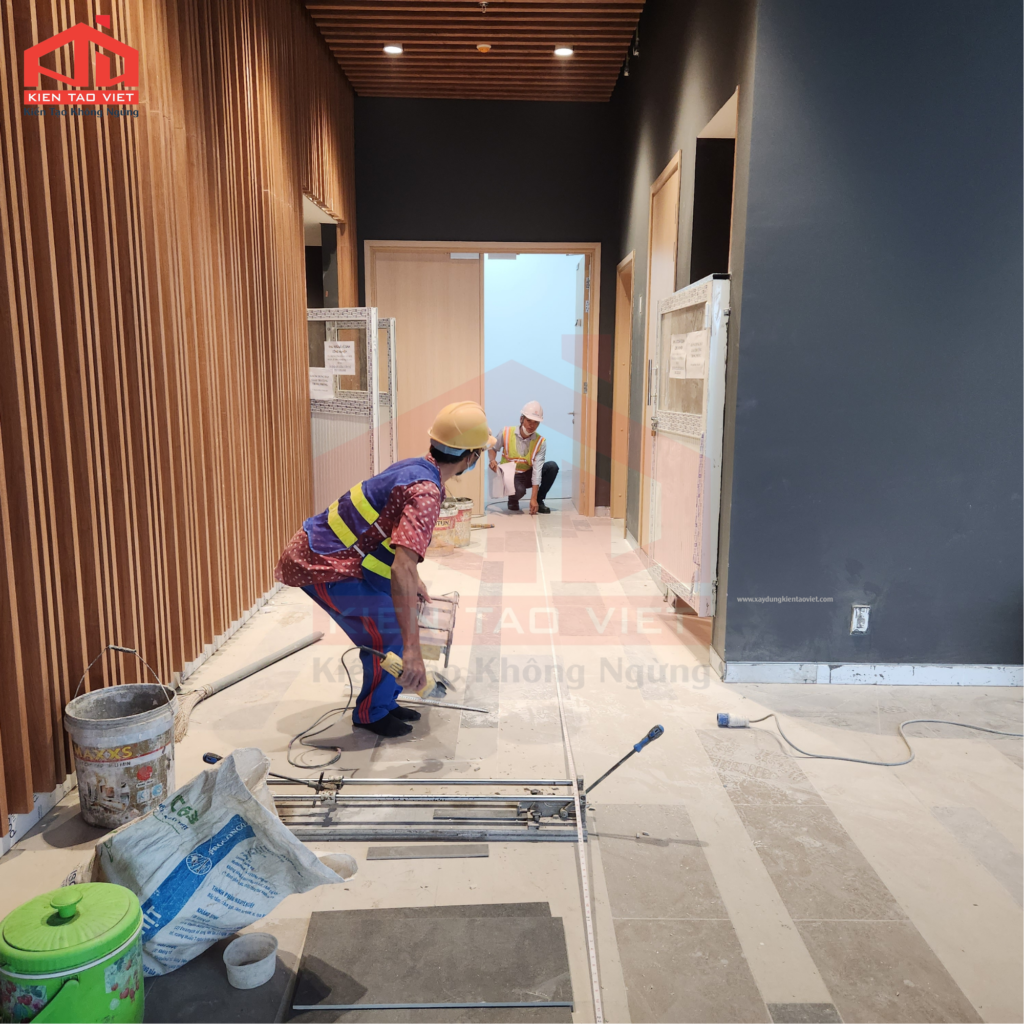
Những yếu tố ảnh hưởng đến sức khỏe người lao động trong nhà máy
Bụi và chất ô nhiễm trong quá trình sản xuất
Một số ngành công nghiệp như cơ khí, sản xuất vật liệu, gia công kim loại hoặc xây dựng thường phát sinh nhiều loại bụi trong quá trình vận hành.
Nếu không được kiểm soát tốt, bụi có thể ảnh hưởng đến hệ hô hấp của người lao động, làm giảm chất lượng môi trường làm việc và gây ra các vấn đề sức khỏe lâu dài.
Doanh nghiệp cần triển khai các giải pháp như:
– Lắp đặt hệ thống thông gió, hút bụi phù hợp.
– Bố trí khu vực sản xuất khoa học.
– Kiểm tra định kỳ chất lượng không khí trong nhà xưởng.
– Trang bị đầy đủ thiết bị bảo hộ cá nhân.
Tiếng ồn từ máy móc công nghiệp
Tiếng ồn là một trong những yếu tố phổ biến tại các nhà máy sản xuất. Việc thường xuyên làm việc trong môi trường có độ ồn cao có thể gây ảnh hưởng đến thính giác, khả năng tập trung và sức khỏe tinh thần của người lao động.
Các giải pháp kiểm soát tiếng ồn có thể bao gồm:
– Bố trí máy móc hợp lý để giảm ảnh hưởng giữa các khu vực.
– Sử dụng vật liệu cách âm phù hợp.
– Bảo trì thiết bị thường xuyên để hạn chế tiếng ồn bất thường.
– Thiết kế nhà xưởng có khả năng giảm truyền âm.
Nhiệt độ và điều kiện thông thoáng trong nhà xưởng
Nhiều nhà máy có diện tích lớn, hoạt động liên tục với hệ thống máy móc sinh nhiệt cao. Nếu không đảm bảo thông thoáng, nhiệt độ trong khu vực sản xuất có thể tăng cao, gây cảm giác mệt mỏi và ảnh hưởng đến sức khỏe người lao động.
Các giải pháp cải thiện môi trường làm việc gồm:
– Thiết kế hệ thống thông gió tự nhiên hoặc cưỡng bức.
– Tối ưu chiều cao nhà xưởng.
– Sử dụng vật liệu mái, vách phù hợp để giảm hấp thụ nhiệt.
– Cải tạo cơ sở vật chất khi nhà xưởng không còn đáp ứng nhu cầu sử dụng.
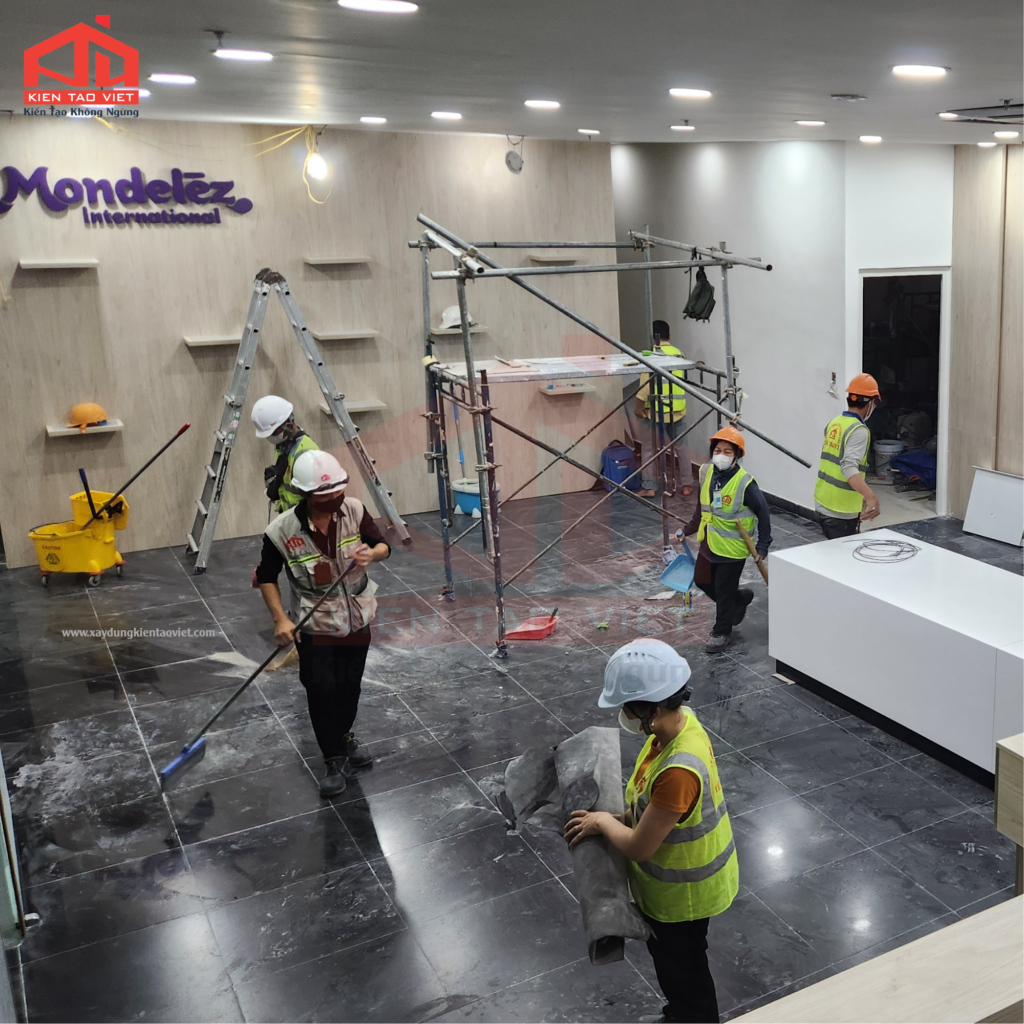
>>Xem thêm: Kiểm Soát Bụi Và Tiếng Ồn Khi Thi Công Trong Nhà Máy Hiệu Quả
Giải pháp xây dựng môi trường làm việc an toàn cho người lao động
Thiết kế nhà xưởng phù hợp với điều kiện sản xuất
Ngay từ giai đoạn thiết kế và xây dựng nhà xưởng, doanh nghiệp cần tính toán các yếu tố liên quan đến sức khỏe người lao động như:
– Không gian di chuyển an toàn.
– Khu vực sản xuất được phân chia hợp lý.
– Hệ thống chiếu sáng đảm bảo.
– Khả năng thông gió và thoát nhiệt tốt.
Một nhà xưởng được thiết kế khoa học không chỉ giúp tối ưu sản xuất mà còn tạo điều kiện làm việc thuận lợi cho công nhân viên.
Cải tạo cơ sở vật chất nhà máy
Đối với những nhà máy đã vận hành lâu năm, việc xuống cấp của công trình có thể ảnh hưởng trực tiếp đến môi trường làm việc.
Các hạng mục cải tạo thường được doanh nghiệp quan tâm gồm:
– Cải tạo mái nhà xưởng.
– Nâng cấp hệ thống thông gió.
– Bổ sung khu vực che chắn, bảo vệ.
– Sửa chữa kết cấu thép, nhà thép tiền chế.
– Tối ưu không gian sản xuất.
Việc cải tạo đúng cách giúp kéo dài tuổi thọ công trình, đồng thời nâng cao điều kiện làm việc cho người lao động.
Ứng dụng các giải pháp cơ khí xây dựng công nghiệp
Trong lĩnh vực cơ khí xây dựng, nhiều giải pháp hiện đại có thể hỗ trợ doanh nghiệp cải thiện môi trường làm việc như:
– Hệ thống mái che công nghiệp giúp bảo vệ khu vực sản xuất.
– Kết cấu thép tiền chế giúp tối ưu không gian nhà xưởng.
– Giải pháp mở rộng nhà máy giúp đáp ứng nhu cầu sản xuất.
– Các hạng mục cơ khí hỗ trợ nâng cao tính an toàn và tiện nghi.
Việc kết hợp giữa xây dựng công nghiệp và giải pháp cơ khí phù hợp sẽ tạo nên môi trường sản xuất hiệu quả, an toàn và bền vững hơn.
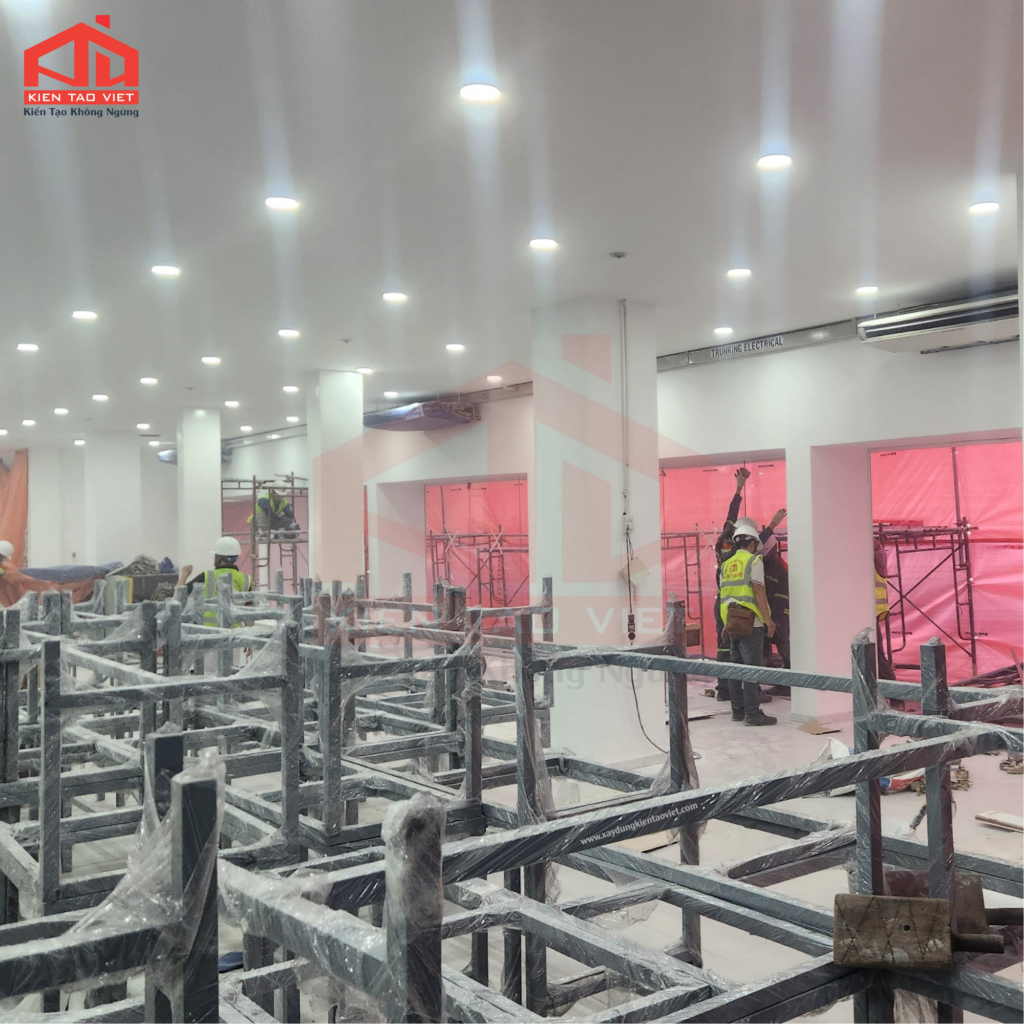
>> Xem thêm: Những Rủi Ro Thường Gặp Trong Xây Dựng Công Nghiệp Và Cách Phòng Tránh
Trách nhiệm của doanh nghiệp trong việc bảo vệ sức khỏe người lao động
Doanh nghiệp không chỉ cần đáp ứng các yêu cầu về an toàn lao động mà còn cần xây dựng văn hóa chăm sóc sức khỏe lâu dài.
Một số hoạt động cần được duy trì thường xuyên:
– Khám sức khỏe định kỳ cho người lao động.
– Đào tạo kiến thức an toàn trong quá trình làm việc.
– Kiểm tra môi trường lao động.
– Bảo trì máy móc, thiết bị và công trình.
– Cập nhật các giải pháp cải thiện điều kiện sản xuất.
Khi người lao động được làm việc trong môi trường an toàn, doanh nghiệp cũng nhận được nhiều lợi ích về năng suất, chất lượng và sự ổn định trong vận hành.
Lợi ích khi doanh nghiệp chú trọng chăm sóc sức khỏe người lao động
Chăm sóc sức khỏe người lao động không chỉ là hoạt động đảm bảo an toàn trong sản xuất mà còn là yếu tố quan trọng giúp doanh nghiệp nâng cao hiệu quả vận hành, xây dựng môi trường làm việc chuyên nghiệp và phát triển bền vững.
Nâng cao năng suất và hiệu quả sản xuất
Khi được làm việc trong môi trường nhà máy an toàn, thông thoáng và đầy đủ điều kiện cần thiết, người lao động sẽ có khả năng tập trung tốt hơn, giảm tình trạng mệt mỏi và duy trì hiệu suất làm việc ổn định.
Doanh nghiệp có thể cải thiện hiệu quả sản xuất thông qua:
– Tối ưu không gian làm việc trong nhà xưởng.
– Đảm bảo điều kiện ánh sáng, nhiệt độ và thông gió phù hợp.
– Giảm các yếu tố gây ảnh hưởng đến sức khỏe trong quá trình vận hành.
Giảm chi phí phát sinh do tai nạn và gián đoạn sản xuất
Môi trường làm việc không đảm bảo có thể làm tăng nguy cơ xảy ra sự cố, ảnh hưởng đến tiến độ sản xuất và phát sinh nhiều chi phí xử lý.
Việc đầu tư vào an toàn lao động và cải thiện cơ sở vật chất giúp doanh nghiệp:
– Hạn chế rủi ro tai nạn trong nhà máy.
– Giảm thời gian gián đoạn sản xuất.
– Bảo vệ máy móc, thiết bị và công trình.
– Duy trì hoạt động vận hành ổn định.
Tăng sự gắn bó của người lao động với doanh nghiệp
Một môi trường làm việc an toàn, hiện đại thể hiện sự quan tâm của doanh nghiệp đối với nhân sự. Điều này giúp tạo dựng niềm tin, nâng cao tinh thần làm việc và thu hút nguồn nhân lực chất lượng cao.
Đặc biệt, đối với các doanh nghiệp sản xuất quy mô lớn, việc xây dựng nhà máy đạt tiêu chuẩn, cải tạo không gian làm việc và đầu tư vào các giải pháp cơ khí xây dựng phù hợp sẽ góp phần tạo nên môi trường làm việc chuyên nghiệp, lâu dài.
Nâng cao hình ảnh và giá trị thương hiệu doanh nghiệp
Doanh nghiệp chú trọng đến sức khỏe người lao động thường được đánh giá cao về trách nhiệm xã hội và năng lực quản lý. Đây cũng là yếu tố quan trọng giúp doanh nghiệp tạo lợi thế cạnh tranh trong quá trình hợp tác với đối tác, khách hàng và mở rộng hoạt động sản xuất.
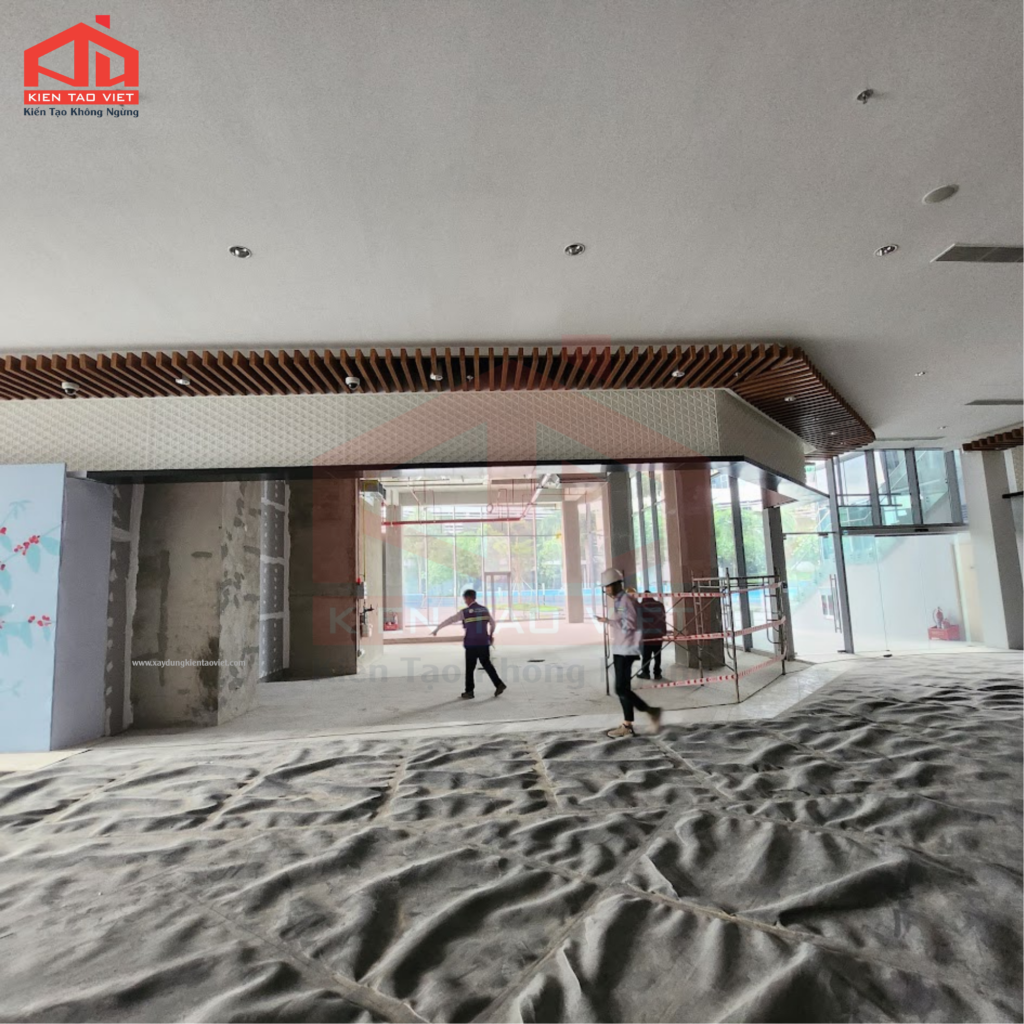
Q&A về chăm sóc sức khỏe người lao động trong môi trường công nghiệp
1. Vì sao doanh nghiệp cần chăm sóc sức khỏe người lao động trong nhà máy?
Chăm sóc sức khỏe người lao động giúp giảm rủi ro tai nạn, hạn chế bệnh nghề nghiệp và nâng cao hiệu quả sản xuất.
2. Những yếu tố nào ảnh hưởng đến sức khỏe người lao động trong môi trường công nghiệp?
Các yếu tố phổ biến gồm bụi, tiếng ồn, nhiệt độ cao, thiếu thông thoáng và điều kiện cơ sở vật chất chưa đảm bảo.
3. Doanh nghiệp cần làm gì để cải thiện môi trường làm việc?
Doanh nghiệp nên đầu tư xây dựng, cải tạo nhà xưởng, tối ưu hệ thống thông gió, kiểm soát môi trường và đảm bảo an toàn trong quá trình sản xuất.
Kiến Tạo Việt đồng hành cùng doanh nghiệp xây dựng môi trường làm việc an toàn
Với kinh nghiệm trong lĩnh vực cơ khí xây dựng, nhà thép tiền chế, xây dựng công nghiệp và cải tạo cơ sở vật chất, Kiến Tạo Việt cung cấp các giải pháp phù hợp giúp doanh nghiệp nâng cấp nhà máy, tối ưu không gian sản xuất và cải thiện môi trường làm việc.
Chúng tôi hướng đến việc tạo ra những công trình có chất lượng cao, đảm bảo an toàn, hiệu quả vận hành và giá trị sử dụng lâu dài cho doanh nghiệp.
Nếu doanh nghiệp đang tìm kiếm giải pháp xây dựng, cải tạo hoặc nâng cấp nhà xưởng nhằm nâng cao điều kiện làm việc cho người lao động, Kiến Tạo Việt sẵn sàng đồng hành và tư vấn giải pháp phù hợp.
Dust and noise control is an important factor during construction activities in factories to protect workers’ health, minimize impacts on production operations and meet environmental requirements. This article will share effective solutions to help businesses control these two factors throughout the construction process.
What is dust and noise control?
In factory renovation, expansion or new construction projects, dust and noise are two factors that are almost unavoidable. They can occur from various activities such as demolition, metal cutting, steel structure welding, concrete drilling, material transportation and operation of construction equipment.
Dust and noise control refers to the application of technical solutions, management procedures and specialized equipment to reduce dust emissions and noise levels throughout the construction process. The goal is not only to create a safe working environment for employees but also to minimize impacts on production lines, machinery, products and surrounding areas.
For operating factories, effective dust and noise control also helps businesses maintain stable production, reduce the risk of interruptions and comply with current safety and environmental regulations.
Why is dust and noise control necessary during factory construction?
Unlike conventional construction projects, construction activities inside factories often take place while production operations are still running. Therefore, if dust and noise are not properly controlled, businesses may face various risks related to workplace safety, product quality and operational efficiency.
Proactively developing a dust and noise control plan from the beginning helps ensure smoother construction progress while reducing negative impacts on the working environment and business activities.
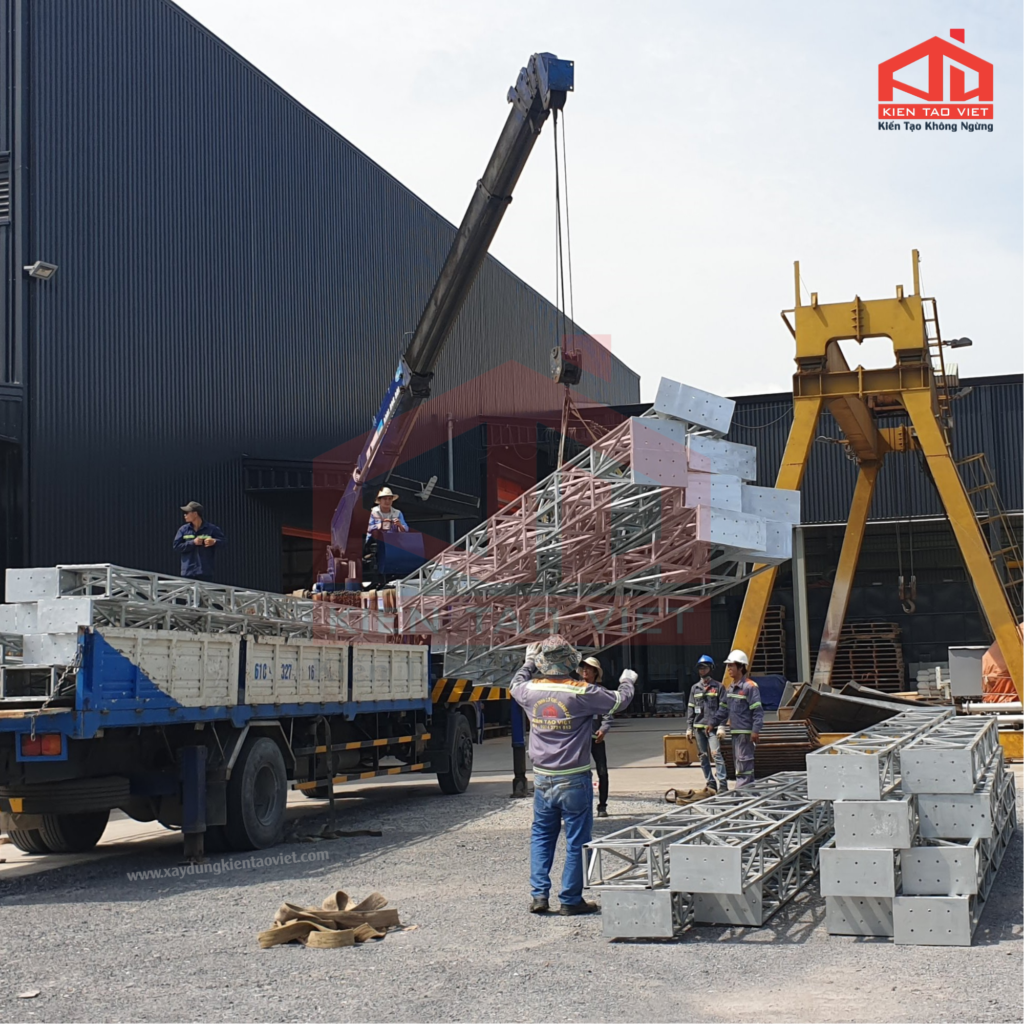
Impacts of poor dust and noise control
1. Impact on workers’ health
Dust generated during construction may contain fine particles or contaminants from concrete, metals and building materials. Long-term exposure can increase the risk of respiratory diseases, eye irritation and skin problems among workers.
In addition, excessive noise from cutting machines, drilling machines, demolition equipment or lifting devices can cause fatigue, reduce concentration and negatively affect hearing if proper protection measures are not provided.
Solutions
– Provide sufficient masks, protective glasses and hearing protection equipment.
– Train employees on safety procedures when working in construction areas.
– Arrange appropriate break times for workers who are frequently exposed to high noise levels.
2. Impact on production lines
Many factories continue operating while undergoing renovation or expansion. If dust spreads into production areas, it can accumulate on machinery, components or products, reducing finished product quality and increasing cleaning and maintenance costs.
Meanwhile, continuous noise can make communication between departments more difficult and affect coordination during production operations.
Solutions
– Clearly separate construction areas from production areas.
– Use partitions or protective barriers to limit dust and noise spreading.
– Develop construction plans by zones to reduce impacts on factory operations.
3. Increased safety risks during construction
Heavy dust accumulation can reduce workers’ visibility, while high noise levels can make communication and emergency warnings more difficult.
This increases the risk of collisions between workers and equipment and affects the ability to respond quickly when incidents occur.
Solutions
– Maintain regular construction site cleaning.
– Install clear warning signs and safety alert systems.
– Closely monitor high-risk areas.
– Regularly inspect working conditions throughout the construction process.
4. Impact on the environment and business image
Dust and noise not only affect internal factory areas but can also impact surrounding areas if they are not properly controlled.
Allowing excessive dust emissions or noise levels beyond permitted limits may lead to complaints from neighboring businesses, damage brand reputation and create issues related to environmental regulations.
Therefore, investing in dust and noise control solutions is not only a technical requirement but also demonstrates a company’s responsibility toward employees and the community.
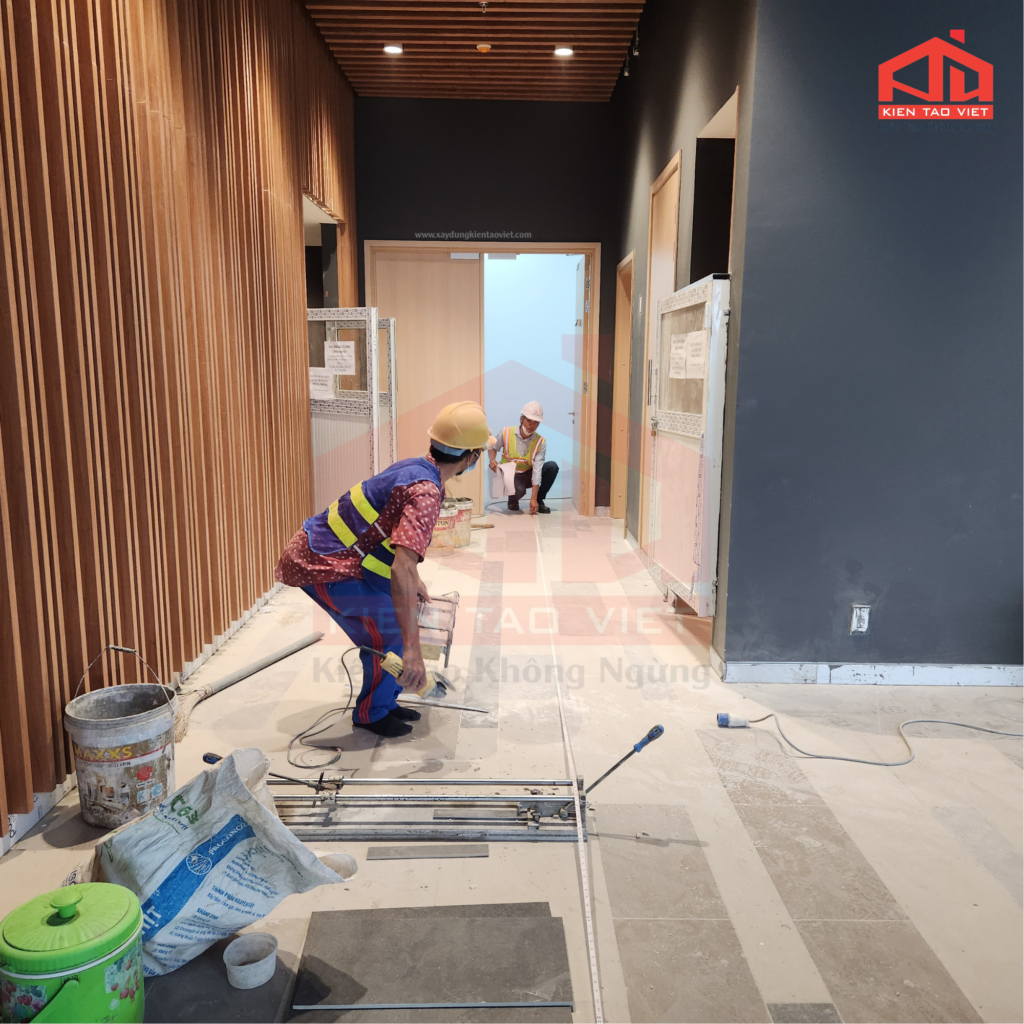
>> Read more: Multi-Functional Office Renovation Solutions for Small Office Spaces
10 effective solutions for dust and noise control during factory construction
1. Develop a construction plan suitable for factory operations
Before starting a project, businesses need to develop a detailed construction plan to minimize impacts on production lines. Clearly identifying construction areas, implementation schedules and priority tasks will help improve dust and noise control efficiency.
For factories that operate continuously, construction should be carried out in separate areas or high-noise activities should be scheduled during periods that have less impact on production activities.
Benefits
– Reduce impacts on production processes.
– Minimize risks during construction.
– Easily control progress and working conditions.
2. Install dust and noise protection partitions
Using temporary partitions is a common solution in factory renovation projects. These partitions help define construction areas, reduce dust dispersion and limit noise spreading into production zones.
Depending on actual conditions, businesses can use panel walls, metal sheets, PVC curtains or soundproof materials to improve control effectiveness.
Benefits
– Limit the spread of dust and noise.
– Protect active production areas.
– Create a safer working environment.
3. Use mist spraying systems for dust suppression
During activities such as concrete cutting, foundation drilling or demolition, a large amount of dust can be generated. Installing a mist spraying system helps dust particles settle quickly and reduces their spread into the air.
This is a simple but highly effective solution, especially for large construction areas or locations where dust is frequently generated.
Benefits
– Reduce airborne dust levels.
– Improve the working environment.
– Prevent dust from accumulating on machinery and products.
4. Select modern construction equipment
Modern machinery not only improves productivity but also significantly reduces vibration, noise and dust generated during construction.
Equipment that is regularly maintained also operates more efficiently, helping reduce risks of failures and ensuring construction quality.
Benefits
– Reduce noise during construction.
– Improve work efficiency.
– Save maintenance and repair costs.
5. Control transportation vehicles and material handling activities
Trucks, forklifts and transportation vehicles operating continuously in construction areas can generate additional dust and noise.
Businesses should establish separate transportation routes, cover materials during movement and clean vehicle wheels before leaving the construction site to minimize dust dispersion.
Benefits
– Reduce dust from transportation activities.
– Minimize impacts on surrounding areas.
– Maintain a cleaner construction environment.
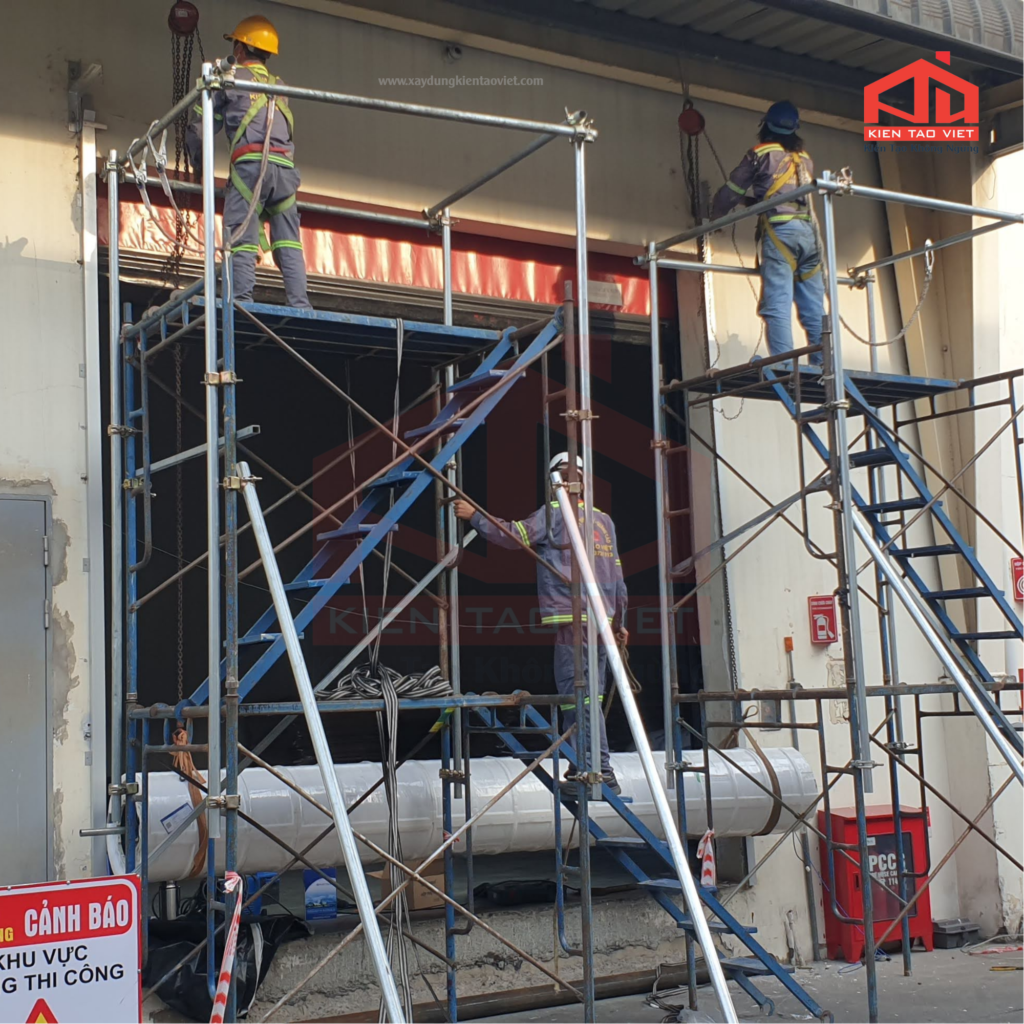
6. Perform regular construction site cleaning
Dust accumulation over time not only affects workers’ health but also reduces the effectiveness of other control measures.
Collecting waste materials, using industrial vacuum systems and cleaning construction areas regularly help maintain a clean and safe working environment.
Benefits
– Reduce accumulated dust.
– Minimize risks of slipping and workplace accidents.
– Create a professional working environment.
7. Manage construction schedules effectively
Activities that generate high noise levels, such as concrete drilling, cutting, welding or steel structure fabrication, should be scheduled at appropriate times to reduce impacts on production activities.
In addition, organizing construction schedules by phases allows businesses to better control progress and working conditions.
Benefits
– Reduce impacts on production lines.
– Improve coordination between departments.
– Minimize noise complaints.
8. Provide adequate personal protective equipment for workers
Besides technical solutions, businesses must ensure workers are fully equipped with protective equipment such as masks, safety glasses, noise protection earplugs and suitable protective clothing.
This is an important measure to reduce direct impacts of dust and noise on workers’ health.
Benefits
– Protect workers’ health.
– Reduce the risk of occupational diseases.
– Improve safety awareness during construction.
9. Monitor and evaluate environmental conditions regularly
For large-scale projects, businesses should periodically measure dust concentration and noise levels to evaluate the effectiveness of implemented control measures.
Regular monitoring helps identify areas with risks of exceeding permitted limits and allows timely corrective actions.
Benefits
– Better control construction conditions.
– Adjust solutions promptly when necessary.
– Meet safety and environmental requirements.
10. Work with experienced construction contractors
A professional construction contractor can develop effective dust and noise control plans from the survey stage, planning process to actual implementation.
With experience in factory renovation and industrial construction, contractors can select suitable solutions to ensure progress, quality and minimize impacts on business operations.
Benefits
– Ensure safe construction processes.
– Effectively control dust and noise.
– Reduce additional costs and potential risks.
– Maintain stable production activities.
Important standards businesses should consider
Besides applying technical solutions, businesses should also comply with occupational safety and environmental protection regulations during construction.
Important considerations include:
– Regularly checking dust concentration and noise levels in construction areas.
– Implementing environmental protection measures according to regulations.
– Providing suitable protective equipment for all employees.
– Developing response plans for environmental incidents.
– Organizing regular training on workplace safety and factory working procedures.
Following these requirements not only helps businesses minimize risks but also contributes to building a safe, professional and sustainable working environment.
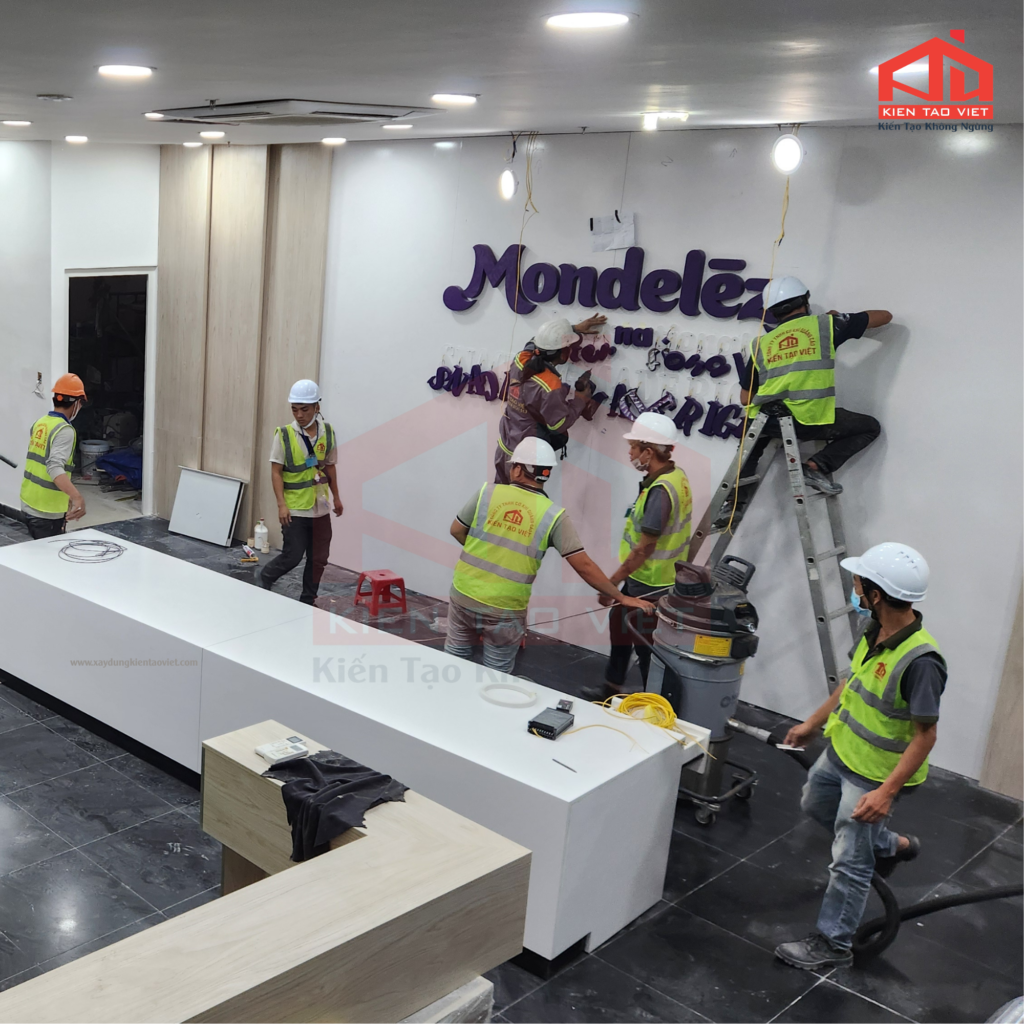
>> Read more: Cafeteria Renovation Project for Mondelez Kinh Do Vietnam by Kien Tao Viet
Why choose Kien Tao Viet for factory construction?
Construction activities inside operating factories require contractors not only to have construction expertise but also to deeply understand production processes, safety requirements and methods for controlling factors that may affect the working environment.
With experience in industrial construction and facility renovation, Kien Tao Viet provides optimized construction solutions that help businesses minimize impacts on production activities while ensuring safety, quality and efficiency.
Extensive experience in industrial projects
Kien Tao Viet has completed many projects involving factory renovation, industrial building upgrades, steel structure construction and installation of industrial mechanical systems.
With practical experience from various projects, our engineering team can develop suitable construction plans based on the specific conditions of each facility.
Safe construction solutions with minimal impact on production
Each project is carefully surveyed before implementation to develop an appropriate construction plan.
Dust and noise control measures are applied systematically to reduce impacts on production lines and working areas within the factory.
This helps businesses maintain stable operations while ensuring construction progress and quality.
Highly qualified technical team
The engineering and construction teams at Kien Tao Viet are professionally trained and strictly follow occupational safety regulations and construction procedures in industrial environments.
With strong technical expertise and practical experience, our team ensures that every project is implemented safely and effectively.
Commitment to quality and schedule
All project stages are strictly controlled, from site survey, design, construction implementation to final acceptance.
This process helps ensure construction quality, complete projects on schedule and minimize unexpected costs during execution.
Frequently asked questions
Is dust and noise control mandatory during factory construction?
Yes. Dust and noise control is an important requirement to ensure workplace safety, protect workers’ health and minimize impacts on production activities as well as surrounding environments.
What should businesses consider when renovating an operating factory?
Businesses should develop a detailed construction plan, clearly separate working areas, apply appropriate dust and noise control measures and maintain close coordination between contractors and factory operation teams.
What solutions are most effective for reducing dust?
Depending on each construction activity, businesses can combine multiple solutions such as installing protective partitions, using mist spraying systems, conducting regular site cleaning and covering materials to prevent dust dispersion.
How can businesses reduce noise during construction?
Businesses should use modern equipment, arrange suitable construction schedules, install soundproof materials in necessary areas and perform high-noise activities outside production hours whenever possible.
Does Kien Tao Viet provide renovation services for operating factories?
Yes. Kien Tao Viet provides site surveys, consulting and factory renovation services for operating factories and industrial facilities.
With suitable construction plans, we help businesses effectively control dust and noise while minimizing impacts on production activities.
Conclusion
Dust and noise control not only helps protect workers’ health but also contributes to maintaining a safe working environment, ensuring product quality and reducing interruptions during production.
Proactively applying suitable solutions from the planning stage allows businesses to minimize risks, control project progress and improve overall construction efficiency.
For factory renovation or construction projects in operating facilities, choosing an experienced contractor is an important factor in ensuring that the project is implemented safely, technically and in compliance with environmental requirements.
Contact Kien Tao Viet
With many years of experience in industrial construction, factory renovation, industrial facility improvement and mechanical construction, Kien Tao Viet accompanies businesses in implementing safe, efficient and cost-effective projects.
From site surveys and construction planning to actual implementation, our engineering team always focuses on effective dust and noise control solutions to minimize impacts on production activities and ensure project progress.
Contact Kien Tao Viet today to receive consultation on suitable, safe and effective construction solutions for your factory.

Kiểm soát bụi và tiếng ồn là yếu tố quan trọng trong quá trình thi công tại nhà máy nhằm bảo vệ sức khỏe người lao động, hạn chế ảnh hưởng đến hoạt động sản xuất và đáp ứng các yêu cầu về môi trường. Bài viết dưới đây sẽ chia sẻ những giải pháp hiệu quả giúp doanh nghiệp kiểm soát hai yếu tố này trong quá trình thi công.
Kiểm soát bụi và tiếng ồn là gì?
Trong các dự án cải tạo, mở rộng hoặc xây dựng mới nhà máy, bụi và tiếng ồn là hai yếu tố gần như không thể tránh khỏi. Chúng phát sinh từ nhiều hoạt động như tháo dỡ công trình, cắt gọt kim loại, hàn kết cấu thép, khoan bê tông, vận chuyển vật liệu hay vận hành các loại máy móc thi công.
Kiểm soát bụi và tiếng ồn là việc áp dụng các biện pháp kỹ thuật, quy trình quản lý và thiết bị chuyên dụng nhằm giảm thiểu lượng bụi phát tán cũng như mức độ tiếng ồn trong suốt quá trình thi công. Mục tiêu không chỉ là tạo môi trường làm việc an toàn cho người lao động mà còn hạn chế ảnh hưởng đến dây chuyền sản xuất, thiết bị, hàng hóa và khu vực xung quanh.
Đối với các nhà máy đang hoạt động, việc kiểm soát tốt bụi và tiếng ồn còn giúp doanh nghiệp duy trì sản xuất ổn định, giảm nguy cơ gián đoạn và đáp ứng các yêu cầu về an toàn, môi trường theo quy định hiện hành.
Vì sao cần kiểm soát bụi và tiếng ồn khi thi công trong nhà máy?
Không giống các công trình xây dựng thông thường, việc thi công trong nhà máy thường diễn ra song song với hoạt động sản xuất. Vì vậy, nếu bụi và tiếng ồn không được kiểm soát hiệu quả, doanh nghiệp có thể đối mặt với nhiều rủi ro liên quan đến an toàn, chất lượng sản phẩm và hiệu suất vận hành.
Việc chủ động xây dựng phương án kiểm soát bụi và tiếng ồn ngay từ đầu sẽ giúp quá trình thi công diễn ra thuận lợi hơn, đồng thời giảm thiểu các tác động tiêu cực đến môi trường làm việc và hoạt động kinh doanh.
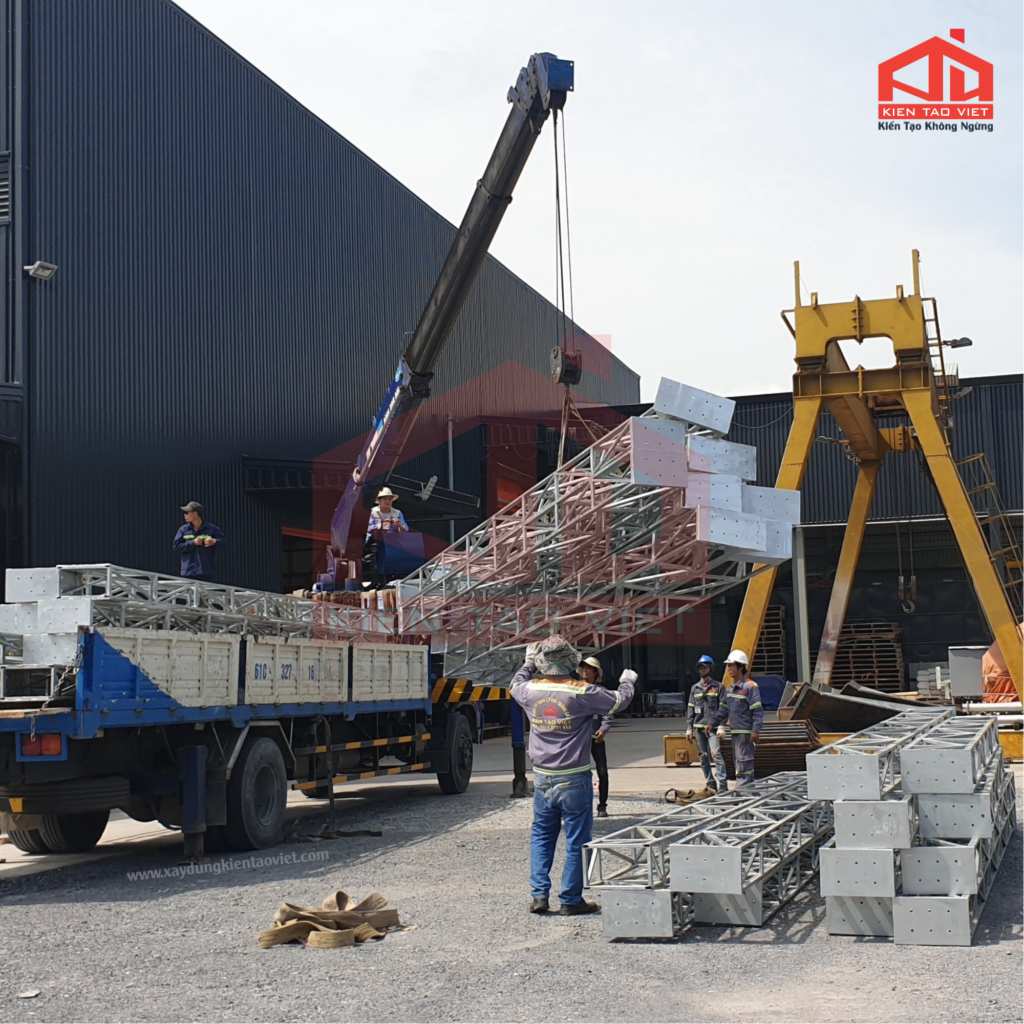
Những ảnh hưởng khi không kiểm soát tốt bụi và tiếng ồn
1. Ảnh hưởng đến sức khỏe người lao động
Bụi phát sinh trong quá trình thi công có thể chứa nhiều hạt mịn hoặc tạp chất từ bê tông, kim loại và vật liệu xây dựng. Khi tiếp xúc trong thời gian dài, người lao động có nguy cơ mắc các bệnh về đường hô hấp, kích ứng mắt hoặc các vấn đề về da.
Bên cạnh đó, tiếng ồn lớn từ máy cắt, máy khoan, máy đục hay thiết bị nâng hạ có thể gây mệt mỏi, giảm khả năng tập trung và ảnh hưởng đến thính lực nếu không được bảo vệ đúng cách.
Giải pháp
– Trang bị đầy đủ khẩu trang, kính bảo hộ và thiết bị bảo vệ thính giác.
– Đào tạo nhân sự về quy trình an toàn khi làm việc trong khu vực thi công.
– Bố trí thời gian nghỉ hợp lý đối với các vị trí thường xuyên tiếp xúc với tiếng ồn lớn.
2. Ảnh hưởng đến dây chuyền sản xuất
Nhiều nhà máy vẫn duy trì hoạt động trong khi tiến hành cải tạo hoặc mở rộng. Nếu bụi phát tán vào khu vực sản xuất, bụi có thể bám lên máy móc, linh kiện hoặc sản phẩm, làm giảm chất lượng thành phẩm và tăng chi phí vệ sinh, bảo trì.
Trong khi đó, tiếng ồn kéo dài có thể gây khó khăn cho việc trao đổi thông tin giữa các bộ phận, ảnh hưởng đến khả năng phối hợp trong quá trình vận hành.
Giải pháp
– Phân tách rõ khu vực thi công và khu vực sản xuất.
– Sử dụng vách ngăn hoặc màng chắn để hạn chế bụi và tiếng ồn lan rộng.
– Lập kế hoạch thi công theo từng khu vực nhằm giảm ảnh hưởng đến hoạt động của nhà máy.
3. Gia tăng nguy cơ mất an toàn trong quá trình thi công
Bụi dày đặc có thể làm giảm tầm nhìn của người lao động, trong khi tiếng ồn lớn khiến việc truyền đạt thông tin hoặc cảnh báo nguy hiểm trở nên khó khăn hơn.
Điều này làm tăng nguy cơ xảy ra va chạm giữa người và thiết bị, đồng thời ảnh hưởng đến khả năng xử lý tình huống khi có sự cố phát sinh.
Giải pháp
– Duy trì vệ sinh công trường thường xuyên.
– Bố trí biển báo và hệ thống cảnh báo rõ ràng.
– Giám sát chặt chẽ các khu vực có mức độ rủi ro cao.
– Kiểm tra điều kiện làm việc định kỳ trong suốt quá trình thi công.
4. Ảnh hưởng đến môi trường và hình ảnh doanh nghiệp
Bụi và tiếng ồn không chỉ tác động đến bên trong nhà máy mà còn có thể ảnh hưởng đến khu vực xung quanh nếu không được kiểm soát phù hợp.
Việc để bụi phát tán hoặc tiếng ồn vượt ngưỡng cho phép có thể gây phản ánh từ các doanh nghiệp lân cận, ảnh hưởng đến uy tín thương hiệu và làm phát sinh các vấn đề liên quan đến quy định về môi trường.
Do đó, đầu tư vào các giải pháp kiểm soát bụi và tiếng ồn không chỉ là yêu cầu về kỹ thuật mà còn thể hiện trách nhiệm của doanh nghiệp đối với người lao động và cộng đồng.
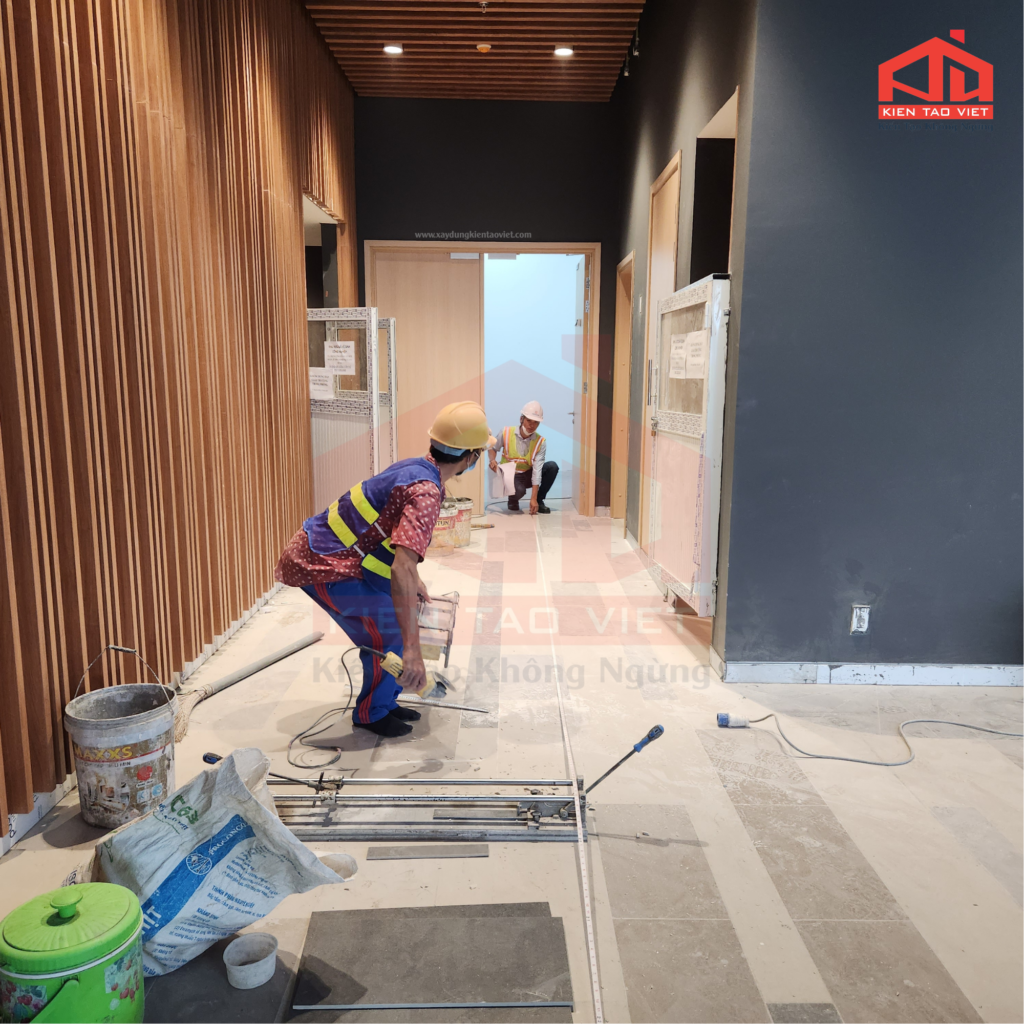
>> Xem thêm: Giải Pháp Cải Tạo Văn Phòng Diện Tích Nhỏ Thành Không Gian Đa Năng
10 giải pháp kiểm soát bụi và tiếng ồn khi thi công trong nhà máy
1. Lập kế hoạch thi công phù hợp với hoạt động của nhà máy
Trước khi triển khai dự án, doanh nghiệp cần xây dựng kế hoạch thi công chi tiết nhằm hạn chế tối đa ảnh hưởng đến dây chuyền sản xuất. Việc xác định rõ khu vực thi công, thời gian thực hiện và các hạng mục ưu tiên sẽ giúp kiểm soát bụi và tiếng ồn hiệu quả hơn.
Đối với những nhà máy đang vận hành liên tục, nên ưu tiên thi công theo từng khu vực hoặc thực hiện các công việc có độ ồn lớn vào thời điểm ít ảnh hưởng đến hoạt động sản xuất.
Lợi ích
– Giảm ảnh hưởng đến quá trình sản xuất.
– Hạn chế phát sinh rủi ro trong quá trình thi công.
– Dễ kiểm soát tiến độ và môi trường làm việc.
2. Lắp đặt vách ngăn chống bụi và chống ồn
Sử dụng vách ngăn tạm thời là giải pháp được áp dụng phổ biến trong các dự án cải tạo nhà máy. Các vách ngăn giúp giới hạn khu vực thi công, giảm lượng bụi phát tán và hạn chế tiếng ồn lan sang khu vực sản xuất.
Tùy theo điều kiện thực tế, doanh nghiệp có thể sử dụng vách panel, tôn, bạt PVC hoặc vật liệu cách âm để nâng cao hiệu quả kiểm soát.
Lợi ích
– Hạn chế bụi và tiếng ồn lan rộng.
– Bảo vệ khu vực sản xuất đang hoạt động.
– Tạo môi trường làm việc an toàn hơn.
3. Sử dụng hệ thống phun sương dập bụi
Trong quá trình cắt bê tông, khoan nền hoặc tháo dỡ công trình, lượng bụi phát sinh thường rất lớn. Việc lắp đặt hệ thống phun sương sẽ giúp các hạt bụi nhanh chóng lắng xuống, hạn chế phát tán vào không khí.
Đây là giải pháp đơn giản nhưng mang lại hiệu quả cao, đặc biệt tại các khu vực có diện tích thi công lớn hoặc thường xuyên phát sinh bụi.
Lợi ích
– Giảm lượng bụi trong không khí.
– Cải thiện môi trường làm việc.
– Hạn chế bụi bám lên máy móc và hàng hóa.
4. Lựa chọn thiết bị thi công hiện đại
Máy móc hiện đại không chỉ giúp nâng cao năng suất mà còn giảm đáng kể độ rung, tiếng ồn và lượng bụi phát sinh trong quá trình thi công.
Các thiết bị được bảo dưỡng định kỳ cũng vận hành ổn định hơn, góp phần giảm thiểu nguy cơ sự cố và đảm bảo chất lượng công việc.
Lợi ích
– Giảm tiếng ồn trong quá trình thi công.
– Nâng cao hiệu suất làm việc.
– Tiết kiệm chi phí bảo trì và sửa chữa.
5. Kiểm soát phương tiện và hoạt động vận chuyển vật liệu
Xe tải, xe nâng và các phương tiện vận chuyển nếu di chuyển liên tục trong khu vực thi công có thể làm phát sinh bụi và tiếng ồn.
Doanh nghiệp nên quy hoạch tuyến đường vận chuyển riêng, che phủ vật liệu khi di chuyển và vệ sinh bánh xe trước khi ra khỏi công trường nhằm hạn chế bụi phát tán.
Lợi ích
– Giảm bụi từ hoạt động vận chuyển.
– Hạn chế ảnh hưởng đến khu vực xung quanh.
– Giữ môi trường thi công sạch sẽ.
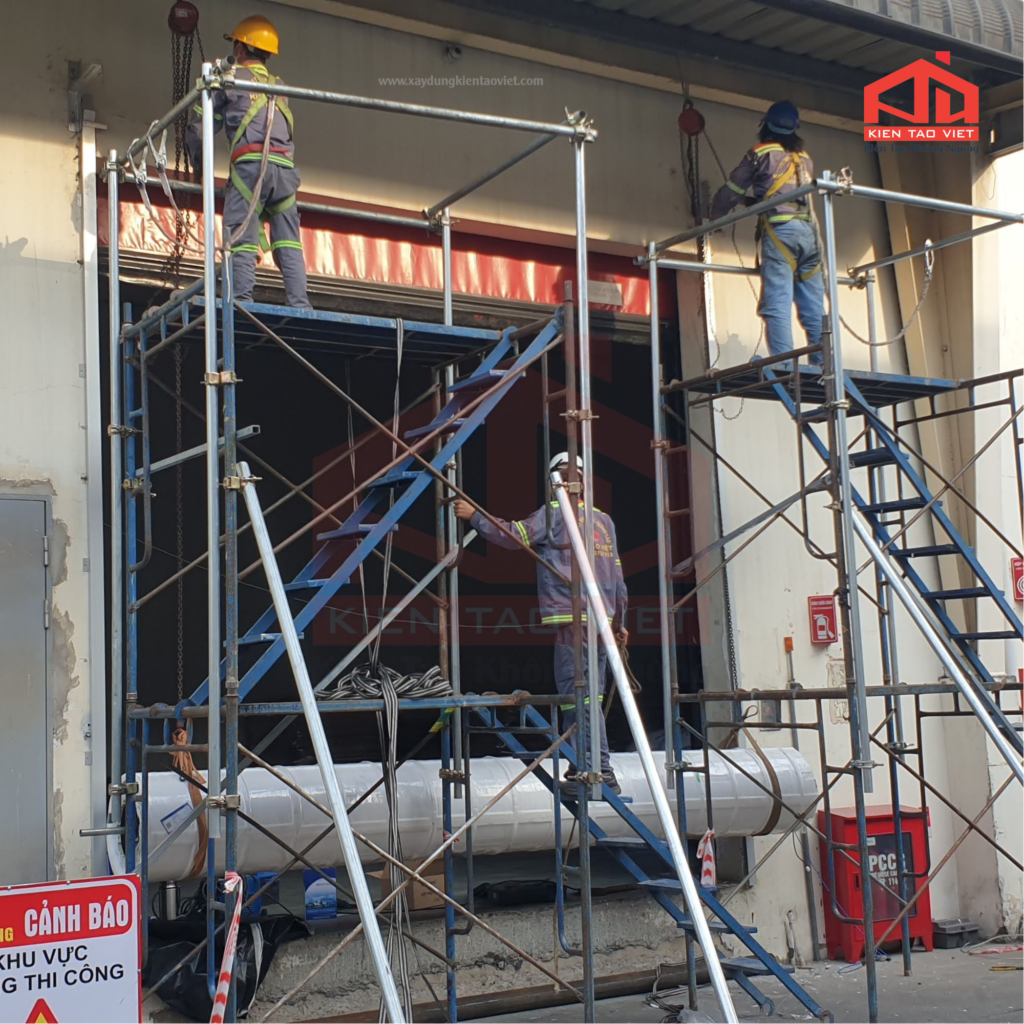
6. Vệ sinh công trường thường xuyên
Bụi tích tụ lâu ngày không chỉ ảnh hưởng đến sức khỏe mà còn làm giảm hiệu quả của các biện pháp kiểm soát khác.
Việc thu gom phế liệu, hút bụi công nghiệp và vệ sinh khu vực thi công theo định kỳ sẽ giúp duy trì môi trường làm việc sạch sẽ và an toàn.
Lợi ích
– Giảm lượng bụi tồn đọng.
– Hạn chế nguy cơ trơn trượt và mất an toàn.
– Tạo môi trường làm việc chuyên nghiệp.
7. Quản lý thời gian thi công hợp lý
Những công việc tạo ra tiếng ồn lớn như khoan cắt bê tông, hàn hoặc gia công kết cấu thép nên được bố trí vào khung giờ phù hợp để giảm ảnh hưởng đến hoạt động sản xuất.
Ngoài ra, việc sắp xếp lịch thi công theo từng giai đoạn cũng giúp doanh nghiệp dễ dàng kiểm soát tiến độ và môi trường làm việc.
Lợi ích
– Giảm tác động đến dây chuyền sản xuất.
– Nâng cao hiệu quả phối hợp giữa các bộ phận.
– Hạn chế khiếu nại về tiếng ồn.
8. Trang bị đầy đủ phương tiện bảo hộ cho người lao động
Bên cạnh các giải pháp kỹ thuật, doanh nghiệp cũng cần đảm bảo người lao động được trang bị đầy đủ thiết bị bảo hộ như khẩu trang, kính bảo hộ, nút tai chống ồn và quần áo bảo hộ phù hợp.
Đây là biện pháp quan trọng nhằm giảm thiểu ảnh hưởng trực tiếp của bụi và tiếng ồn đến sức khỏe người lao động.
Lợi ích
– Bảo vệ sức khỏe người lao động.
– Giảm nguy cơ mắc bệnh nghề nghiệp.
– Nâng cao ý thức an toàn trong thi công.
9. Theo dõi và đánh giá định kỳ chất lượng môi trường
Trong các dự án quy mô lớn, doanh nghiệp nên thực hiện đo nồng độ bụi và mức độ tiếng ồn theo định kỳ để đánh giá hiệu quả của các biện pháp đã triển khai.
Việc theo dõi thường xuyên sẽ giúp phát hiện sớm các khu vực có nguy cơ vượt ngưỡng cho phép và kịp thời đưa ra phương án xử lý.
Lợi ích
– Kiểm soát tốt điều kiện thi công.
– Kịp thời điều chỉnh các biện pháp phù hợp.
– Đáp ứng yêu cầu về an toàn và môi trường.
10. Hợp tác với đơn vị thi công có kinh nghiệm
Một đơn vị thi công chuyên nghiệp sẽ có phương án kiểm soát bụi và tiếng ồn ngay từ giai đoạn khảo sát, lập kế hoạch đến triển khai thực tế.
Với kinh nghiệm trong lĩnh vực cải tạo nhà máy và xây dựng công nghiệp, đơn vị thi công sẽ biết cách lựa chọn giải pháp phù hợp nhằm đảm bảo tiến độ, chất lượng và giảm thiểu ảnh hưởng đến hoạt động sản xuất của doanh nghiệp.
Lợi ích
– Đảm bảo thi công an toàn.
– Kiểm soát tốt bụi và tiếng ồn.
– Hạn chế phát sinh chi phí và rủi ro.
– Duy trì hoạt động sản xuất ổn định.
Một số tiêu chuẩn doanh nghiệp cần lưu ý
Bên cạnh việc áp dụng các giải pháp kỹ thuật, doanh nghiệp cũng nên tuân thủ các quy định về an toàn lao động và bảo vệ môi trường trong quá trình thi công.
Một số nội dung cần đặc biệt quan tâm gồm:
– Kiểm tra định kỳ nồng độ bụi và mức độ tiếng ồn tại khu vực thi công.
– Thực hiện đầy đủ các biện pháp bảo vệ môi trường theo quy định.
– Trang bị phương tiện bảo hộ phù hợp cho toàn bộ nhân sự.
– Xây dựng phương án ứng phó khi phát sinh sự cố về môi trường.
– Tổ chức đào tạo định kỳ về an toàn lao động và quy trình làm việc trong nhà máy.
Việc tuân thủ các yêu cầu này không chỉ giúp doanh nghiệp giảm thiểu rủi ro mà còn góp phần xây dựng môi trường làm việc an toàn, chuyên nghiệp và bền vững.
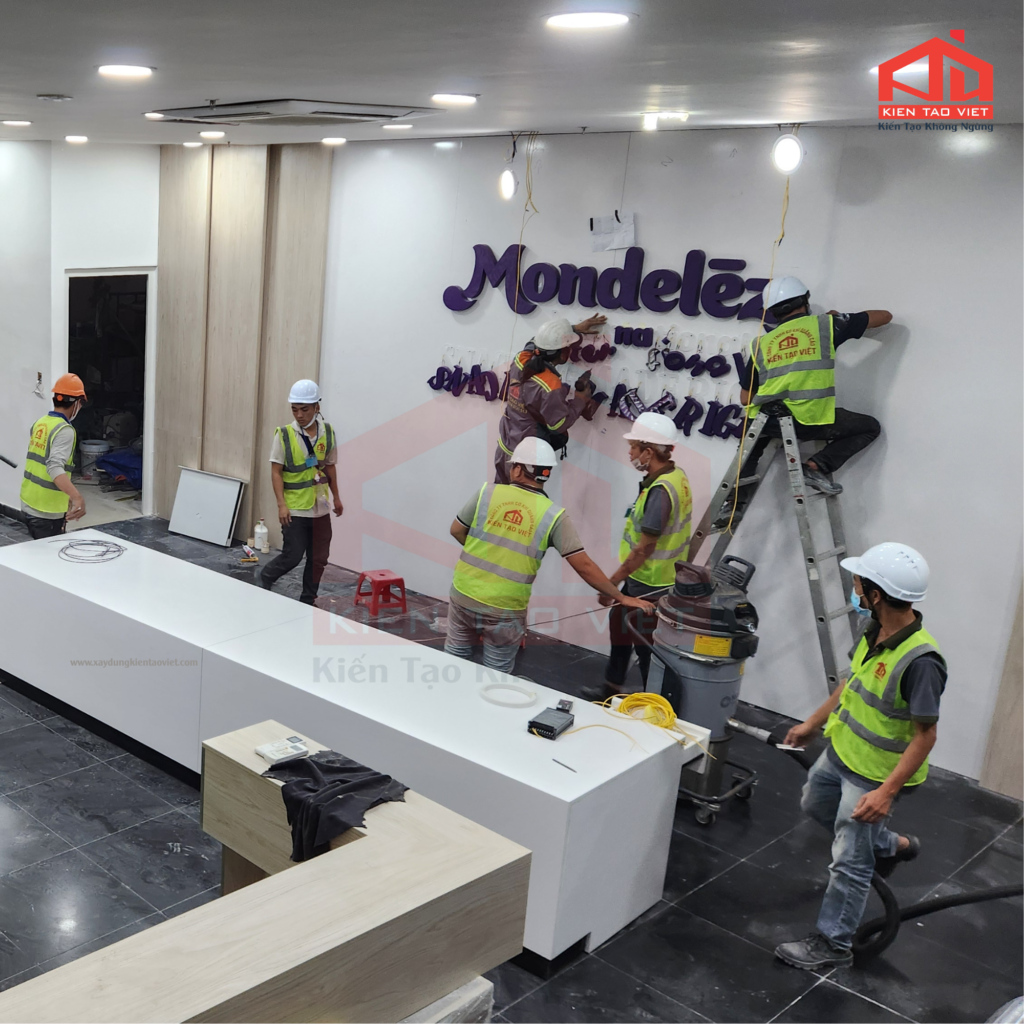
>> Xem thêm: Dự án cải tạo nhà ăn cho Công ty cổ phần Mondelez Kinh Đô của Kiến Tạo Việt
Vì sao nên chọn Kiến Tạo Việt khi thi công trong nhà máy?
Thi công trong nhà máy đang hoạt động đòi hỏi đơn vị thực hiện không chỉ có chuyên môn xây dựng mà còn phải hiểu rõ quy trình sản xuất, yêu cầu về an toàn và cách kiểm soát các yếu tố ảnh hưởng đến môi trường làm việc. Với kinh nghiệm trong lĩnh vực xây dựng công nghiệp và cải tạo cơ sở vật chất, Kiến Tạo Việt luôn mang đến những giải pháp thi công tối ưu, giúp doanh nghiệp hạn chế tối đa ảnh hưởng đến hoạt động sản xuất.
Kinh nghiệm thi công nhiều dự án công nghiệp
Kiến Tạo Việt đã thực hiện nhiều dự án cải tạo nhà máy, nâng cấp nhà xưởng, thi công kết cấu thép và lắp đặt các hạng mục cơ khí công nghiệp. Nhờ kinh nghiệm thực tế, đội ngũ kỹ sư luôn đưa ra phương án thi công phù hợp với từng điều kiện công trình.
Giải pháp thi công an toàn, hạn chế ảnh hưởng đến sản xuất
Mỗi dự án đều được khảo sát kỹ lưỡng trước khi triển khai nhằm xây dựng phương án thi công hợp lý. Các biện pháp kiểm soát bụi và tiếng ồn được áp dụng đồng bộ, giúp giảm tác động đến dây chuyền sản xuất và khu vực làm việc của doanh nghiệp.
Đội ngũ kỹ thuật chuyên môn cao
Đội ngũ kỹ sư và nhân sự thi công của Kiến Tạo Việt được đào tạo bài bản, tuân thủ nghiêm ngặt các quy định về an toàn lao động và quy trình thi công trong môi trường nhà máy.
Cam kết chất lượng và tiến độ
Mọi hạng mục đều được kiểm soát chặt chẽ từ khảo sát, thiết kế, thi công đến nghiệm thu. Điều này giúp công trình đảm bảo chất lượng, hoàn thành đúng tiến độ và hạn chế tối đa các chi phí phát sinh.
Câu hỏi thường gặp
Kiểm soát bụi và tiếng ồn có bắt buộc khi thi công trong nhà máy không?
Có. Đây là yêu cầu quan trọng nhằm đảm bảo an toàn lao động, bảo vệ sức khỏe người làm việc và hạn chế ảnh hưởng đến hoạt động sản xuất cũng như môi trường xung quanh.
Thi công cải tạo nhà máy đang hoạt động cần lưu ý điều gì?
Doanh nghiệp nên lập kế hoạch thi công chi tiết, phân chia khu vực làm việc rõ ràng, áp dụng các biện pháp kiểm soát bụi và tiếng ồn, đồng thời phối hợp chặt chẽ giữa đơn vị thi công và bộ phận vận hành của nhà máy.
Giải pháp nào giúp giảm bụi hiệu quả nhất?
Tùy từng hạng mục thi công, doanh nghiệp có thể kết hợp nhiều giải pháp như lắp đặt vách ngăn, sử dụng hệ thống phun sương, vệ sinh công trường định kỳ và che chắn vật liệu để hạn chế bụi phát tán.
Làm thế nào để hạn chế tiếng ồn trong quá trình thi công?
Doanh nghiệp nên sử dụng thiết bị hiện đại, bố trí thời gian thi công hợp lý, lắp đặt vật liệu cách âm tại khu vực cần thiết và ưu tiên thực hiện các công việc có độ ồn lớn ngoài giờ sản xuất nếu điều kiện cho phép.
Kiến Tạo Việt có nhận thi công cải tạo nhà máy đang vận hành không?
Có. Kiến Tạo Việt cung cấp dịch vụ khảo sát, tư vấn và thi công cải tạo nhà máy, nhà xưởng đang hoạt động với phương án triển khai phù hợp, giúp kiểm soát bụi và tiếng ồn hiệu quả, đồng thời hạn chế tối đa ảnh hưởng đến hoạt động sản xuất.
Kết luận
Kiểm soát bụi và tiếng ồn không chỉ giúp bảo vệ sức khỏe người lao động mà còn góp phần duy trì môi trường làm việc an toàn, đảm bảo chất lượng sản phẩm và hạn chế gián đoạn trong quá trình sản xuất. Việc chủ động áp dụng các giải pháp phù hợp ngay từ giai đoạn lập kế hoạch sẽ giúp doanh nghiệp giảm thiểu rủi ro, kiểm soát tiến độ và nâng cao hiệu quả của dự án.
Đối với những công trình cải tạo hoặc xây dựng trong nhà máy đang hoạt động, lựa chọn đơn vị thi công có kinh nghiệm là yếu tố quan trọng để đảm bảo công trình được triển khai an toàn, đúng kỹ thuật và đáp ứng các yêu cầu về môi trường.
Liên hệ Kiến Tạo Việt
Với nhiều năm kinh nghiệm trong lĩnh vực xây dựng công nghiệp, cải tạo nhà máy, cải tạo nhà xưởng và thi công cơ khí, Kiến Tạo Việt luôn đồng hành cùng doanh nghiệp trong việc triển khai các dự án an toàn, hiệu quả và tối ưu chi phí.
Từ khảo sát hiện trạng, lập phương án thi công đến triển khai thực tế, đội ngũ kỹ sư của Kiến Tạo Việt luôn chú trọng các giải pháp kiểm soát bụi và tiếng ồn, giúp hạn chế tối đa ảnh hưởng đến hoạt động sản xuất và đảm bảo tiến độ công trình.
Liên hệ Kiến Tạo Việt ngay hôm nay để được tư vấn giải pháp thi công phù hợp, an toàn và hiệu quả cho nhà máy của doanh nghiệp bạn.

Lockout Tagout (LOTO) is a safety procedure used to control and isolate hazardous energy sources before maintenance or repair work is carried out on industrial equipment. Proper implementation of LOTO not only minimizes the risk of workplace accidents but also helps create a safer working environment, ensuring maintenance activities are performed efficiently while complying with recognized safety standards.
What is Lockout Tagout?
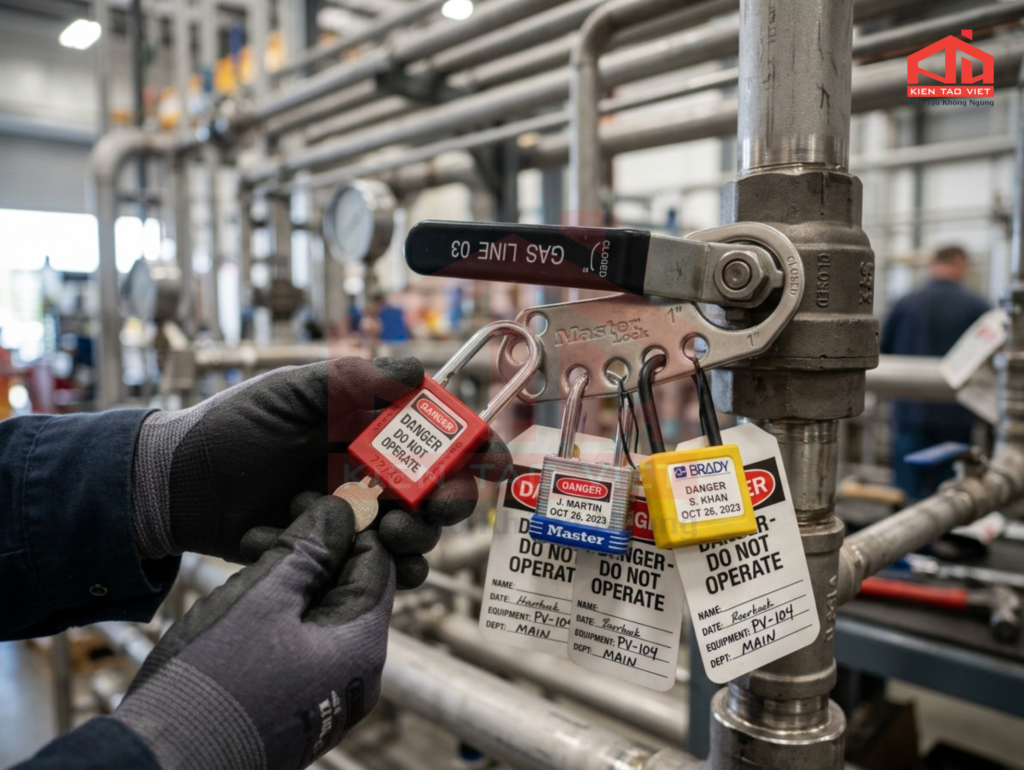
Lockout Tagout (LOTO) is a hazardous energy control procedure designed to prevent machinery or equipment from being unintentionally started during maintenance, servicing, cleaning, or repair activities. The process involves isolating energy sources, applying lockout devices, and attaching warning tags to protect maintenance personnel from potential hazards.
In modern industrial environments, simply turning off a machine does not always eliminate the risk. Many types of equipment can retain stored energy even after the primary power source has been disconnected. If this residual energy is not properly controlled, the equipment may unexpectedly restart, putting maintenance technicians and workers at serious risk.
For this reason, Lockout Tagout has become an essential component of industrial safety management systems. Many manufacturing companies have incorporated LOTO into their standard operating procedures to reduce workplace hazards and improve the safety of maintenance operations.
What is the difference between Lockout and Tagout?
Although Lockout and Tagout are commonly mentioned together, they serve different functions within the LOTO procedure.
What is Lockout?
Lockout is the process of using a specialized locking device to secure an energy-isolating device, such as an electrical disconnect switch, pneumatic valve, or hydraulic valve. Once the lock has been properly installed, the equipment cannot be restarted until the lock is removed.
The primary purpose of Lockout is to create a physical barrier that completely prevents hazardous energy from being restored while maintenance work is in progress.
What is Tagout?
Tagout involves attaching a warning tag to the locked energy-isolating device to indicate that the equipment is currently undergoing maintenance or repair and must not be operated.
A typical warning tag includes information such as:
– Name of the authorized employee
– Lockout date and time
– Reason for the lockout
– “Do Not Operate” warning
Unlike Lockout, Tagout serves only as a visual warning. It does not physically prevent the equipment from being energized unless it is used together with an appropriate lockout device.
Comparison between Lockout and Tagout
| Criteria | Lockout | Tagout |
| Purpose | Physically prevents equipment from operating | Warns personnel not to operate the equipment |
| Device Used | Safety padlock, valve lockout, circuit breaker lockout | Warning tag |
| Level of Protection | Physically prevents hazardous energy from being restored | Provides visual warning only |
| Role | Mandatory component of the LOTO procedure | Supports hazard communication and identification |
| Effectiveness | Highly effective | Most effective when used together with Lockout |
In practice, Lockout and Tagout should always be applied together. While Lockout physically isolates hazardous energy, Tagout ensures that everyone working around the equipment is aware that maintenance activities are in progress. Combining these two measures significantly improves workplace safety and helps prevent accidental equipment startup.
>> Read more: What Is HSE in Construction? Understanding Its Role and Importance
Why is Lockout Tagout important in industrial facilities?
Manufacturing plants and industrial facilities rely on machinery powered by various forms of energy, including electricity, compressed air, hydraulics, and thermal energy. During maintenance, even a single accidental startup or an improperly isolated energy source can result in serious injuries.
Implementing a Lockout Tagout program provides several important benefits:
– Protects technicians and maintenance personnel.
– Prevents unexpected equipment startup.
– Reduces the risk of hazardous energy-related accidents.
– Standardizes maintenance safety procedures.
– Supports compliance with internationally recognized safety requirements.
For manufacturing businesses, Lockout Tagout is more than just a technical procedure. It demonstrates a strong commitment to employee safety and reflects a professional approach to operational risk management.
Lockout Tagout devices
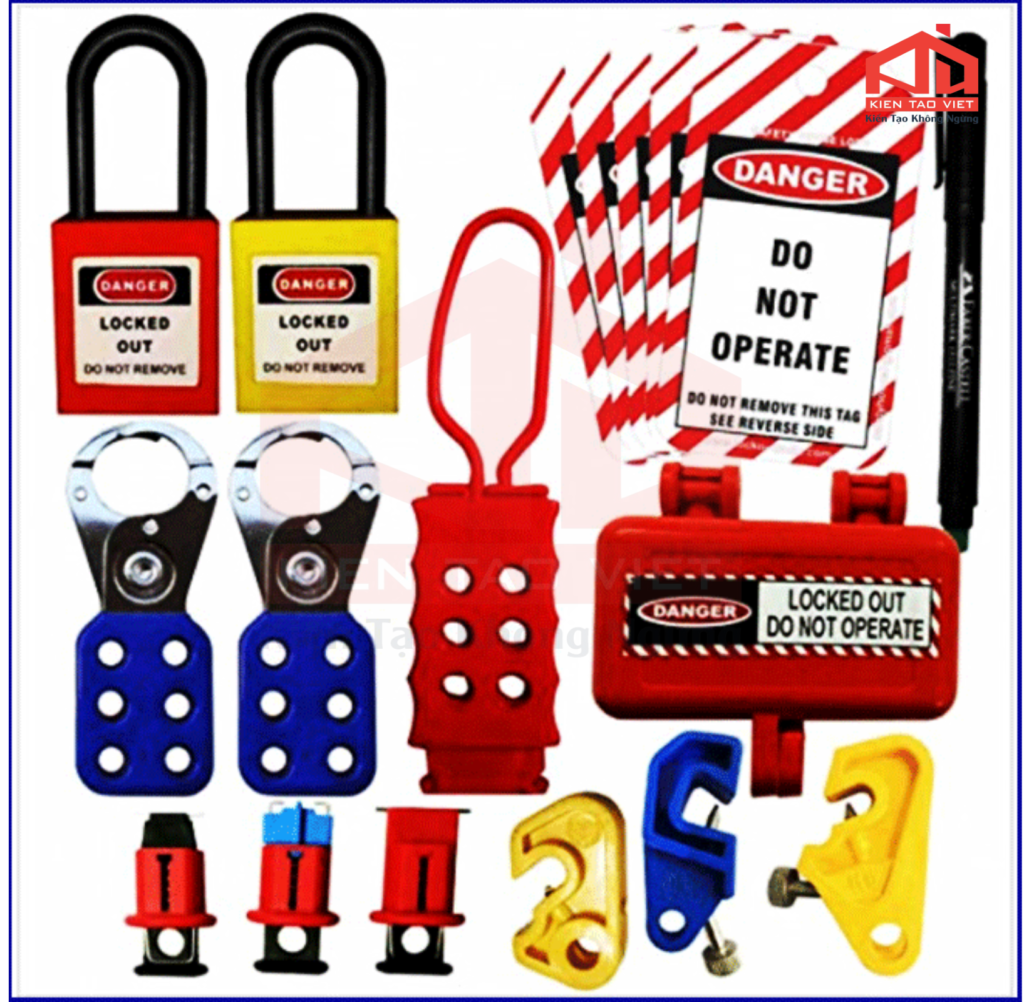
To implement an effective Lockout Tagout (LOTO) program, businesses should equip their facilities with appropriate lockout and warning devices designed for different types of machinery and energy isolation points.
Below are the most commonly used Lockout Tagout devices in industrial facilities.
Safety padlocks
Safety padlocks are specially designed for Lockout procedures. Each padlock is assigned a unique key, ensuring that only the authorized employee who installed the lock can remove it after the maintenance work has been completed.
This provides an additional layer of protection by preventing unauthorized personnel from restoring power to the equipment.
Warning tags (Tagout)
Warning tags are attached to lockout devices to indicate that maintenance or servicing is currently being performed and that the equipment must not be operated.
These tags are typically manufactured from durable materials that are resistant to water, chemicals, tearing, and harsh industrial environments. A standard tag generally includes the technician’s name, lockout date, reason for the lockout, and a clear “Do Not Operate” warning.
Circuit breaker lockouts
Circuit breaker lockout devices are used to secure electrical breakers or disconnect switches, preventing electricity from being restored while maintenance work is underway.
These devices are widely used in electrical control panels and power distribution systems throughout manufacturing facilities.
Valve lockout devices
Valve lockouts are designed to secure valves used in compressed air, steam, hydraulic, gas, or liquid systems. Once installed, they prevent the valve from being accidentally opened during maintenance.
Different valve lockout designs are available to accommodate gate valves, ball valves, butterfly valves, and other industrial valve types.
Lockout hasps
A lockout hasp allows multiple authorized employees to apply their personal padlocks to a single energy isolation point.
The equipment cannot be re-energized until every worker has removed their individual lock, making this device particularly useful for team maintenance activities.
Applications of Lockout Tagout in industrial facilities
Lockout Tagout is widely applied during maintenance, repair, inspection, cleaning, and servicing activities involving equipment that contains hazardous energy sources. By following the proper procedure, organizations can significantly reduce workplace risks while ensuring machinery remains safely isolated until maintenance has been completed.
The following are some of the most common applications of Lockout Tagout in industrial facilities.
Machine and production line maintenance
One of the primary applications of Lockout Tagout is preventive and corrective maintenance.
Before replacing components, repairing equipment, or carrying out scheduled maintenance, all hazardous energy sources must be completely isolated and locked.
Applying Lockout Tagout prevents machinery from being accidentally started while maintenance personnel are working, significantly reducing the risk of workplace injuries.
Example
A technician is replacing a bearing on a conveyor motor. If another employee accidentally starts the conveyor from the control room, the technician could become trapped in the drive mechanism.
When the Lockout Tagout procedure has been properly implemented, the electrical disconnect remains locked and tagged, preventing power from being restored until the maintenance work has been completed.
Equipment inspection and cleaning
Many industrial machines require routine cleaning to maintain performance and product quality.
During cleaning, workers often need to access moving parts or areas where hazardous energy may still be present.
Applying Lockout Tagout before cleaning eliminates the risk of unexpected equipment startup, providing a safer working environment for maintenance personnel.
Electrical system maintenance
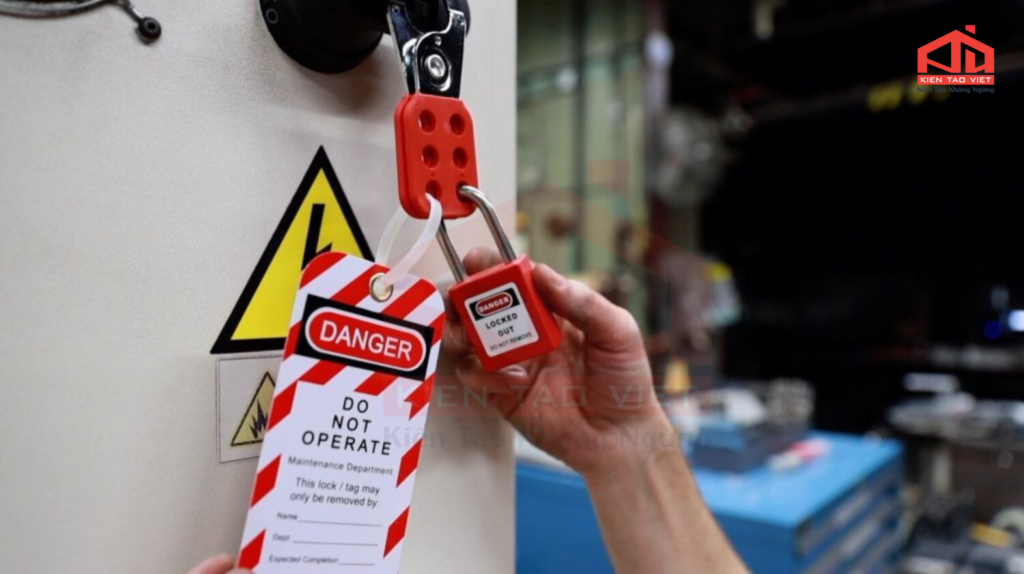
When servicing electrical panels, control cabinets, or power distribution systems, technicians must lock electrical disconnect devices and attach warning tags to prevent others from unintentionally restoring power.
This application of Lockout Tagout plays a vital role in preventing electrical shock, arc flash incidents, and equipment damage during maintenance.
Pneumatic and hydraulic system maintenance
Equipment powered by compressed air or hydraulic systems may retain residual pressure even after normal shutdown.
Before disconnecting pipes, valves, hoses, or cylinders, technicians should isolate the energy source and safely release any stored pressure.
This helps prevent sudden releases of hydraulic oil or compressed air that could cause serious injuries.
Steam and thermal system maintenance
Boilers, steam pipelines, and heating systems operate under high temperatures and pressure.
Before maintenance begins, the energy source must be isolated and the equipment allowed to cool to a safe operating temperature.
Following these precautions helps protect workers from burns, excessive pressure, and accidental steam releases.
Benefits of implementing Lockout Tagout
Implementing a comprehensive Lockout Tagout program provides significant advantages for both employees and businesses.
Reduces workplace accidents
The most important benefit of Lockout Tagout is preventing injuries caused by hazardous energy.
By ensuring that all energy sources are properly isolated, organizations can greatly reduce accidents such as:
– Electrical shock
– Crush injuries
– Contact with moving machinery
– Thermal burns
– Hydraulic or pneumatic system failures
– Chemical releases
Protects employees
A safe working environment allows maintenance personnel to perform their duties with greater confidence and reduced risk.
More importantly, it strengthens employee awareness of safety procedures and encourages a proactive safety culture throughout the organization.
Reduces operational costs
Workplace accidents can result in substantial financial losses, including:
– Employee compensation
– Equipment repair costs
– Production downtime
– Delivery delays
– Reduced operational efficiency
Implementing Lockout Tagout is a long-term investment that helps minimize these avoidable costs while improving overall operational reliability.
Improving maintenance efficiency
A standardized Lockout Tagout procedure enables maintenance personnel to perform their work in a safe, organized, and systematic manner.
By following clearly defined procedures, businesses can reduce maintenance errors, improve equipment reliability, and enhance the overall effectiveness of maintenance management programs.
Supporting safety compliance
Today, many organizations incorporate Lockout Tagout into their occupational health and safety management systems.
Proper implementation of the LOTO procedure not only helps organizations comply with recognized workplace safety requirements but also demonstrates a strong commitment to employee well-being. In addition, maintaining a well-established Lockout Tagout program can enhance a company’s professional image and strengthen confidence among customers, business partners, and regulatory authorities.
>> Read more: Industrial Construction Risks: Common Challenges and How to Prevent Them
Best practices for implementing Lockout Tagout
To maximize the effectiveness of a Lockout Tagout program, organizations should establish clear procedures and ensure consistent compliance across all departments.
The following best practices are recommended:
– Only trained and authorized employees should perform Lockout Tagout procedures.
– Each authorized employee should use a personal safety padlock and retain sole control of its key.
– Never remove another person’s lock or warning tag without following the organization’s approved authorization process.
– Always verify that all hazardous energy sources have been completely isolated before beginning maintenance work.
– Regularly inspect and maintain Lockout Tagout devices to ensure they remain in good working condition.
– Develop documented Lockout Tagout procedures for each type of equipment and communicate them to all relevant personnel.
– Conduct regular safety training and practical drills to improve employee awareness and ensure procedural consistency.
Following these best practices helps organizations establish a reliable hazardous energy control program while significantly reducing workplace risks.
Frequently Asked Questions (FAQ)
Is Lockout Tagout mandatory in every industrial facility?
The requirement depends on the type of industry, applicable regulations, and the equipment being used. However, whenever hazardous energy sources are present, implementing a Lockout Tagout procedure is considered a best practice for protecting maintenance personnel and preventing accidental equipment startup.
Can Lockout and Tagout be used separately?
They should be used together whenever possible.
Lockout provides physical protection by preventing equipment from being energized, while Tagout serves as a visual warning to inform others that maintenance is in progress. Combining both measures offers the highest level of workplace safety.
Who is authorized to remove a Lockout device?
In general, only the authorized employee who applied the lock should remove it after confirming that maintenance work has been completed and the equipment is safe to return to service.
Organizations may establish specific procedures for exceptional situations, but unauthorized removal of a lock should never occur.
When should Lockout Tagout be applied?
Lockout Tagout should be performed before any maintenance, repair, inspection, cleaning, servicing, or component replacement involving machinery or equipment that contains hazardous energy.
Implementing the procedure before work begins is essential for preventing unexpected startup and protecting maintenance personnel.
Conclusion
Lockout Tagout (LOTO) is a fundamental hazardous energy control procedure that plays a critical role in protecting workers and ensuring safe maintenance operations in industrial facilities. When properly implemented, the LOTO process helps prevent workplace accidents, improves maintenance efficiency, and supports a safer, more productive working environment.
Understanding the principles of Lockout Tagout and consistently following established procedures enables organizations to minimize operational risks, strengthen workplace safety, and maintain reliable production processes.
With extensive experience in industrial construction and factory development, Kien Tao Viet is committed to delivering solutions that prioritize safety, quality, and long-term operational efficiency. In addition to providing professional design and construction services, we continuously share practical industry knowledge to help businesses build safer and more sustainable industrial facilities.
If you are looking for a trusted partner for industrial facility consulting, factory design, or construction services, Kien Tao Viet is ready to provide tailored solutions that meet your operational requirements while ensuring the highest standards of quality and safety.

Lockout Tagout là quy trình an toàn giúp kiểm soát và cô lập các nguồn năng lượng nguy hiểm trước khi bảo trì hoặc sửa chữa thiết bị trong nhà máy. Việc áp dụng đúng LOTO không chỉ giảm nguy cơ tai nạn lao động mà còn góp phần xây dựng môi trường sản xuất an toàn, đảm bảo hoạt động bảo trì diễn ra hiệu quả và tuân thủ các tiêu chuẩn an toàn.
Lockout Tagout là gì?
Lockout Tagout (LOTO) là quy trình kiểm soát nguồn năng lượng nguy hiểm nhằm đảm bảo máy móc hoặc thiết bị không thể khởi động ngoài ý muốn trong suốt quá trình bảo trì, sửa chữa hoặc vệ sinh. Quy trình này được thực hiện bằng cách cô lập nguồn năng lượng, khóa thiết bị và gắn thẻ cảnh báo, giúp bảo vệ người trực tiếp làm việc khỏi những rủi ro có thể xảy ra.
Trong môi trường sản xuất hiện đại, nhiều thiết bị vẫn có thể lưu trữ năng lượng ngay cả khi đã tắt nguồn. Nếu nguồn năng lượng này không được kiểm soát triệt để, máy móc có thể bất ngờ vận hành trở lại, gây nguy hiểm cho kỹ thuật viên và công nhân đang làm việc.
Chính vì vậy, Lockout Tagout được xem là một trong những quy trình quan trọng trong hệ thống quản lý an toàn của nhà máy. Nhiều doanh nghiệp sản xuất hiện nay đã đưa LOTO vào quy trình vận hành tiêu chuẩn nhằm giảm thiểu rủi ro và nâng cao mức độ an toàn trong quá trình bảo trì thiết bị. Nội dung này dựa trên các khái niệm và quy trình được trình bày trong tài liệu tham khảo bạn cung cấp, nhưng đã được diễn đạt lại theo văn phong mới.
Lockout và Tagout khác nhau như thế nào?
Mặc dù thường được nhắc đến cùng nhau, Lockout và Tagout đảm nhiệm hai vai trò khác nhau trong quy trình LOTO.
Lockout là gì?
Lockout là thao tác sử dụng thiết bị khóa chuyên dụng để cố định bộ phận cách ly nguồn năng lượng như cầu dao điện, van khí nén hoặc van thủy lực. Khi khóa đã được lắp đặt đúng cách, thiết bị sẽ không thể được khởi động nếu chưa tháo khóa.
Điểm quan trọng của Lockout là tạo ra rào cản vật lý, giúp ngăn chặn hoàn toàn việc cấp năng lượng cho máy móc trong thời gian bảo trì.
Tagout là gì?
Tagout là bước gắn thẻ cảnh báo tại vị trí đã khóa nhằm thông báo rằng thiết bị đang được bảo trì hoặc sửa chữa và không được phép vận hành.
Trên thẻ cảnh báo thường thể hiện các thông tin như:
– Tên người thực hiện.
– Thời gian khóa.
– Lý do khóa thiết bị.
– Cảnh báo không được vận hành.
Khác với Lockout, Tagout chỉ mang tính cảnh báo trực quan và không có khả năng ngăn chặn việc khởi động thiết bị nếu không kết hợp cùng khóa an toàn.
So sánh Lockout và Tagout
| Tiêu chí | Lockout | Tagout |
| Mục đích | Ngăn thiết bị hoạt động bằng khóa vật lý | Cảnh báo người vận hành |
| Thiết bị sử dụng | Khóa an toàn, khóa van, khóa cầu dao | Thẻ cảnh báo |
| Khả năng bảo vệ | Ngăn chặn trực tiếp việc cấp năng lượng | Chỉ cung cấp thông tin cảnh báo |
| Vai trò | Bắt buộc trong quy trình LOTO | Hỗ trợ nhận diện và cảnh báo |
| Hiệu quả | Cao | Phát huy hiệu quả khi kết hợp với Lockout |
Trong thực tế, Lockout và Tagout luôn được thực hiện đồng thời để vừa kiểm soát nguồn năng lượng, vừa đảm bảo mọi người trong khu vực nhận biết rằng thiết bị đang ở trạng thái bảo trì. Cách kết hợp này góp phần nâng cao hiệu quả của quy trình an toàn và hạn chế tối đa các sự cố do vận hành ngoài ý muốn.
>> Xem thêm: HSE Trong Xây Dựng Là Gì? Vai Trò Và Tầm Quan Trọng
Vì sao Lockout Tagout quan trọng trong nhà máy?
Trong các nhà máy sản xuất, hệ thống máy móc thường vận hành với công suất lớn và sử dụng nhiều nguồn năng lượng khác nhau như điện, khí nén, thủy lực hay nhiệt. Khi tiến hành bảo trì, chỉ cần một thao tác khởi động nhầm hoặc nguồn năng lượng chưa được cô lập hoàn toàn cũng có thể dẫn đến tai nạn nghiêm trọng.
Việc áp dụng Lockout Tagout mang lại nhiều giá trị thiết thực như:
– Bảo vệ kỹ thuật viên và công nhân trong quá trình bảo trì.
– Ngăn ngừa máy móc khởi động ngoài ý muốn.
– Giảm nguy cơ tai nạn lao động liên quan đến nguồn năng lượng nguy hiểm.
– Chuẩn hóa quy trình bảo trì trong nhà máy.
– Góp phần đáp ứng các yêu cầu về an toàn theo tiêu chuẩn quốc tế.
Đối với các doanh nghiệp sản xuất, LOTO không chỉ là một quy trình kỹ thuật mà còn thể hiện sự quan tâm đến an toàn của người lao động và tính chuyên nghiệp trong công tác quản lý vận hành.
Các thiết bị sử dụng trong quy trình Lockout Tagout
Để triển khai LOTO hiệu quả, doanh nghiệp cần trang bị đầy đủ các thiết bị khóa và cảnh báo phù hợp với từng loại máy móc.
Một số thiết bị được sử dụng phổ biến gồm:
Khóa an toàn (Safety Padlock)
Khóa an toàn được thiết kế chuyên dụng cho quy trình Lockout. Mỗi khóa thường có mã số riêng và chỉ người sở hữu chìa khóa mới được phép mở.
Thẻ cảnh báo (Tagout)
Thẻ cảnh báo giúp nhận biết thiết bị đang được bảo trì và không được phép vận hành. Thẻ thường được làm từ vật liệu có khả năng chống nước, chống rách và chịu được môi trường làm việc khắc nghiệt.
Khóa cầu dao
Được sử dụng để khóa các loại aptomat hoặc cầu dao điện nhằm ngăn việc cấp điện trở lại trong quá trình sửa chữa.
Khóa van
Áp dụng cho các hệ thống sử dụng khí nén, hơi nước hoặc chất lỏng nhằm cố định van ở trạng thái đóng.
Khóa nhóm (Lockout Hasp)
Thiết bị này cho phép nhiều kỹ thuật viên cùng khóa trên một điểm cách ly nguồn năng lượng. Thiết bị chỉ có thể được mở khi tất cả người tham gia đã tháo khóa cá nhân của mình.
Ứng dụng của Lockout Tagout trong nhà máy
Lockout Tagout được áp dụng trong hầu hết các hoạt động liên quan đến bảo trì, sửa chữa, vệ sinh hoặc kiểm tra máy móc có sử dụng nguồn năng lượng nguy hiểm. Việc triển khai đúng quy trình giúp hạn chế rủi ro trong quá trình làm việc, đồng thời đảm bảo thiết bị chỉ được vận hành trở lại khi đã đáp ứng đầy đủ các điều kiện an toàn.
Dưới đây là một số ứng dụng phổ biến của Lockout Tagout trong nhà máy.
Bảo trì máy móc và dây chuyền sản xuất
Đây là lĩnh vực ứng dụng phổ biến nhất của LOTO. Trước khi tiến hành thay thế linh kiện, sửa chữa hoặc bảo dưỡng định kỳ, toàn bộ nguồn năng lượng cấp cho máy cần được cô lập và khóa an toàn.
Việc thực hiện Lockout Tagout giúp ngăn chặn tình trạng thiết bị bất ngờ khởi động trong khi kỹ thuật viên đang làm việc, từ đó giảm thiểu nguy cơ tai nạn lao động.
Ví dụ
Một kỹ thuật viên cần thay bạc đạn cho động cơ băng tải. Nếu băng tải vô tình được khởi động từ phòng điều khiển trong lúc sửa chữa, người thực hiện có thể bị cuốn vào hệ thống truyền động. Khi áp dụng LOTO đúng quy trình, cầu dao đã được khóa và gắn thẻ cảnh báo nên thiết bị không thể cấp điện trở lại cho đến khi công việc hoàn tất.
Kiểm tra và vệ sinh thiết bị
Nhiều loại máy móc cần được vệ sinh định kỳ để duy trì hiệu suất hoạt động. Tuy nhiên, trong quá trình vệ sinh, người lao động thường phải tiếp cận gần các bộ phận chuyển động hoặc khu vực có nguồn năng lượng nguy hiểm.
Áp dụng Lockout Tagout trước khi vệ sinh giúp loại bỏ nguy cơ thiết bị hoạt động ngoài ý muốn, tạo điều kiện làm việc an toàn hơn cho nhân viên.
Sửa chữa hệ thống điện
Khi thực hiện các công việc liên quan đến tủ điện, bảng điều khiển hoặc hệ thống cấp nguồn, kỹ thuật viên cần khóa các thiết bị đóng cắt điện và gắn thẻ cảnh báo để tránh việc người khác vô tình cấp điện trở lại.
Đây là một trong những ứng dụng quan trọng của Lockout Tagout nhằm phòng ngừa nguy cơ điện giật và chập cháy trong quá trình sửa chữa.
Bảo trì hệ thống khí nén và thủy lực
Các thiết bị sử dụng khí nén hoặc thủy lực thường tồn tại áp suất dư ngay cả khi đã dừng vận hành.
Trước khi tháo đường ống, van hoặc xi lanh, người thực hiện cần khóa nguồn cấp và xả toàn bộ áp suất còn lại trong hệ thống. Điều này giúp hạn chế tình trạng dầu hoặc khí nén phun mạnh gây mất an toàn
Bảo trì thiết bị sử dụng hơi nước hoặc nhiệt
Đối với lò hơi, hệ thống gia nhiệt hoặc đường ống hơi, việc cô lập nguồn cấp và chờ thiết bị giảm xuống mức nhiệt độ an toàn là yêu cầu bắt buộc trước khi tiến hành sửa chữa.
Nhờ đó, người lao động tránh được các nguy cơ như bỏng nhiệt, áp suất cao hoặc rò rỉ hơi nước.
Lợi ích khi doanh nghiệp áp dụng Lockout Tagout
Việc triển khai Lockout Tagout không chỉ giúp bảo vệ người lao động mà còn mang lại nhiều lợi ích cho doanh nghiệp trong hoạt động sản xuất và quản lý an toàn.
Giảm nguy cơ tai nạn lao động
Đây là lợi ích quan trọng nhất của quy trình LOTO.
Khi các nguồn năng lượng được kiểm soát chặt chẽ, nguy cơ thiết bị khởi động ngoài ý muốn sẽ được giảm đáng kể, từ đó hạn chế các tai nạn như:
– Điện giật.
– Kẹp tay vào máy.
– Va đập bởi bộ phận chuyển động.
– Bỏng nhiệt.
– Rò rỉ hóa chất hoặc khí nén.
Bảo vệ người lao động
Một môi trường làm việc an toàn giúp người lao động yên tâm thực hiện công việc, đặc biệt đối với đội ngũ kỹ thuật và bảo trì – những người thường xuyên tiếp xúc trực tiếp với máy móc.
Điều này cũng góp phần nâng cao ý thức tuân thủ quy trình an toàn trong toàn doanh nghiệp.
Giảm thiểu chi phí phát sinh
Tai nạn lao động có thể kéo theo nhiều chi phí như:
– Bồi thường cho người lao động.
– Chi phí sửa chữa thiết bị.
– Thời gian dừng sản xuất.
– Ảnh hưởng đến tiến độ giao hàng.
Việc đầu tư xây dựng và thực hiện quy trình Lockout Tagout giúp doanh nghiệp hạn chế những tổn thất này trong dài hạn.
Nâng cao hiệu quả bảo trì
Khi quy trình được chuẩn hóa, nhân viên bảo trì có thể thực hiện công việc một cách an toàn và có hệ thống.
Điều này giúp giảm sai sót trong quá trình sửa chữa, đồng thời nâng cao hiệu quả quản lý thiết bị của doanh nghiệp.
Đáp ứng yêu cầu về an toàn
Nhiều doanh nghiệp hiện nay áp dụng Lockout Tagout như một phần trong hệ thống quản lý an toàn và sức khỏe nghề nghiệp.
Việc thực hiện đúng quy trình không chỉ góp phần đáp ứng các tiêu chuẩn an toàn mà còn nâng cao hình ảnh chuyên nghiệp của doanh nghiệp đối với khách hàng và đối tác.
>>Xem thêm: Những Rủi Ro Thường Gặp Trong Xây Dựng Công Nghiệp Và Cách Phòng Tránh
Những lưu ý khi triển khai Lockout Tagout
Để quy trình LOTO phát huy hiệu quả, doanh nghiệp cần lưu ý một số vấn đề sau:
– Chỉ những người đã được đào tạo mới được phép thực hiện Lockout Tagout.
– Mỗi người sử dụng một khóa cá nhân và tự quản lý chìa khóa của mình.
– Không tháo khóa hoặc thẻ cảnh báo của người khác khi chưa được phép.
– Luôn xác minh thiết bị đã ở trạng thái an toàn trước khi bắt đầu bảo trì.
– Kiểm tra định kỳ các thiết bị Lockout Tagout để đảm bảo vẫn hoạt động tốt.
– Xây dựng quy trình LOTO bằng văn bản và phổ biến đến toàn bộ nhân sự liên quan.
– Thường xuyên tổ chức đào tạo và diễn tập để nâng cao nhận thức về an toàn.
Việc tuân thủ đầy đủ các nguyên tắc trên sẽ giúp quy trình Lockout Tagout được triển khai thống nhất và mang lại hiệu quả cao trong thực tế.
Câu hỏi thường gặp về Lockout Tagout
Lockout Tagout có bắt buộc trong mọi nhà máy không?
Điều này phụ thuộc vào loại hình sản xuất và quy định áp dụng. Tuy nhiên, đối với các thiết bị có nguồn năng lượng nguy hiểm, việc triển khai quy trình LOTO là giải pháp quan trọng nhằm đảm bảo an toàn trong quá trình bảo trì và sửa chữa.
Lockout và Tagout có thể sử dụng riêng lẻ không?
Không nên. Lockout tạo ra sự ngăn chặn về mặt vật lý, trong khi Tagout đóng vai trò cảnh báo. Hai biện pháp cần được kết hợp để nâng cao hiệu quả kiểm soát rủi ro.
Ai được phép tháo khóa Lockout?
Chỉ người trực tiếp đặt khóa hoặc người được doanh nghiệp ủy quyền theo quy trình nội bộ mới được phép tháo khóa sau khi xác nhận công việc đã hoàn thành và thiết bị đủ điều kiện vận hành trở lại.
Khi nào cần thực hiện Lockout Tagout?
LOTO nên được áp dụng trước các công việc như bảo trì, sửa chữa, kiểm tra, vệ sinh hoặc thay thế linh kiện trên những thiết bị có khả năng phát sinh nguồn năng lượng nguy hiểm.
Kết luận
Lockout Tagout là quy trình kiểm soát nguồn năng lượng nguy hiểm đóng vai trò quan trọng trong việc bảo vệ người lao động và đảm bảo an toàn trong quá trình bảo trì, sửa chữa thiết bị. Việc triển khai đúng quy trình không chỉ giúp giảm thiểu rủi ro tai nạn mà còn góp phần chuẩn hóa công tác quản lý an toàn, nâng cao hiệu quả vận hành và xây dựng môi trường sản xuất chuyên nghiệp.
Việc hiểu rõ Lockout Tagout (LOTO) và áp dụng đúng quy trình không chỉ giúp đảm bảo an toàn cho người lao động mà còn góp phần giảm thiểu rủi ro, hạn chế tai nạn và nâng cao hiệu quả vận hành trong nhà máy.
Với kinh nghiệm trong lĩnh vực xây dựng công nghiệp và thi công nhà xưởng, Kiến Tạo Việt luôn chú trọng các giải pháp đáp ứng tiêu chuẩn an toàn trong quá trình thiết kế và thi công. Nếu doanh nghiệp của bạn đang tìm kiếm đơn vị tư vấn, thiết kế hoặc xây dựng nhà máy, nhà xưởng chuyên nghiệp, hãy liên hệ Kiến Tạo Việt để được hỗ trợ giải pháp tối ưu, phù hợp với nhu cầu thực tế và đảm bảo chất lượng công trình.
Industrial Construction is a field that requires close coordination between multiple stages, including design, construction, workforce management, schedule control, and quality assurance. A small mistake at any stage can lead to additional costs, extended construction timelines, or directly affect the investment efficiency of a business.
In reality, industrial construction projects often face various risks such as workplace safety issues, material price fluctuations, labor shortages, design changes, and legal challenges. If these risks are not identified and controlled early, they can create significant impacts on the entire project.
So, what are the most common risks in industrial construction, and what should businesses do to minimize them? Let’s explore with Kien Tao Viet in the following article.
Why Is Risk Management in Industrial Construction Important?
Unlike conventional civil construction projects, Industrial Construction projects typically involve large-scale developments, long construction periods, and the participation of multiple parties, including investors, design consultants, main contractors, subcontractors, and material suppliers.
Therefore, a lack of coordination in just one stage can affect the entire project timeline. A minor design modification, delayed material supply, or shortage of skilled workers can result in additional expenses and extend the completion schedule.
Effective risk management not only helps businesses proactively handle unexpected situations but also contributes to maintaining construction quality, controlling budgets, ensuring project progress, and improving safety throughout the construction process.
Especially as many companies are increasing investments in factories, warehouses, and production facilities, establishing a comprehensive risk management plan has become a critical factor in improving project efficiency.

8 Common Risks in Industrial Construction
1. Occupational Safety Risks
Workplace safety is always the top priority in every Industrial Construction project. Construction sites often involve a large number of workers, heavy equipment, and complex machinery, creating potential hazards if safety management is not strictly implemented.
Common incidents such as falls from heights, electric shocks, machinery collisions, scaffolding failures, or falling materials can cause serious consequences, affecting workers’ health and disrupting construction activities.
In addition, inadequate protective equipment, failure to follow safety procedures, or insufficient worker training can significantly increase the risk of accidents at construction sites.
Prevention Solutions
– Provide complete personal protective equipment that meets safety standards.
– Organize regular occupational safety training for all employees.
– Establish daily site inspection procedures.
– Assign safety supervisors throughout the construction process.
– Regularly inspect and maintain machinery and equipment.
Note: Building a strong safety culture within the organization can significantly reduce incidents and improve the overall productivity of the workforce.
2. Construction Schedule Risks
Project timeline is one of the key factors determining the success of an industrial construction project. However, many projects experience delays due to unrealistic planning or unexpected issues arising during implementation.
Common causes include material shortages, unfavorable weather conditions, design modifications, delayed site clearance, or ineffective coordination among project stakeholders.
When construction progress is affected, businesses may face additional expenses and the risk of delaying the operation of the facility, reducing overall investment efficiency.
Prevention Solutions
– Develop a detailed construction schedule for each project phase.
– Prepare contingency plans for unexpected situations.
– Monitor progress through project management software.
– Maintain regular communication between investors, designers, and contractors.
– Closely control material and equipment supply sources.
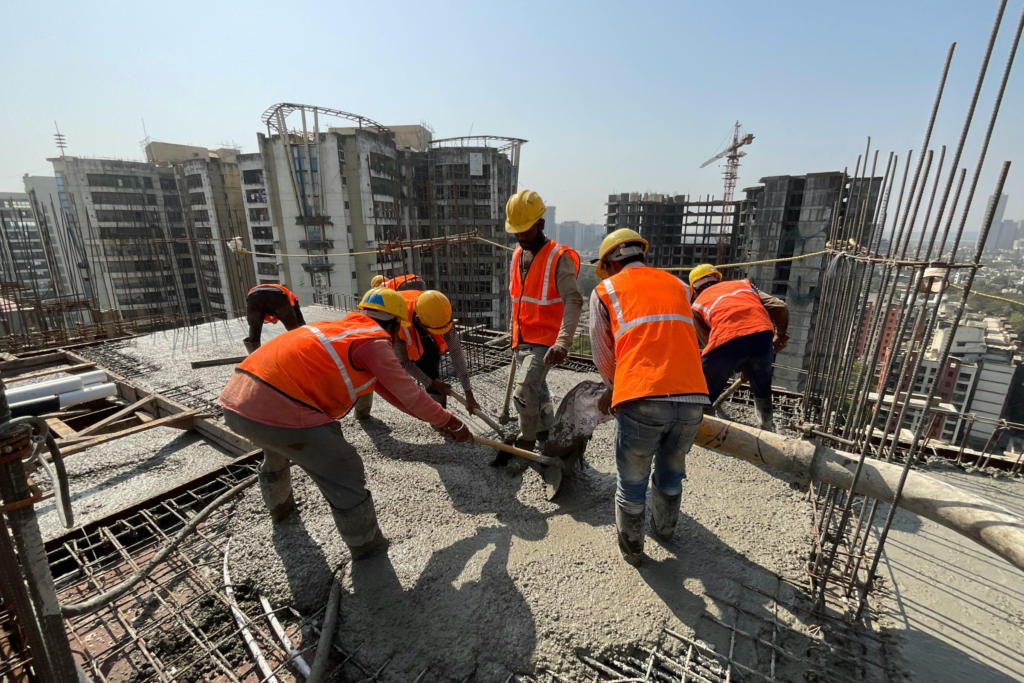
3. Cost and Financial Risks
Besides project timelines, cost control is another major challenge in Industrial Construction. Many projects experience budget overruns due to fluctuations in material prices, changes in workload, or ineffective financial management.
Additionally, delayed payments, insufficient working capital, or inaccurate initial estimates can create difficulties during project execution.
Without proper control, these additional expenses can directly affect business profitability and the ability to complete the project according to the original plan.
Prevention Solutions
– Prepare detailed cost estimates from the project preparation stage.
– Allocate contingency budgets for unexpected expenses.
– Regularly monitor cash flow and payment schedules.
– Update material price fluctuations to develop suitable adjustment plans.
– Clearly define payment terms and price adjustment conditions in contracts.
4. Human Resources and Construction Capacity Risks
Human resources are one of the key factors directly affecting the quality and progress of an Industrial Construction project. A shortage of skilled workers, frequent workforce changes, or insufficient training can reduce construction efficiency and increase the possibility of errors during implementation.
In addition, ineffective work allocation or poor coordination between construction teams can negatively impact the progress of individual project components. This not only extends the construction timeline but also increases labor and management costs.
For large-scale projects such as factories, warehouses, and production facilities, maintaining a skilled and experienced technical team is essential to ensure that the project is completed according to the planned schedule.
Prevention Solutions
– Develop a recruitment and training plan from the beginning of the project.
– Allocate appropriate human resources for each construction stage.
– Improve employee benefits to retain skilled workers.
– Enhance technical and occupational safety training programs regularly.
– Apply technology solutions in workforce management to improve productivity.
5. Design and Technical Solution Risks
An inconsistent or insufficiently reviewed design can create many challenges during the construction process. Differences between architectural drawings, structural designs, and technical systems may require contractors to make adjustments or reconstruct certain parts, resulting in increased costs and extended project completion time.
Furthermore, inadequate site surveys or inaccurate assessments of geological conditions can affect the foundation system and the overall load-bearing capacity of the structure.
In many cases, design changes that occur after construction has started can not only interrupt the project schedule but also affect material supply plans and investment budgets.
Prevention Solutions
– Conduct detailed site surveys and geological assessments before the design stage.
– Review and verify technical drawings before construction begins.
– Ensure close coordination between designers, investors, and contractors.
– Apply BIM modeling or simulation technologies to identify technical conflicts early.
– Minimize design changes once the construction phase has started.
6. Legal and Contract Risks
Legal issues can create significant challenges if they are not carefully prepared from the beginning of an Industrial Construction project. Missing construction permits, incomplete documentation, or unclear contracts may cause project delays or lead to disputes between involved parties.
Additionally, disagreements regarding project scope, payment schedules, or responsibilities among stakeholders are common causes that negatively affect construction progress.
Fully complying with legal regulations not only helps businesses minimize risks but also creates a strong foundation for smooth and efficient project implementation.
Prevention Solutions
– Complete all necessary legal documents and construction permits before starting the project.
– Prepare clear contracts defining work scope, schedules, and responsibilities of each party.
– Verify the legal status of contractors, suppliers, and related partners.
– Consult legal experts for large-scale and complex projects.
– Regularly update new regulations related to the construction industry.
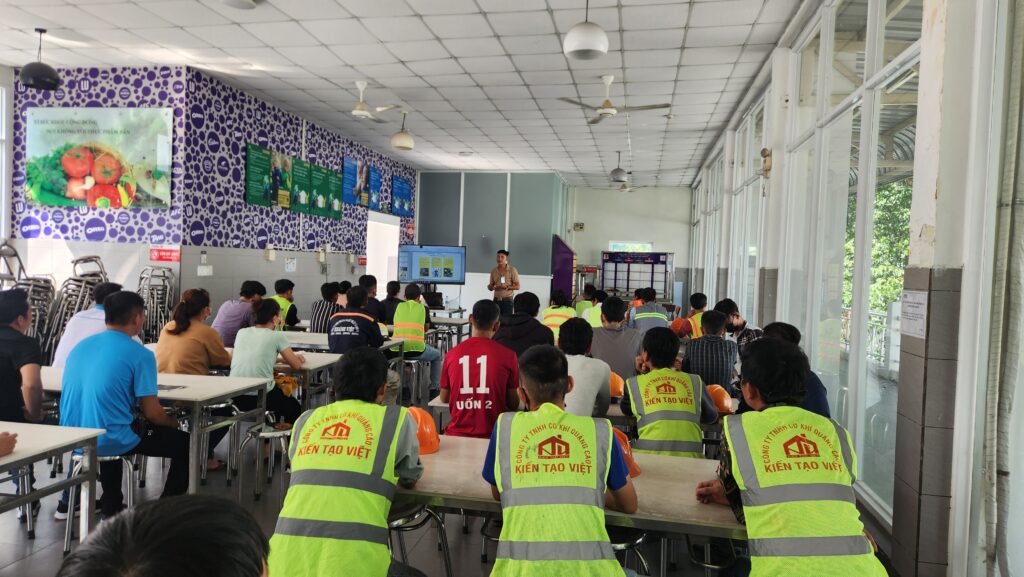
7. Material and Construction Equipment Risks
Materials and equipment play an important role in determining the quality, durability, and lifespan of a construction project. Using substandard materials or poorly maintained machinery can lead to various problems during the construction process.
In addition, fluctuations in raw material prices or disruptions in the supply chain can make it difficult for businesses to control project costs and maintain construction schedules.
For Industrial Construction projects, where high requirements for structural strength and durability are essential, selecting high-quality materials is always a top priority.
Prevention Solutions
– Choose reliable suppliers with clear material origins.
– Inspect material quality before installation and use.
– Develop appropriate procurement plans to reduce the impact of price fluctuations.
– Maintain machinery and equipment regularly to ensure stable operation.
– Prepare backup plans for critical materials and equipment.
8. Environmental and Weather Condition Risks
Natural factors such as heavy rain, storms, prolonged heat waves, or flooding can interrupt construction activities and affect the quality of the completed structure.
Furthermore, industrial construction activities may also impact the surrounding environment if they are not properly controlled. Dust, noise, wastewater, and construction waste can affect nearby areas and create potential legal issues.
Therefore, proactively developing weather response plans and implementing environmental protection measures are essential requirements for every construction project.
Prevention Solutions
– Monitor weather forecasts to adjust construction plans accordingly.
– Arrange safe storage areas for materials during rainy and stormy seasons.
– Implement measures to control dust, noise, and wastewater.
– Conduct environmental impact assessments according to regulations.
– Purchase construction insurance for large-scale projects or projects with high potential risks.
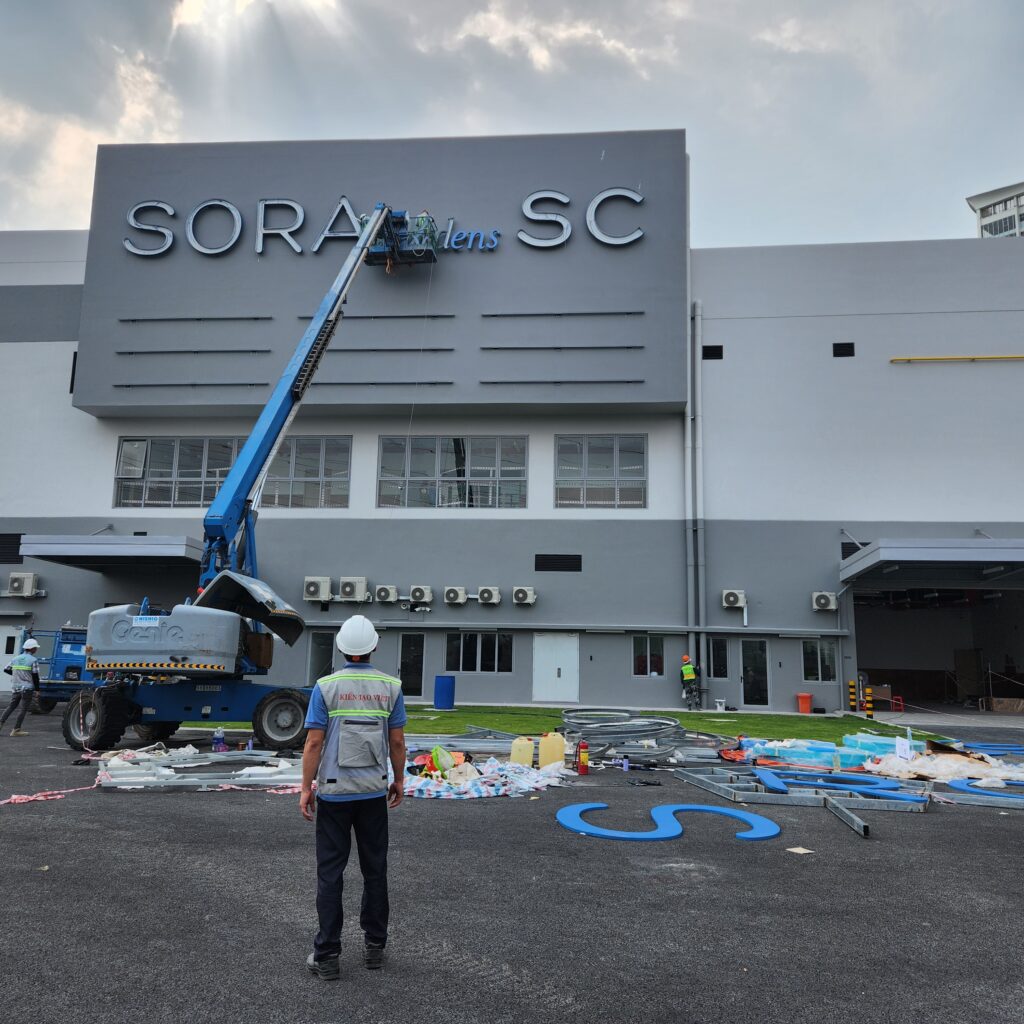
>> Read more: Costly Mistakes in Factory Construction That Cost Businesses Millions
Solutions to Minimize Risks in Industrial Construction
Although risks cannot be completely eliminated during the construction process, businesses can significantly reduce their impact by establishing a comprehensive management plan from the beginning.
Develop a Detailed Project Plan
A clear plan covering timeline, resources, budget, and responsibilities of each department helps ensure systematic project implementation. It also creates favorable conditions for monitoring progress and handling unexpected issues effectively.
Strengthen Coordination Between Stakeholders
Close cooperation between investors, design consultants, contractors, and suppliers ensures that information is communicated quickly, reduces errors, and minimizes unnecessary adjustments during construction.
Apply Technology in Project Management
Project management software, BIM models, and real-time progress monitoring systems allow businesses to better control quality, schedule, and costs. These technologies also help identify potential risks at an early stage.
Control Quality from the Beginning
Inspecting materials, accepting completed work items, and closely supervising construction procedures contribute to improving project quality while reducing repair and maintenance costs in the future.
Proactively Prepare Contingency Plans
Preparing backup budgets, workforce resources, equipment, and response scenarios enables businesses to handle unexpected situations effectively, minimizing impacts on project progress and overall efficiency.
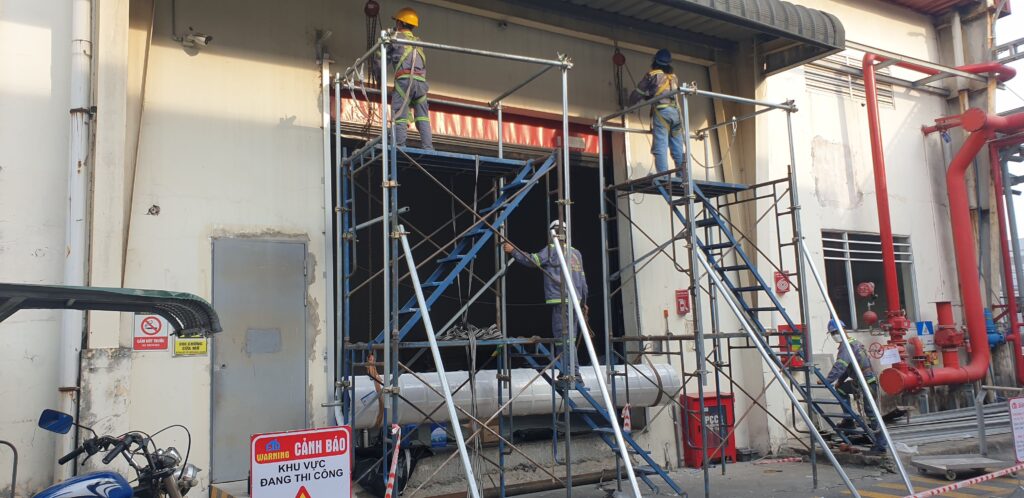
>> Read more: What Is a Toolbox Meeting (TBM)? Why Is It Important in Construction?
Why Choose Kien Tao Viet for Industrial Construction Projects?
In the field of Industrial Construction, choosing the right contractor not only affects the quality of the project but also determines the ability to control schedule, costs, and risks throughout the implementation process.
With years of experience in designing and constructing industrial projects, Kien Tao Viet provides comprehensive solutions that help businesses develop factories, warehouses, and production facilities efficiently, safely, and sustainably.
Extensive Experience with Various Industrial Projects
Kien Tao Viet has participated in numerous Industrial Construction projects with different scales and requirements, ranging from manufacturing factories, storage warehouses, to supporting facilities in industrial zones.
Practical experience enables our technical team to accurately evaluate project conditions, identify potential risks early, and propose suitable construction solutions for each specific requirement.
Strict Project Management Process
Every project is implemented through a clear process, including site surveys, design, planning, construction, inspection, and final handover.
Assigning specific responsibilities to each department helps minimize errors, improve coordination efficiency, and maintain effective control over the construction schedule.
Comprehensive Quality Control
Kien Tao Viet focuses on quality control throughout every stage, from selecting materials, fabricating structures, conducting construction activities, to inspecting and accepting each completed component.
This approach ensures that projects achieve high durability, meet technical requirements, and minimize future repair and maintenance costs.
Prioritizing Occupational Safety
Safety is always considered a top priority in every Industrial Construction project. Our construction teams receive regular training on safety procedures, use proper protective equipment, and strictly comply with regulations at construction sites.
As a result, businesses can have greater confidence in the safety standards and professionalism throughout the project implementation process.
Long-Term Partnership with Businesses
Beyond construction services, Kien Tao Viet continues to support customers through maintenance, upgrades, and consulting solutions for future expansion needs as businesses develop their production capabilities.
Frequently Asked Questions (FAQ)
1. What are the most common risks in Industrial Construction?
The most common risks include construction delays, occupational safety issues, unexpected costs, design errors, and material price fluctuations. These factors can directly affect project investment efficiency if they are not identified and controlled early.
2. How can businesses minimize additional costs during factory construction?
Businesses should prepare detailed cost estimates, conduct thorough site surveys, clearly define project scope, and allocate contingency budgets for unexpected situations.
In addition, regularly monitoring construction progress and cash flow helps businesses make timely adjustments and maintain financial control throughout the project.
3. Should businesses hire a separate project management unit?
For large-scale Industrial Construction projects or developments involving multiple complex components, hiring a professional project management unit can help businesses better control schedule, quality, costs, and coordination among stakeholders.
4. How often should construction quality be inspected during the project?
Quality inspections should be carried out regularly throughout each construction stage, especially before moving to the next phase.
Continuous quality control helps identify potential issues early, reduce correction costs, and ensure that the project meets technical requirements.
5. Does Kien Tao Viet provide turnkey Industrial Construction services?
Yes. Kien Tao Viet provides comprehensive turnkey solutions for Industrial Construction projects, including site surveys, consulting, design, construction, progress management, and final project handover according to business requirements.
Conclusion
Industrial Construction projects always involve potential risks related to occupational safety, project schedules, costs, legal requirements, design, materials, and environmental conditions. However, most of these risks can be effectively controlled when businesses proactively identify potential challenges and develop appropriate risk management plans.
Choosing an experienced construction partner with a professional management process and strong quality control capabilities will help businesses improve project efficiency, minimize unexpected issues, and ensure that construction goals are achieved as planned.
If your business is looking for a safe, cost-effective, and reliable Industrial Construction solution, Kien Tao Viet is ready to accompany you from the initial survey and consultation stages to construction and final handover.
Xây dựng công nghiệp là lĩnh vực đòi hỏi sự phối hợp chặt chẽ giữa nhiều hạng mục từ thiết kế, thi công, quản lý nhân sự đến kiểm soát tiến độ và chất lượng công trình. Chỉ cần một sai sót nhỏ trong bất kỳ giai đoạn nào cũng có thể dẫn đến phát sinh chi phí, kéo dài thời gian thi công hoặc ảnh hưởng trực tiếp đến hiệu quả đầu tư của doanh nghiệp.
Trong thực tế, các dự án xây dựng công nghiệp thường đối mặt với nhiều rủi ro như mất an toàn lao động, biến động giá vật tư, thiếu hụt nhân lực, thay đổi thiết kế hay các vấn đề pháp lý. Nếu không được nhận diện và kiểm soát từ sớm, những rủi ro này có thể gây ra nhiều hệ lụy cho toàn bộ dự án.
Vậy đâu là những rủi ro phổ biến nhất trong xây dựng công nghiệp và doanh nghiệp cần làm gì để hạn chế chúng? Hãy cùng Kiến Tạo Việt tìm hiểu trong bài viết dưới đây.
Vì sao quản lý rủi ro trong xây dựng công nghiệp lại quan trọng?
Không giống những công trình dân dụng thông thường, các dự án xây dựng công nghiệp thường có quy mô lớn, thời gian thi công kéo dài và có sự tham gia của nhiều đơn vị như chủ đầu tư, đơn vị thiết kế, nhà thầu chính, nhà thầu phụ và nhà cung cấp vật tư.
Chính vì vậy, chỉ cần một khâu thiếu đồng bộ cũng có thể ảnh hưởng đến toàn bộ tiến độ dự án. Một thay đổi nhỏ trong bản vẽ thiết kế, sự chậm trễ trong việc cung ứng vật liệu hay thiếu hụt nhân lực đều có khả năng làm phát sinh chi phí và kéo dài thời gian hoàn thành công trình.
Việc quản lý rủi ro không chỉ giúp doanh nghiệp chủ động xử lý các tình huống phát sinh mà còn góp phần đảm bảo chất lượng công trình, kiểm soát ngân sách, duy trì tiến độ và nâng cao mức độ an toàn trong suốt quá trình thi công.
Đặc biệt, trong bối cảnh nhiều doanh nghiệp đang đẩy mạnh đầu tư nhà xưởng, kho bãi và cơ sở sản xuất, việc xây dựng một kế hoạch quản lý rủi ro bài bản là yếu tố quan trọng để nâng cao hiệu quả của dự án.

8 Rủi ro thường gặp trong xây dựng công nghiệp
1. Rủi ro về an toàn lao động
An toàn lao động luôn là ưu tiên hàng đầu trong mọi dự án xây dựng công nghiệp. Công trường thường có mật độ thiết bị, máy móc và nhân công lớn nên nguy cơ xảy ra tai nạn luôn hiện hữu nếu công tác quản lý không được thực hiện nghiêm túc.
Các sự cố như ngã cao, điện giật, va chạm với máy móc, sập giàn giáo hoặc vật liệu rơi từ trên cao đều có thể gây hậu quả nghiêm trọng, ảnh hưởng đến sức khỏe người lao động và làm gián đoạn quá trình thi công.
Ngoài ra, việc thiếu trang bị bảo hộ, không tuân thủ quy trình an toàn hoặc chưa được đào tạo đầy đủ cũng làm tăng nguy cơ xảy ra sự cố tại công trường.
Cách phòng tránh
– Trang bị đầy đủ thiết bị bảo hộ đạt tiêu chuẩn.
– Tổ chức đào tạo an toàn lao động định kỳ cho toàn bộ nhân sự.
– Thiết lập quy trình kiểm tra hiện trường mỗi ngày.
– Bố trí cán bộ giám sát an toàn trong suốt quá trình thi công.
– Kiểm tra và bảo dưỡng máy móc, thiết bị thường xuyên.
Lưu ý: Xây dựng văn hóa an toàn trong doanh nghiệp sẽ giúp giảm thiểu đáng kể các sự cố và nâng cao hiệu quả làm việc của toàn bộ đội ngũ.
2. Rủi ro về tiến độ thi công
Tiến độ là một trong những yếu tố quyết định sự thành công của dự án. Tuy nhiên, nhiều công trình xây dựng công nghiệp bị kéo dài do kế hoạch chưa sát thực tế hoặc phát sinh các yếu tố ngoài dự kiến.
Một số nguyên nhân phổ biến gồm thiếu vật liệu, thời tiết bất lợi, thay đổi thiết kế, chậm giải phóng mặt bằng hoặc sự phối hợp chưa hiệu quả giữa các đơn vị tham gia dự án.
Khi tiến độ bị ảnh hưởng, doanh nghiệp không chỉ phát sinh thêm chi phí mà còn có nguy cơ chậm đưa công trình vào khai thác, làm giảm hiệu quả đầu tư.
Cách phòng tránh
– Xây dựng kế hoạch thi công chi tiết theo từng giai đoạn.
– Chuẩn bị phương án dự phòng cho các tình huống phát sinh.
– Theo dõi tiến độ bằng phần mềm quản lý dự án.
– Duy trì trao đổi thường xuyên giữa chủ đầu tư, đơn vị thiết kế và nhà thầu.
– Kiểm soát chặt nguồn cung vật tư và thiết bị.
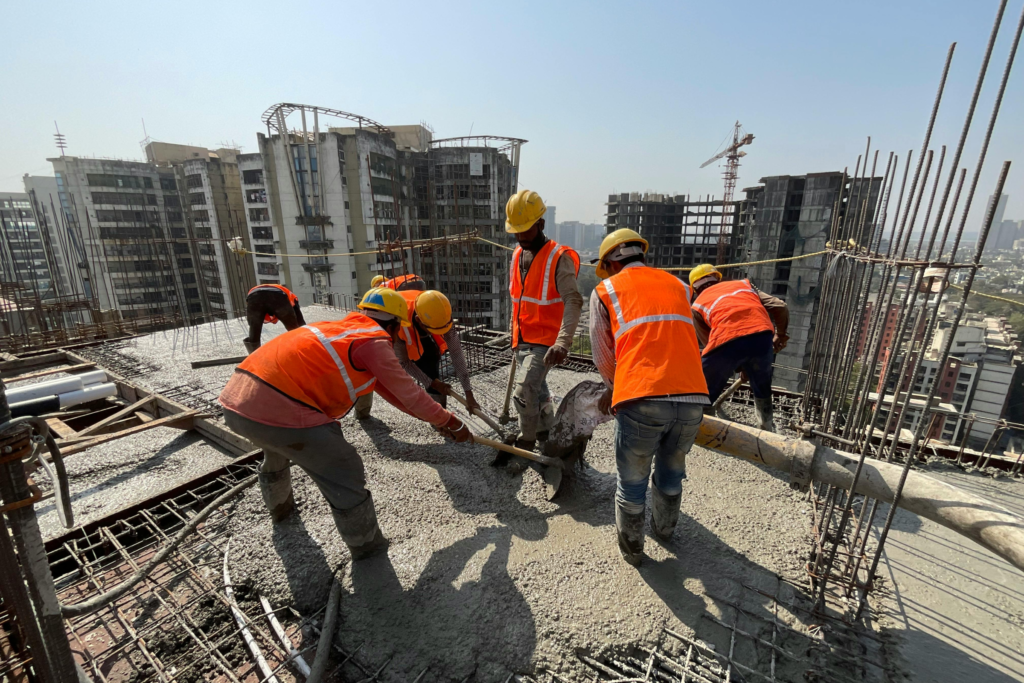
3. Rủi ro về chi phí và tài chính
Bên cạnh tiến độ, kiểm soát chi phí cũng là bài toán lớn trong xây dựng công nghiệp. Thực tế cho thấy nhiều dự án phát sinh ngân sách do biến động giá vật liệu, thay đổi khối lượng công việc hoặc quản lý tài chính chưa hiệu quả.
Ngoài ra, việc thanh toán chậm, thiếu nguồn vốn lưu động hoặc dự toán chưa sát thực tế cũng có thể khiến dự án gặp khó khăn trong quá trình triển khai.
Nếu không được kiểm soát tốt, những khoản phát sinh này sẽ ảnh hưởng trực tiếp đến lợi nhuận của doanh nghiệp và khả năng hoàn thành công trình đúng kế hoạch.
Cách phòng tránh
– Lập dự toán chi tiết ngay từ giai đoạn chuẩn bị.
– Dự phòng ngân sách cho các chi phí phát sinh.
– Theo dõi dòng tiền và tiến độ thanh toán thường xuyên.
– Cập nhật biến động giá vật liệu để có phương án điều chỉnh phù hợp.
– Ký kết hợp đồng rõ ràng về điều khoản thanh toán và điều chỉnh giá khi cần thiết.
4. Rủi ro về nhân sự và năng lực thi công
Nguồn nhân lực là yếu tố ảnh hưởng trực tiếp đến chất lượng và tiến độ của một dự án xây dựng công nghiệp. Việc thiếu lao động có tay nghề, biến động nhân sự hoặc đội ngũ chưa được đào tạo bài bản đều có thể làm giảm hiệu quả thi công và tăng nguy cơ xảy ra sai sót.
Bên cạnh đó, nếu công tác phân công công việc không hợp lý hoặc thiếu sự phối hợp giữa các tổ đội, tiến độ thực hiện từng hạng mục cũng sẽ bị ảnh hưởng. Điều này không chỉ kéo dài thời gian thi công mà còn làm phát sinh thêm chi phí nhân công và quản lý.
Đối với những công trình quy mô lớn như nhà máy, kho bãi hay xưởng sản xuất, việc duy trì một đội ngũ kỹ thuật có chuyên môn và kinh nghiệm là điều kiện quan trọng để đảm bảo dự án được triển khai đúng kế hoạch.
Cách phòng tránh
– Lập kế hoạch tuyển dụng và đào tạo nhân sự ngay từ đầu dự án.
– Bố trí nhân lực phù hợp với từng hạng mục thi công.
– Nâng cao chế độ phúc lợi để giữ chân lao động có tay nghề.
– Tăng cường đào tạo kỹ thuật và an toàn lao động định kỳ.
– Ứng dụng công nghệ trong quản lý nhân sự nhằm nâng cao hiệu quả làm việc.
5. Rủi ro về thiết kế và giải pháp kỹ thuật
Một bản thiết kế thiếu đồng bộ hoặc chưa được rà soát kỹ có thể dẫn đến nhiều vấn đề trong quá trình thi công. Những sai lệch giữa bản vẽ kiến trúc, kết cấu và hệ thống kỹ thuật thường khiến nhà thầu phải điều chỉnh hoặc thi công lại, làm tăng chi phí và kéo dài thời gian hoàn thành công trình.
Ngoài ra, việc khảo sát hiện trạng chưa đầy đủ hoặc đánh giá chưa chính xác điều kiện địa chất cũng có thể ảnh hưởng đến nền móng và khả năng chịu lực của công trình.
Trong nhiều trường hợp, các thay đổi thiết kế phát sinh khi dự án đang triển khai không chỉ gây gián đoạn tiến độ mà còn ảnh hưởng đến kế hoạch cung ứng vật tư và ngân sách đầu tư.
Cách phòng tránh
– Khảo sát hiện trạng và địa chất kỹ lưỡng trước khi thiết kế.
– Kiểm tra, thẩm định bản vẽ trước khi đưa vào thi công.
– Phối hợp chặt chẽ giữa đơn vị thiết kế, chủ đầu tư và nhà thầu.
– Ứng dụng mô hình BIM hoặc các công nghệ mô phỏng để phát hiện xung đột kỹ thuật từ sớm.
– Hạn chế thay đổi thiết kế khi công trình đã bước vào giai đoạn thi công.
6. Rủi ro về pháp lý và hợp đồng
Các vấn đề pháp lý luôn tiềm ẩn nhiều nguy cơ nếu không được chuẩn bị đầy đủ ngay từ giai đoạn đầu của dự án. Thiếu giấy phép xây dựng, hồ sơ chưa hoàn thiện hoặc hợp đồng thiếu chặt chẽ đều có thể khiến công trình bị gián đoạn hoặc phát sinh tranh chấp.
Ngoài ra, những bất đồng liên quan đến khối lượng công việc, thời gian thanh toán hay trách nhiệm của các bên cũng là nguyên nhân phổ biến làm ảnh hưởng đến tiến độ dự án.
Việc tuân thủ đầy đủ các quy định của pháp luật không chỉ giúp doanh nghiệp giảm thiểu rủi ro mà còn tạo nền tảng cho quá trình triển khai dự án diễn ra thuận lợi.
Cách phòng tránh
– Hoàn thiện đầy đủ hồ sơ và giấy phép trước khi khởi công.
– Soạn thảo hợp đồng rõ ràng về phạm vi công việc, tiến độ và trách nhiệm của các bên.
– Kiểm tra tính pháp lý của nhà thầu, nhà cung cấp và các đối tác liên quan.
– Tham khảo ý kiến chuyên gia pháp lý đối với các dự án có quy mô lớn.
– Thường xuyên cập nhật các quy định mới trong lĩnh vực xây dựng.
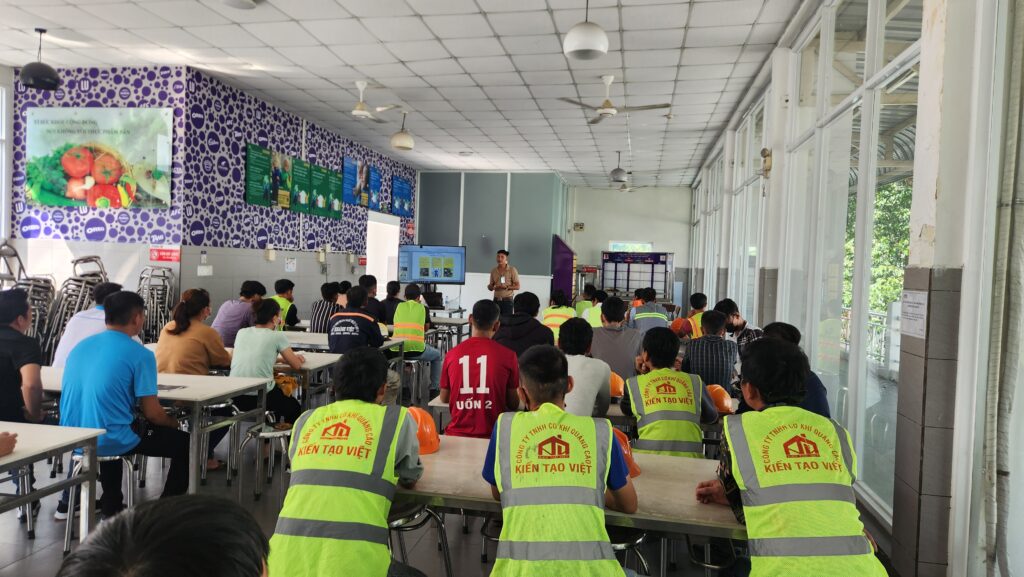
7. Rủi ro về vật liệu và thiết bị thi công
Vật liệu và thiết bị là yếu tố quyết định đến chất lượng cũng như tuổi thọ của công trình. Nếu sử dụng vật liệu không đạt tiêu chuẩn hoặc máy móc không được bảo trì định kỳ, dự án có thể gặp nhiều sự cố trong quá trình thi công.
Ngoài ra, sự biến động về giá nguyên vật liệu hoặc gián đoạn chuỗi cung ứng cũng có thể khiến doanh nghiệp gặp khó khăn trong việc kiểm soát ngân sách và tiến độ.
Đối với các công trình xây dựng công nghiệp, nơi yêu cầu cao về khả năng chịu lực và độ bền, việc lựa chọn vật liệu chất lượng luôn là ưu tiên hàng đầu.
Cách phòng tránh
– Lựa chọn nhà cung cấp uy tín và có nguồn gốc vật liệu rõ ràng.
– Kiểm tra chất lượng vật liệu trước khi đưa vào sử dụng.
– Xây dựng kế hoạch mua sắm phù hợp để hạn chế ảnh hưởng của biến động giá.
– Bảo trì máy móc, thiết bị định kỳ nhằm đảm bảo hiệu suất hoạt động.
– Chuẩn bị phương án dự phòng đối với các loại vật tư quan trọng.
8. Rủi ro do điều kiện môi trường và thời tiết
Các yếu tố tự nhiên như mưa lớn, bão, nắng nóng kéo dài hoặc ngập úng đều có thể làm gián đoạn quá trình thi công và ảnh hưởng đến chất lượng công trình.
Không chỉ vậy, hoạt động xây dựng công nghiệp cũng có thể tác động đến môi trường xung quanh nếu không được kiểm soát tốt. Bụi, tiếng ồn, nước thải hay chất thải xây dựng đều có nguy cơ gây ảnh hưởng đến khu vực lân cận và làm phát sinh các vấn đề pháp lý.
Do đó, việc chủ động xây dựng kế hoạch ứng phó với điều kiện thời tiết và thực hiện các biện pháp bảo vệ môi trường là yêu cầu cần thiết đối với mọi dự án.
Cách phòng tránh
– Theo dõi dự báo thời tiết để điều chỉnh kế hoạch thi công phù hợp.
– Bố trí khu vực lưu trữ vật liệu an toàn trong mùa mưa bão.
– Triển khai các biện pháp kiểm soát bụi, tiếng ồn và nước thải.
– Thực hiện đánh giá tác động môi trường theo quy định.
– Mua bảo hiểm công trình đối với các dự án có quy mô lớn hoặc tiềm ẩn nhiều rủi ro.
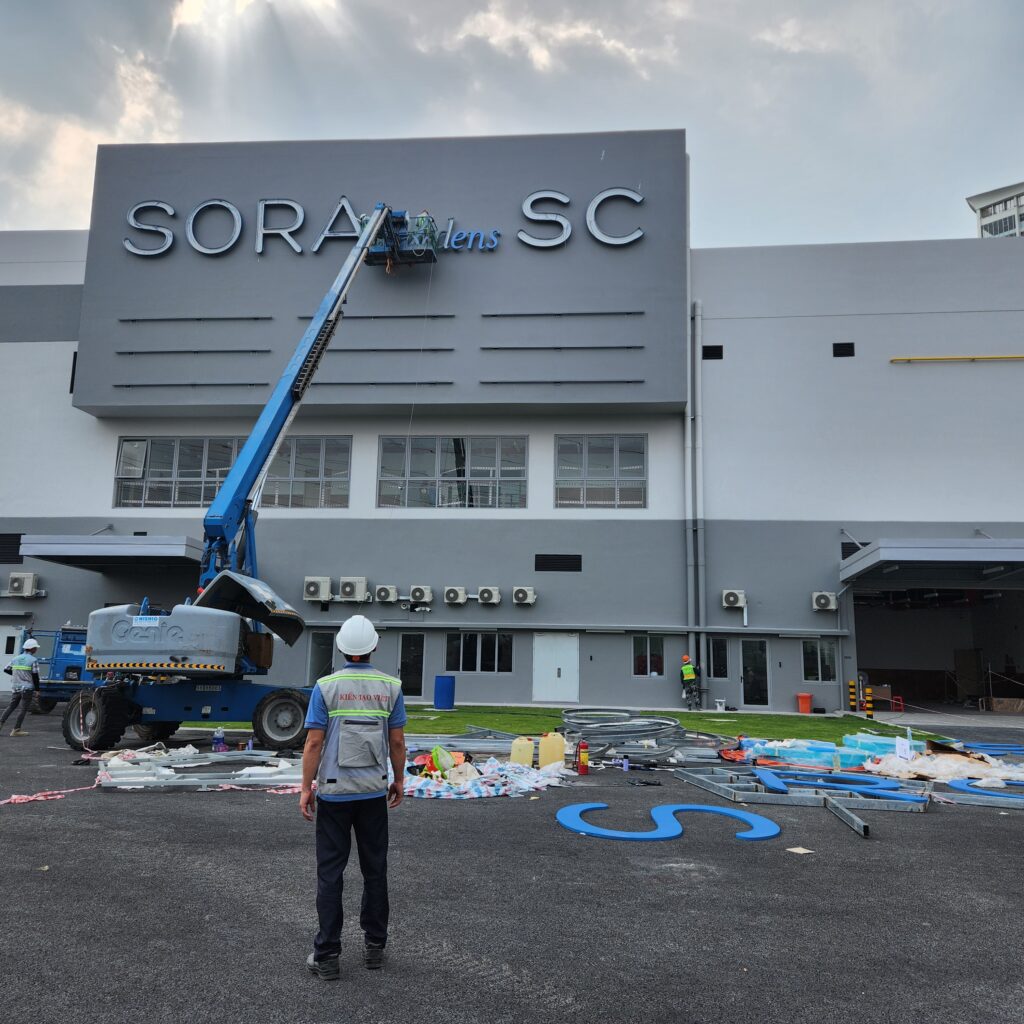
>>Xem thêm: Những Sai Lầm Khi Xây Dựng Nhà Xưởng Khiến Doanh Nghiệp Tốn Kém
Giải Pháp Giúp Hạn Chế Rủi Ro Trong Xây Dựng Công Nghiệp
Mặc dù không thể loại bỏ hoàn toàn các rủi ro trong quá trình thi công, doanh nghiệp hoàn toàn có thể giảm thiểu tác động của chúng nếu xây dựng một kế hoạch quản lý bài bản ngay từ đầu.
Xây dựng kế hoạch dự án chi tiết
Một kế hoạch rõ ràng về tiến độ, nguồn lực, ngân sách và trách nhiệm của từng bộ phận sẽ giúp dự án được triển khai có hệ thống, đồng thời tạo điều kiện thuận lợi để theo dõi và xử lý các vấn đề phát sinh.
Tăng cường phối hợp giữa các bên
Sự kết nối chặt chẽ giữa chủ đầu tư, đơn vị thiết kế, nhà thầu và nhà cung cấp sẽ giúp thông tin được truyền đạt nhanh chóng, hạn chế sai sót và giảm thiểu việc phải điều chỉnh trong quá trình thi công.
Ứng dụng công nghệ trong quản lý
Các phần mềm quản lý dự án, mô hình BIM hay hệ thống theo dõi tiến độ theo thời gian thực giúp doanh nghiệp kiểm soát tốt hơn về chất lượng, tiến độ và chi phí, đồng thời hỗ trợ phát hiện sớm các nguy cơ tiềm ẩn.
Kiểm soát chất lượng ngay từ đầu
Việc kiểm tra vật liệu, nghiệm thu từng hạng mục và giám sát chặt chẽ quy trình thi công sẽ góp phần nâng cao chất lượng công trình, giảm thiểu các chi phí sửa chữa hoặc khắc phục sau này.
Chủ động xây dựng phương án dự phòng
Dự phòng ngân sách, nhân lực, thiết bị và các kịch bản ứng phó sẽ giúp doanh nghiệp linh hoạt xử lý khi có sự cố xảy ra, hạn chế tối đa ảnh hưởng đến tiến độ và hiệu quả của dự án.
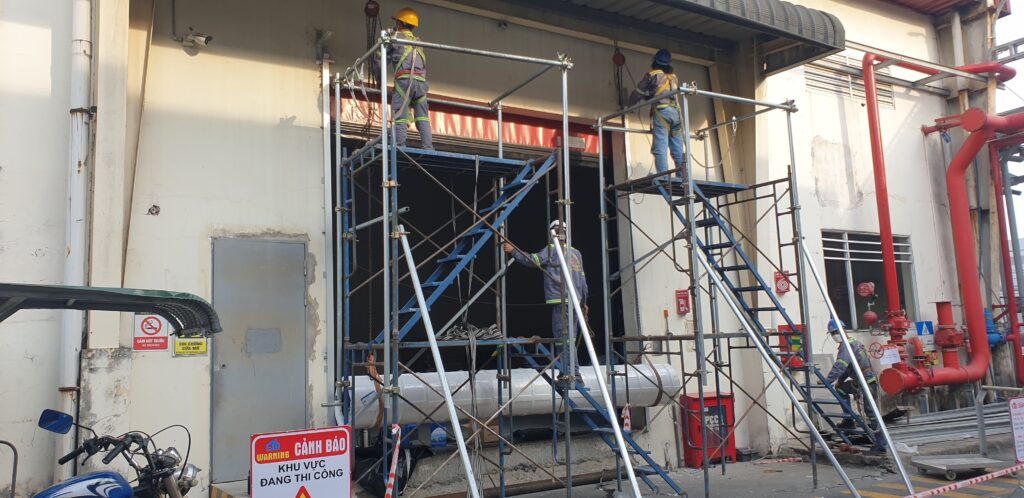
>>Xem thêm: Toolbox Meeting Là Gì? Tại sao lại quan trọng trong xây dựng?
Vì sao nên chọn Kiến Tạo Việt cho dự án xây dựng công nghiệp?
Trong lĩnh vực xây dựng công nghiệp, việc lựa chọn đúng đơn vị thi công không chỉ ảnh hưởng đến chất lượng công trình mà còn quyết định khả năng kiểm soát tiến độ, chi phí và rủi ro trong suốt quá trình triển khai dự án.
Với nhiều năm kinh nghiệm trong thiết kế và thi công các công trình công nghiệp, Kiến Tạo Việt mang đến giải pháp tổng thể giúp doanh nghiệp xây dựng nhà xưởng, kho bãi và cơ sở sản xuất một cách hiệu quả, an toàn và bền vững.
Kinh nghiệm thực tế với nhiều loại công trình
Kiến Tạo Việt đã tham gia triển khai nhiều dự án xây dựng công nghiệp với quy mô và yêu cầu khác nhau, từ nhà xưởng sản xuất, kho lưu trữ đến các công trình phụ trợ trong khu công nghiệp.
Kinh nghiệm thực tế giúp đội ngũ kỹ thuật đánh giá chính xác hiện trạng, nhận diện sớm các nguy cơ tiềm ẩn và đề xuất phương án thi công phù hợp với từng dự án.
Quy trình quản lý chặt chẽ
Mỗi dự án đều được triển khai theo quy trình rõ ràng từ khảo sát, thiết kế, lập kế hoạch, thi công đến nghiệm thu và bàn giao.
Việc phân công trách nhiệm cụ thể cho từng bộ phận giúp hạn chế sai sót, nâng cao khả năng phối hợp và kiểm soát tốt tiến độ thi công.
Kiểm soát chất lượng toàn diện
Kiến Tạo Việt chú trọng kiểm tra chất lượng ở tất cả các giai đoạn, từ lựa chọn vật liệu, gia công kết cấu đến thi công và nghiệm thu từng hạng mục.
Điều này giúp công trình đạt độ bền cao, đáp ứng các yêu cầu kỹ thuật và giảm thiểu chi phí sửa chữa trong quá trình sử dụng.
Đề cao an toàn lao động
An toàn luôn được xem là yếu tố ưu tiên trong mọi dự án xây dựng công nghiệp. Đội ngũ thi công được đào tạo định kỳ về quy trình an toàn, sử dụng thiết bị bảo hộ đầy đủ và tuân thủ nghiêm ngặt các quy định tại công trường.
Nhờ đó, doanh nghiệp có thể yên tâm về mức độ an toàn và tính chuyên nghiệp trong quá trình triển khai dự án.
Đồng hành lâu dài cùng doanh nghiệp
Không chỉ dừng lại ở việc thi công, Kiến Tạo Việt còn hỗ trợ khách hàng trong công tác bảo trì, nâng cấp và tư vấn giải pháp mở rộng công trình khi có nhu cầu phát triển sản xuất trong tương lai.
Câu hỏi thường gặp (FAQ)
1. Rủi ro nào thường gặp nhất trong xây dựng công nghiệp?
Các rủi ro phổ biến nhất gồm chậm tiến độ, mất an toàn lao động, phát sinh chi phí, sai sót thiết kế và biến động giá vật liệu. Đây là những yếu tố có thể ảnh hưởng trực tiếp đến hiệu quả đầu tư của dự án nếu không được kiểm soát từ sớm.
2. Làm thế nào để hạn chế phát sinh chi phí khi thi công nhà xưởng?
Doanh nghiệp nên lập dự toán chi tiết, khảo sát kỹ hiện trạng, xác định rõ phạm vi công việc và dự phòng ngân sách cho các tình huống phát sinh. Đồng thời, cần theo dõi tiến độ và dòng tiền thường xuyên để kịp thời điều chỉnh kế hoạch.
3. Có nên thuê đơn vị quản lý dự án riêng không?
Đối với các công trình xây dựng công nghiệp có quy mô lớn hoặc nhiều hạng mục phức tạp, việc có đơn vị quản lý dự án chuyên nghiệp sẽ giúp kiểm soát tốt hơn về tiến độ, chất lượng, chi phí và sự phối hợp giữa các bên tham gia.
4. Bao lâu nên kiểm tra chất lượng công trình trong quá trình thi công?
Việc kiểm tra nên được thực hiện thường xuyên theo từng giai đoạn thi công và đặc biệt trước khi chuyển sang hạng mục tiếp theo. Kiểm soát chất lượng liên tục sẽ giúp phát hiện sớm sai sót và giảm chi phí khắc phục.
5. Kiến Tạo Việt có nhận thi công trọn gói công trình công nghiệp không?
Có. Kiến Tạo Việt cung cấp giải pháp thi công trọn gói cho các dự án xây dựng công nghiệp, bao gồm khảo sát, thiết kế, thi công, quản lý tiến độ và bàn giao hoàn thiện theo yêu cầu của doanh nghiệp.
Kết Luận
Các dự án xây dựng công nghiệp luôn tiềm ẩn nhiều rủi ro liên quan đến an toàn lao động, tiến độ, chi phí, pháp lý, thiết kế và điều kiện môi trường. Tuy nhiên, phần lớn các rủi ro này có thể được kiểm soát nếu doanh nghiệp chủ động nhận diện từ sớm và xây dựng kế hoạch quản lý phù hợp.
Việc lựa chọn đơn vị thi công có kinh nghiệm, quy trình quản lý chặt chẽ và năng lực kiểm soát chất lượng tốt sẽ giúp dự án vận hành hiệu quả hơn, hạn chế phát sinh và đảm bảo công trình được hoàn thành đúng mục tiêu đề ra.
Nếu doanh nghiệp của bạn đang tìm kiếm giải pháp xây dựng công nghiệp an toàn, tối ưu chi phí và đảm bảo tiến độ, Kiến Tạo Việt sẵn sàng đồng hành từ giai đoạn khảo sát, tư vấn đến thi công và bàn giao hoàn thiện.

Office renovation costs are one of the biggest concerns for businesses looking to upgrade their workspace. Without a well-defined plan, renovation expenses can quickly spiral due to unexpected costs and project changes. Here are seven practical strategies to help businesses reduce office renovation costs while maintaining quality, functionality, and aesthetic appeal.
Why Do Office Renovation Costs Often Exceed the Budget?
Many businesses begin an office renovation project with a carefully planned budget. However, once construction starts, the final cost often exceeds initial expectations. This usually happens due to design changes, unexpected site conditions, rising material prices, poor project planning, or selecting contractors based solely on the lowest quotation.
In many cases, seemingly minor adjustments – such as relocating electrical outlets, changing flooring materials, or modifying the office layout – can significantly increase labor and material costs. Delays in construction may also lead to additional expenses, affecting both the project timeline and daily business operations.
Managing office renovation costs is not simply about reducing expenses. It is about making informed decisions, investing in the right areas, and ensuring every dollar contributes to a more functional, efficient, and professional workspace.
In this article, Kien Tao Viet shares seven practical and cost-effective strategies to help businesses control renovation expenses while creating a modern office environment that supports productivity and long-term growth.
Why Managing Office Renovation Costs Matters
Renovating an office is a valuable investment, but it can also become a financial burden if costs are not carefully controlled. Many businesses underestimate the impact of unexpected expenses, such as design modifications, material upgrades, project delays, or unforeseen construction issues.
When renovation costs spiral out of control, companies may be forced to cut back on important features or delay other business initiatives. In some cases, prolonged construction periods can even disrupt daily operations and affect employee productivity.
Effective cost management allows businesses to allocate resources wisely, prioritize essential improvements, and maintain better financial stability throughout the project. More importantly, it ensures that every dollar invested contributes to creating a workspace that supports long-term growth and operational efficiency.
Ultimately, managing office renovation costs is not about spending less – it is about spending smarter.

>> Read more: Multi-Functional Office Renovation Solutions for Small Office Spaces
7 Practical Ways to Reduce Office Renovation Costs
1. Create a Detailed Budget and Renovation Plan
One of the most effective ways to control office renovation costs is to establish a comprehensive plan before construction begins.
Start by identifying exactly what needs to be renovated, whether it is flooring, ceilings, lighting, electrical systems, meeting rooms, workstations, or common areas. Once the scope is defined, allocate a specific budget to each category and include a contingency reserve of approximately 10% – 15% for unexpected expenses.
A detailed budget helps prevent overspending and allows decision-makers to evaluate priorities more effectively. It also minimizes costly changes during construction, which are often a major source of budget overruns.
Pro Tip: Finalize the design and project scope before work begins to avoid expensive revisions later.
2. Reuse Existing Furniture and Infrastructure
Not every element of your current office needs to be replaced. In many cases, existing furniture, partitions, storage cabinets, doors, or lighting fixtures can be refurbished and integrated into the new design.
Reusing quality assets significantly reduces office renovation costs while promoting sustainability and minimizing construction waste.
For example, instead of purchasing entirely new desks, businesses can replace work surfaces, repaint frames, or upgrade accessories to achieve a modern appearance at a fraction of the cost.
This approach is particularly beneficial for companies seeking a refreshed office environment without undertaking a complete fit-out.
Pro Tip: Evaluate each item based on functionality, durability, and appearance before deciding whether to replace or refurbish it.
3. Choose Cost-Effective Materials
Materials account for a significant portion of any office renovation budget. Selecting the right materials can dramatically impact overall project costs without sacrificing quality or aesthetics.
Today, businesses have access to many affordable alternatives that offer excellent durability and visual appeal. For example:
– SPC vinyl flooring instead of natural hardwood flooring
– Gypsum ceilings instead of complex custom ceiling systems
– Aluminum-framed glass partitions instead of traditional masonry walls
– Laminate finishes instead of premium wood veneers
The key is to focus on long-term value rather than simply choosing the cheapest option available. Durable materials often reduce maintenance and replacement costs over time, resulting in greater savings in the long run.
Pro Tip: Consult with experienced renovation professionals to identify materials that provide the best balance between performance, aesthetics, and budget.
4. Embrace an Open Office Layout
Open-plan offices have become increasingly popular because they support collaboration, improve flexibility, and reduce construction expenses.
By minimizing permanent walls and enclosed rooms, businesses can lower material, labor, and installation costs. Open layouts also maximize natural light distribution, reducing the need for artificial lighting during working hours.
Additionally, flexible office designs make it easier to adapt the workspace as business needs evolve, reducing future renovation requirements.
For areas that require privacy, glass partitions or movable dividers can provide practical solutions without compromising openness.
Pro Tip: Balance collaboration and privacy by carefully planning the placement of meeting rooms, focus zones, and collaborative spaces.
5. Partner with a Reliable Office Renovation Contractor
Choosing the right contractor is one of the most effective ways to control office renovation costs. While a lower quotation may seem attractive, it does not always guarantee quality or long-term savings.
An experienced renovation contractor can provide accurate budgeting, recommend cost-effective materials, optimize construction schedules, and minimize costly mistakes throughout the project. Working with a single contractor that manages the entire renovation process – from planning and design to construction and final handover – also improves communication and reduces the risk of delays.
When selecting a contractor, consider more than just the price. Review their previous projects, customer testimonials, warranties, and project management capabilities before making a decision.
Pro Tip: A transparent quotation and detailed contract can help prevent unexpected expenses during construction.
6. Renovate in Phases When Working with a Limited Budget
Not every business has the financial flexibility to renovate an entire office at once. If budget constraints are a concern, completing the renovation in phases can be a practical solution.
Start by upgrading the areas that have the greatest impact on daily operations, such as workstations, meeting rooms, reception areas, or collaborative spaces. Additional improvements can then be scheduled as future budgets become available.
A phased renovation approach allows businesses to spread investment over time while maintaining business continuity and reducing financial pressure.
Pro Tip: Develop a comprehensive master plan before starting the first phase to ensure consistency in design, functionality, and future expansion.
7. Invest in Energy-Efficient Systems
Reducing office renovation costs is not only about lowering construction expenses – it also means minimizing long-term operating costs.
Installing LED lighting, energy-efficient HVAC systems, motion sensors, and maximizing natural daylight can significantly reduce monthly utility bills. Although these upgrades may require a slightly higher initial investment, they often deliver substantial savings over the lifetime of the office.
Careful planning of electrical layouts, network infrastructure, and air conditioning systems also helps avoid expensive modifications in the future.
Pro Tip: Choose certified energy-efficient equipment to maximize long-term savings and reduce maintenance costs.
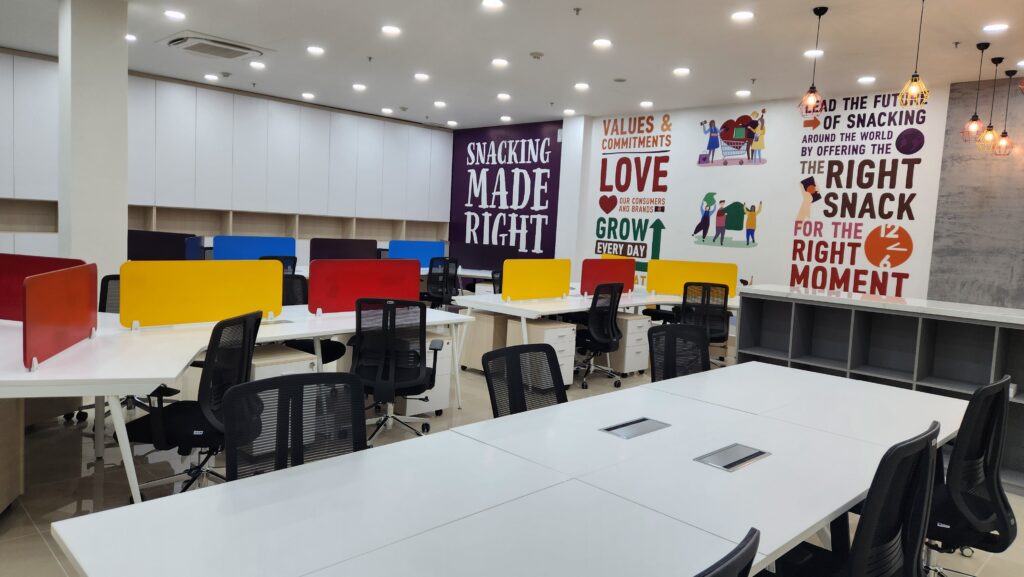
>> Read more: Mondelez Kinh Do Office Renovation Project by Kien Tao Viet
Common Mistakes That Increase Office Renovation Costs
Frequently Changing the Design During Construction
Design revisions after construction has begun are one of the biggest reasons renovation budgets exceed expectations. Every modification may require additional materials, labor, and project time.
Finalizing the layout, materials, and specifications before construction starts can significantly reduce unnecessary expenses.
Choosing a Contractor Based Solely on Price
The lowest quotation is not always the most cost-effective option.
Inexperienced contractors may use lower-quality materials, underestimate project requirements, or fail to manage the renovation efficiently. These issues often result in costly repairs, delays, and additional work after completion.
Businesses should evaluate contractors based on experience, technical expertise, project portfolio, and customer satisfaction – not price alone.
Failing to Set Aside a Contingency Budget
Even the most carefully planned renovation projects can encounter unexpected situations, such as hidden structural issues, electrical upgrades, plumbing modifications, or fluctuations in material prices.
To stay financially prepared, businesses should reserve approximately 10% – 15% of the total renovation budget for unforeseen expenses.
A contingency budget helps prevent project interruptions and ensures that quality standards are maintained without exceeding financial limits.
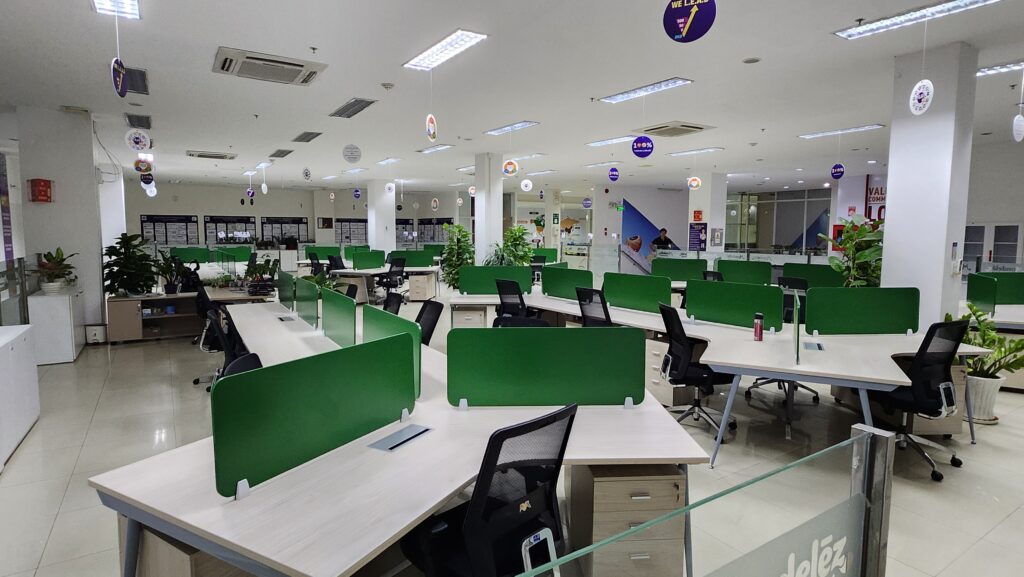
Why Choose Kien Tao Viet?
At Kien Tao Viet, we understand that every business has unique renovation requirements and budget considerations. Our goal is to deliver modern, functional office spaces while helping clients maximize the value of every investment.
Professional Project Management
From initial site surveys and concept development to construction and project completion, every stage is carefully planned and professionally managed to ensure quality and efficiency.
Transparent Pricing
We provide clear and detailed quotations with no hidden costs, allowing clients to manage their renovation budget with confidence.
Quality Workmanship
Our experienced engineers, designers, and construction teams are committed to delivering high-quality workmanship, durable materials, and projects completed on schedule.
Cost-Effective Solutions
Rather than recommending unnecessary upgrades, we focus on practical renovation strategies that reduce office renovation costs while improving workspace functionality, employee comfort, and overall business image.
Frequently Asked Questions
How long does an office renovation usually take?
The timeline depends on the size and complexity of the project. Small office renovations may take between 2 and 4 weeks, while larger commercial renovations can require one to three months.
Do I need permission to renovate a leased office?
Yes. Businesses should obtain approval from the building owner or property management before making structural, electrical, or mechanical modifications.
How much does an office renovation typically cost?
There is no fixed price for office renovations. The total cost depends on factors such as office size, existing conditions, design requirements, material selection, and the scope of work. A professional site assessment is the best way to obtain an accurate estimate.
Final Thoughts
Managing office renovation costs is not about spending less—it is about investing wisely. With proper planning, strategic material selection, efficient space design, and the support of an experienced renovation contractor, businesses can create a modern, productive, and visually appealing office without exceeding their budget.
Whether you are planning a complete office transformation or upgrading specific areas, careful budgeting and professional guidance will help ensure a successful renovation with long-term value.
Ready to Transform Your Office?
Kien Tao Viet is committed to delivering high-quality office renovation solutions tailored to your business needs and budget.
Contact us today for a free consultation, on-site assessment, and a detailed quotation. Let us help you create a modern workspace that inspires productivity while keeping your office renovation costs under control.